Posted on Tuesday, October 14th, 2014 by Pat Whelan in Beef Recipes | No Comments »
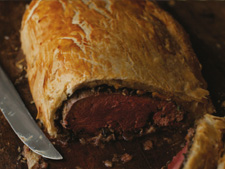 My family loves this recipe and there’s something wonderfully retro about the notion of beef Wellington. It puts us in mind of formal dinners at Downton Abbey or seventies dinner parties with the hostess floating around in a kaftan. Named after the man who crushed Napoleon at Waterloo, the very notion of preparing beef Wellington casts fear into the hearts of the most competent of home cooks. Perhaps that’s why so many chefs like to cook it at home for their private celebrations, in a subtle display of one-upmanship. You’ll find more chefs eating beef Wellington than turkey on Christmas Day, that’s for sure. But we’ll wager that even they don’t make their own puff pastry. Our version doesn’t include foie gras (it just seems de trop) and it isn’t that difficult. Really.
Beef Wellington – Printer Friendly Download
Ingredients
- 20 g dried porcini mushrooms
- 100g butter
- 4 shallots, finely chopped
- 600 g chestnut mushrooms, chopped
- leaves from 2 sprigs of thyme
- 400 ml Madeira
- 4 tablespoons double cream
- 2 tablespoons extra virgin olive oil or Irish rapeseed oil
- 1 kg centre-cut beef fillet
- 500 g all-butter puff pastry
- 1 egg, beaten
Serves 6
To Cook
Preheat the oven, and a baking sheet, to 200° C/fan 180° C/gas mark 6. Soak the porcini in 150 ml boiling water for 20 minutes, then squeeze out and chop finely, reserving the soaking water. Melt the butter in a frying pan over medium heat and cook the shallots until pale gold, then add the mushrooms, porcini and thyme and cook until softened. Pour in the Madeira, season, turn up the heat and cook until the wine has evaporated. Take off the heat and scoop the mixture into a bowl. Mix in the double cream, taste for seasoning, and set aside. This is your mushroom duxelle. Heat the oil in a pan over a high heat and, when it is smoking, add the fillet and sear briefly on all sides until crusted. Season well and allow to cool. Roll out the pastry to a rectangle big enough to envelop the meat. Brush the pastry all over with most of the beaten egg, and then spread with the duxelle mixture. Put the beef at one end and carefully roll it up in the pastry. Stand the pastry-enveloped beef seam side down, and then trim the edges and tuck in to seal the parcel, pressing the edges together. Brush with the remainder of the beaten egg. Put on to the hot baking sheet and cook for about 35–40 minutes, or until a meat thermometer reads 45° C for very rare or 60° C for medium and the pastry is golden. Set aside to rest for 5 minutes before serving.
Tags: Avoca Irish Butcher, beef fillet, Beef Recipes, beef wellington, centre-cut, Irish Beef, James Whelan Butchers, Pat Whelan, The Irish Beef Book
Posted on Monday, October 13th, 2014 by Pat Whelan in Foodie Articles | No Comments »
There’s a tremendous beauty in the English language. We, unlike some of our European neighbours, have been blessed with an abundant tongue based on rich, ancient foundations. We have an instrument of expression that when used correctly can work incredible magic. Words can make us fall in love, do things we don’t want to do, create mental pictures or even stir up emotions we didn’t even know existed. There is power in words and yet we are often lazy, assuming that some subjects don’t deserve a richer word currency. Sad to say, recent recruitment advertising that I have seen for butchers is a perfect example. It looks like there are openings for apprentice butchers in many parts of Ireland which is great news, including my own business, exposing the fact that there is not a lack of jobs in the industry, but a lack of skills. However looking at the distinctly dull and lifeless call to arms, I can see many approaching just because there’s a paying job at the end of it. I caution that a paying job is never a good driving factor for a life in this world.
While the word ‘passion’ is often bandied about and overused these days it should be fully applied to butchers. I want people with an ardent interest in the area to come forward to fill any positions I may have or take up any training programmes we create. I want those bordering on the obsessive because then and only then will we have a chance at creating a healthy legacy. On that note, I am often asked if “I minded taking over the family business”! It always amazes me that anyone would think I was obligated or forced in some way to follow in my father’s footsteps. I genuinely loved every part of the business. I had butchery in my blood and for me it was a natural step. I was simply fulfilling my purpose and calling and while I’m thankful that I have such a strong ancestral link to raising stock for food and this noble craft, I firmly believe that it would have been my perfect job had I been the very first in my line to become a butcher.
Many people miss the fundamental reasons someone might want to take up this trade. I often find myself standing at a fence in the dew drenched, quiet early mornings, marvelling at the wonder of the animals I rear and the link they provide between us and the land. While I take great care in raising them and enjoy their inherent, melancholic majesty, I am also starkly aware of their ultimate upcoming sacrifice. These gracious, primal mammals provide us with food that keeps us healthy and makes us strong. I fully acknowledge the responsibility of ensuring that we make the most of such selfless surrender. As a butcher it is up to me to find out everything I can about the animal and the nourishment it can provide. I am responsible for making sure that every part of the animal that is a source of nourishment can be used as such. It is up to me to know how to cook any cut of meat, nose to tail including the bones, and to have personal experience of that so I can pass it on – that is a calling, a purpose and so much more than just a job. It is in this kind of thinking that one finds the joy.
Besides the cerebral there is also the physical. Part of the work of a butcher is not pretty. It is bloody, heavy and serious work. That neatly tied, attractive little package or the dark red fillet of steak that makes eyes at you from behind the gleaming glass of a butcher’s counter was once part of a large and wieldy carcass that required a deft combination of skill and art to bring it to such an aesthetic end. I can recall many days in the slaughterhouse where I emerged after ridiculously long hours of carrying, carving and cutting spent and exhausted. I often imagined a crowd outside that steel door just waiting to celebrate and applaud my wondrous achievements of turning the gory and slightly macabre into things of beauty that people enjoyed bringing to their kitchens. Of course the brass band and the cheering crowds only existed in my head as few people picking up a Sunday roast truly appreciate where it has come from. It is worth remarking that we are particularly unaware of this in Ireland. In France you will notice that a skilled butcher or baker is something to be celebrated and indeed treasured by the community. In Ireland sometimes the job of butcher or baker don’t have the craft recognition they deserve. Hence the dull recruitment ads that include uninspiring sentences such as “Trimming excess fat off meat and finishing to customer specifications will be required”. Where is the art and the craft, the nourishment, the acknowledgement of the ability to butcher an animal and provide real nutritious food that promotes life? Where is the fun? Where is the joy?
We must also remember that many of our human rituals are based around and linked to food. The food providers in our lives are vital. Being a butcher is more than just a job. There has to be an appreciation of the intrinsic nature of the work and what you are really doing rather than the soul less single minded goal of a pay packet. This is the only way to happiness and a fulfilling career in any walk of life.
At James Whelan Butchers we do provide an 18 month programme with an accredited FETAC qualification on completion. We only create the very best butchers that will carry our signature of excellence into the industry. We want the passionate and enthusiastic so if you or someone you know is interested they can contact us via the website or [email protected].
We hope you enjoyed reading this post by Pat Whelan of James Whelan Butchers. Pat is a 5th generation butcher, cook book author and the director of James Whelan Butchers with shops in Clonmel, the Avoca Handweavers Rathcoole and Kilmacanogue, Dunnes Stores Cornelscourt, Rathmines and Swords in Dublin. Sign up to our newsletter for more updates from James Whelan Butchers
Tags: A Butcher's Life, Avoca Irish Butcher, James Whelan Butchers, Pat Whelan, The Irish Beef Book
Posted on Friday, October 10th, 2014 by Pat Whelan in Beef Recipes | No Comments »
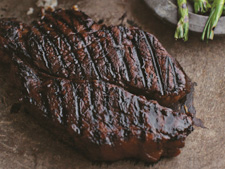
This Japanese dish is very easy to make and, in my experience, universally popular! Marinate
ahead for a super-speedy supper.Ingredients
- 8 tablespoons soy sauce
- 4 tablespoons mirin
- 4 tablespoons caster sugar
- 1 tablespoon honey
- 1 tablespoon sesame oil
- 2 teaspoons finely grated ginger
- 1 garlic clove, thinly sliced
- 800 g piece sirloin steak
- 1 tablespoon extra virgin olive oil or Irish
- rapeseed oil
- bunch of spring onions
- sushi rice
Serves 4
To Cook
Place the soy sauce, mirin, sugar, honey, sesame oil, ginger and garlic in a saucepan over medium-high heat. Bring to the boil, reduce heat to low and simmer for 5–10 minutes. Remove from the heat and allow to cool to room temperature. Pour the soy sauce mixture into a large, shallow dish and add the steak, turning a few times to coat. Cover and refrigerate for 3 hours. Drain the beef, reserving the marinade. Heat the rapeseed oil in a large frying pan over medium-high heat. Cook the steak for about 3 minutes each side (for medium rare) or according to how you like it. Transfer the steak to a plate, cover loosely with foil and leave to rest for 5 minutes. Cook the spring onions in the frying pan and set to one side.
Add the reserved marinade to the pan and bring to the boil. Reduce the heat to low and simmer, uncovered, for 2–3 minutes or until reduced slightly. Thinly slice the steak. Serve with sushi rice, prepared according to the instructions on the packet, and sliced spring onions, drizzled with the sauce.
Tags: Beef Recipes, beef teriyaki, beef teriyaki with spring onions, Irish Beef, James Whelan Butchers, Pat Whelan, The Irish Beef Book
Posted on Wednesday, October 8th, 2014 by Pat Whelan in Beef Recipes | No Comments »
 Some people use fillet, others striploin. Sirloin works too. The meat you use must be of excellent quality; you have to have absolute trust in your butcher. It’s important to hand-chop the meat with your sharpest knife, and taste the mixture as you go along, tweaking until you have the balance just right. We prefer the raw egg mixed in rather than perched on top. Even if you think you couldn’t bring yourself to eat raw meat, you really should try this just once. You might just be converted.
Steak tartare – Printer Friendly Download
Ingredients
- 2 organic egg yolks
- 2 tablespoons Dijon mustard
- 4 anchovy filets, finely chopped
- 2 teaspoons tomato ketchup
- 1 teaspoon Worcestershire sauce
- Tabasco sauce, to taste
- freshly ground black pepper
- 50 ml extra virgin olive oil or Irish
- rapeseed oil
- 30 ml brandy
- 1 small shallot, finely chopped
- 50 g capers, rinsed
- 50 g cornichons, finely chopped
- 2 tablespoons flat-leaf parsley, finely chopped
- 500 g striploin steak, finely chopped
- 4 slices good white bread, toasted and quartered
Serves 4
To Cook
Place the egg yolks in a large stainless steel bowl and add the mustard and anchovies. Mix well, then add the ketchup, Worcestershire sauce, Tabasco and pepper, and mix well again. Slowly whisk in the oil, then add the brandy and mix again. Fold in the shallot, capers,
cornichons and parsley. Add the chopped meat to the bowl and mix well. Divide the meat evenly among four chilled dinner plates, forming it into a disc on each plate. You can use a ring mould if you have one, but it’s not essential. Serve with the toasted bread. Skinny chips (see the recipe on page 000) are the classic accompaniment.
Tags: Avoca Irish Butcher, beef fillet, Beef Recipes, Irish Beef, James Whelan Butchers, Pat Whelan, sirloin, skinny chips, steak tartare, striploin, The Irish Beef Book
Posted on Monday, October 6th, 2014 by Pat Whelan in Side Dishes | No Comments »
 Roast onions with balsamic vinegar is a great side dish and goes great with steak.
Onions with balsamic vinegar – Printer Friendly Download
Ingredients
- 8 red onions, peeled and halved
- 100 ml extra virgin olive oil or Irish
- rapeseed oil
- 3 tablespoons balsamic vinegar
- 12 sprigs thyme
- flaky sea salt
- freshly ground black pepper
Serves 4-6
To Cook
Preheat the oven to 190° C/fan 170° C/gas mark 5. Put the onions in a heatproof gratin dish or a small roasting tin in which they will fit snugly in a single layer. Drizzle over the oil and balsamic and add the thyme and some seasoning. Make sure the onions are well oiled and seasoned. Cook for 40 to 45 minutes, until tender and well browned.
Tags: Avoca Irish Butcher, Irish beef side dish, James Whelan Butchers, onions, Pat Whelan, roast onions, roast onions with balsamic vinegar, Side dish, The Irish Beef Book
Posted on Monday, October 6th, 2014 by Pat Whelan in Foodie Articles | No Comments »
I was reared in the business of food and farms and therefore acquired an easy knowledge of the natural world, seasons, soil, animals and the roles that man plays within nature’s boundaries. I also have a great passion for food but sometimes though, when one is immersed in a world it’s easy to forget that not everyone shares your passion or knowledge. Our increased busy-ness and technological advances have meant that simple knowledge about nature is often lost. Add to this trade agreements, modern food processes and fast transport and suddenly most foods are available all year round and the natural seasons and what they yield become irrelevant. It’s always “summer somewhere” and so everything appears to be available all year round. Many people just don’t know what is “in season” at any given time and therefore cannot operate within nature’s laws even if they wanted to. By the same token we don’t want to go overboard. This isn’t about adopting a bad attitude to anything imported, processed or not grown within a ten mile radius. It is, however, about adjusting the balance. If we increase the amount of local and fresh food that we consume we are positively impacting nutrition and the local economy.
Each season brings with it a glut of fresh ingredients and nature is clever in that it provides appropriate food for the time of year. When produce is abundant and grown locally or at least somewhere in Ireland, it should be less expensive. Autumn is all about chunky root vegetables and Irish apples and pears from local orchards. It’s the time of year that meat displays offer braising and stewing cuts for the colder days. The lighter breakfasts of summer give way to warm buns, toasted breads and porridge. A walk in the country will yield great free bramble fruits that make excellent jams, preserves and additions to homemade tarts. I had the rare opportunity of watching Nigel Slater on TV last Saturday. He did an amazing pork and blackberry dish. He half filled a large bowl with blackberries, squelched them with his hands, then scored the skin on a shoulder of pork, placed it in the blackberries and left it overnight in the fridge. The next day he put the whole lot into a roasting dish and cooked it slowly. It looked terrific and I intend trying it before the blackberries disappear completely. Of course if you really know what you are doing the fields are full of wild mushrooms just crying out to be picked and put in a soup or fried with some good bacon. Indeed those wild mushrooms would be fantastic slow cooked with some stewing beef in red wine
If you look at what’s in season from a nutritional point of view you will also marvel at nature’s ability to know exactly what we need. The colourful root vegetables are full of nutrients that are super cold and flu fighters. They also work really well when cooked slowly in stews which demand certain cuts of meat. Meats suitable for braising and stewing are packed with good fats and proteins that demand long slow cooking to extract them. Apples and pears are full of antioxidants and are also essential to stabilise the PH balance of the body which impacts the ability of the immune system to fight invasion. We really need apples, pears and other alkali foods to provide a balance today more than ever as many of the processed foods that we consume are very acidic. I could go on but you just need to know that autumn is all about gearing the body to cope with the harsher months of winter.
 Naturally, winter is about hibernation. Shorter days and colder nights call for food that provides inner warmth. This season also gives us a natural yearning for healing and restorative foods. The body is recovering from a spring, summer and autumn of sowing, growing and harvesting and should now be resting in the winter and rejuvenating in anticipation of doing it all over again come the spring. Of course our modern world has abandoned such idyllic living and we work all year round, but isn’t it so easy to see how modern day burn-out and stress would be such an alien concept to our ancestors who, classically, abided by nature and avoided such ills and rested at least one day a week? That’s why in winter we love the comfort of pies, fruit or meat; thick, steaming broths, smoked meats and the odd hot whiskey! Goose is a traditional poultry choice of winter; its dark fatty flesh goes well with rich wine gravies and tangy fruit sauces. Full flavoured casseroles, sometimes using all types of offal, are also on the winter menu. Again offal is full of iron and we need it.
I think we are slowly changing and I’m always delighted when people seem to be waking up to the over industrialisation of food. Today we have greater access to local and fresh food and it seems to be a growing sector. People are definitely more conscious of what they are eating and where it is coming from and more people are making an attempt to grow their own. We’re seeing small local producers create new and interesting products to sell and by all accounts, between local markets and shops stocking local and fresh produce, I think things are looking good. Personally I think every schoolchild in the land should be taught about Ireland, its food and how the seasons impact that cycle. As individuals we may never go to the countryside to physically pick our own wild berries or even grow our own food in an urban setting. We may never want to bend over and actually pluck a mushroom or a root vegetable but if we know when they’re in season and a have a basic knowledge, then we can make better balanced choices for the rest of our lives. Surely that’s not too much to ask of an ‘education’ system, is it?
We hope you enjoyed reading this post by Pat Whelan of James Whelan Butchers. Pat is a 5th generation butcher, cook book author and the director of James Whelan Butchers with shops in Clonmel, the Avoca Handweavers Rathcoole and Kilmacanogue, Dunnes Stores Cornelscourt, Rathmines and Swords in Dublin. Sign up to our newsletter for more updates from James Whelan Butchers
Tags: alkali foods, Amazing Autumn, antioxidants, Apples, Avoca Irish Butcher, blackberries, Braising, bramble fruits, broths, comfort pies, homemade tarts, hot whiskey, in season, James Whelan Butchers, jams, offal, Pat Whelan, pears, pork and blackberry, porridge, preserves, roast, Root Vegetables, shoulder of pork, stews, toasted breads, warm buns
Posted on Friday, October 3rd, 2014 by Pat Whelan in Foodie Articles | No Comments »
I’m always conscious of the balance between time invested, money spent and the result. Some things in life just aren’t worth it. Puff pastry is an example. Getting puff pastry right is a skill and for the amateur it requires time and patience. If you have a burning desire to master it then go ahead, but for the rest of us I would say, “buy it”. If your family is fond of tomato ketchup that too can be recreated at home but it’s a lot of work. Homemade ketchup might be considered the healthier option perhaps but, unless they are consuming it by the bucket load, then a squeezy tube is the way to go.
Now some people would automatically lump soup into the ‘easier to buy’ category and that’s where we would part company. If you can use a knife and you own a pot you can make soup! If there are only two things you do for your children when it comes to the kitchen then teach them the versatility of the humble egg and secondly how to make a decent soup. If you do this at a young age and let them perfect both before they fly the nest you will have fulfilled your role as a parent. We’ll leave the eggs to another day but for now I think we should agree that there is really no excuse for buying packet soup. Granted there are some wonderfully nutritious ready made soups available in today’s marketplace, but making your own soup is very satisfying, economical and surprisingly quick.
The possibilities for flavours and varieties of soup are endless but write down the steps if you’re making up your own recipe as you may want to re-create it if it turns out well. There are a few rules to follow with soup making but generally it is a simple culinary art to master. It is also pretty much a one pot affair and so the washing up is minimal. Soup is also a handy way of using up any odds and ends that are left in the fridge. Potatoes are invaluable to the soup maker as while adding flavour they also provide a natural thickening agent. While I enjoy making both meat and fish soups, I will often keep it very simple with just a basic mushroom or other vegetarian offering. I have found that pulses like lentils and chick peas can make soups really hearty and filling and these are also a good source of protein, significantly boosting the nutrition factor. Onions are essential in preparing a base for any soup and don’t forget herbs and spices. Herbs and spices are not only a wonderfully flavoursome addition to soups but they also add colour. If you have to cheat at anything then I’ll turn a blind eye to bought stock. I could actually write an entire piece on stock alone and I will do in the near future, but for the beginner in the soup arena we’ll forgive a little shop bought stock. I tend to make up batches of stock for the freezer, but there are some excellent natural stock and bullion bases available to buy they do the job perfectly well. A word of caution though, I would say that you get what you pay for when it comes to stock and that the very cheap versions can contain a ridiculous amount of salt. Read the labels! As a general rule of thumb all soups use a minimum of about one to one and half pounds of ingredients (450-675g) to every one and half pints of stock (1 litre). 
In the language of soup making the terms ‘sauté’, ‘sweat’ and ‘soften’ are often used in recipes to describe the initial cooking of onions or vegetables in oil or butter. They all practically mean the same thing. The idea is to just soften the ingredients slowly rather than browning them. Always use a gentle rather than a high heat for this and you should be fine unless the actual recipe calls for ‘frying’.
Soups generally fall into two categories clear soups like consommé or broth and thick soups. Thick soups either use a thickening agent or are reduced to the point of thickness. Thick soups would often have a cream base also. When it comes to the actual consistency of a thick soup it’s a personal choice. Some soups call for lumps and chunks where the texture of the ingredients are considered part of the enjoyment but I personally like mushroom soup for example to have a smoother texture and therefore I always purée it at the end of the cooking process. It really is a matter of taste, do whatever you like best. Most soups also freeze really well and it’s easy and very economical to batch cook.
Soup is one of the oldest dishes in the world and every culture had its own; New England chowder, Spanish gazpacho, Russian borscht, Italian minestrone, French onion, Chinese won ton and vegetable broth which was popular with Celtic traditions. They are all just variations on the same theme. According to food history the modern restaurant industry was built on soup. ‘Restoratifs’ (also where the word ‘restaurant’ comes from) were the first items served in public restaurants in 18th century Paris, suggesting that they might ‘restore’ one if you were weary. Soup is still restoring us to this day and works well as a light lunch, a starter or a warming supper before bedtime.
We hope you enjoyed reading this post by Pat Whelan of James Whelan Butchers. Pat is a 5th generation butcher, cook book author and the director of James Whelan Butchers with shops in Clonmel, the Avoca Handweavers Rathcoole and Kilmacanogue, Dunnes Stores Cornelscourt, Rathmines and Swords in Dublin. Sign up to our newsletter for more updates from James Whelan Butchers
Tags: Avoca Irish Butcher, Chinese won ton, French onion, Italian minestrone, James Whelan Butchers, light lunch, New England chowder, Pat Whelan, Russian borscht, soup, Spanish gazpacho, starter, The Nationalist, vegetable broth
Posted on Thursday, October 2nd, 2014 by Pat Whelan in Side Dishes | No Comments »
 This is great side dish for a buffet table. This is simple to make and goes great with roasts.
Creamed spinach – Printer Friendly Download
Ingredients
- about 1 kg fresh spinach, washed and tough
- stems removed
- 2 tablespoons unsalted butter
- ½ cup finely chopped shallots
- 1 teaspoon minced garlic
- 120 ml double cream
- ¾ teaspoon salt
- ½ teaspoon freshly ground black pepper
- ¼ teaspoon nutmeg
Serves 4
To Cook
Bring a pot of salted water to a boil over high heat. Add the spinach and cook for 2 minutes. Drain in a fine mesh strainer, pressing with a large spoon to release as much water as possible. Finely chop and set aside. Melt the butter in a frying pan over medium-high heat. Add the shallots and garlic and cook, stirring, until soft — about 2 minutes. Add the spinach and cook, stirring, just until its liquid is released. Add the cream, salt, pepper, and nutmeg, and cook until the cream is reduced by half, about 4 minutes. Remove from the heat and serve immediately.
Tags: Avoca Irish Butcher, creamed spinach, James Whelan Butchers, Pat Whelan, spinach, The Irish Beef Book
Posted on Monday, September 29th, 2014 by Pat Whelan in Beef Recipes | No Comments »

Very slow roasting is the answer when you have to go out and want dinner to be ready when you come home. This method produces a very juicy and flavoursome roast.
Ultra Slow Roast Sirloin – Printer Friendly Download
Ingredients
- 1.5 kg sirloin
- 1 tablespoon extra virgin olive or Irish rapeseed oil
- flaky sea salt and freshly ground black pepper
Serves 4-6
To Cook
Preheat the oven to 75° C/fan 55° C/gas mark ¼. Rub the sirloin with the oil and season with flaky sea salt and freshly ground black pepper. Place a ridged griddle pan over a high heat and when it’s smoking, sear the meat on all sides until well browned. Place the meat in a roasting tin and cook for 4–5 hours, or until a meat thermometer reads 50° C (for rare meat), 55° C (medium rare) or 60° C (medium). Start checking the temperature after four hours. Cover with foil and leave to rest for 30 minutes before serving. This would be excellent with Béarnaise sauce
Tags: Aberdeen-Angus, Avoca Irish Butcher, dry-aged, Hereford, Irish Beef, James Whelan Butchers, Pat Whelan, sirloin, slow roast, The Irish Beef Book, ultra slow roast sirloin
Posted on Monday, September 29th, 2014 by Pat Whelan in Foodie Articles | No Comments »
October 3rd is National Potato Day; a day to celebrate the spud. Not the most glamorous of national days perhaps, but despite the fact that it is probably a promotional notion dreamt up by potato growers, why shouldn’t it have its own day? There was a time in Ireland when every day was National Potato Day but the world has evolved and pasta, rice cous cous and a host of other grains have muscled in on the potato’s patch. Also the spud’s criminal association with its fiendish friend, BUTTER, hasn’t helped its reputation in the health conscious and fat fighting communities. It’s high time someone spoke up for the spud and even the dairy company that it keeps. It’s time we stopped vilifying a perfectly good food and enjoyed its versatility. Here’s to National Potato Day; I declare myself a supporter.
Potatoes have been part of European cuisine for a few centuries now. In Ireland we have the legendary Sir Walter Raleigh to thank for bringing us the first spud. Where would the Sunday Roast be without at least one side dish of some sort of potato, be it roast, mashed, croqueted or all three in some excessive cases. What would have become of the fish had we not put it together with the chip?

The potato originated in South America and at first was thought of as an ornamental plant. Once its true value was discovered it was hard to believe how tasty, versatile, economical and nutritious the yield could be. A potato has good levels of Vitamin B and C, is a good carbohydrate and a good source of iron and potassium along with other minerals. There’s no fat in the potato and due to its dense nature it can fill you up.
Various varieties have been created so throughout the year we can also enjoy the subtle differences in taste and texture. I always look forward to the new potato but equally I can enjoy a plate of winter mash or a large jacket potato baked in the oven. Some varieties are better for chips and others are ideal for salads. Whatever your preference, floury or waxy, there is a potato variety for everyone.
Before the advent of the fridge many people stored spuds in a potato box in a darkened cellar or a shed. If you have such a place (that’s not centrally heated) then you could still do it. Ideally you can keep potatoes in your fridge and they will last but I think it’s best to use them relatively quickly once you’ve bought them.
Having mentioned all the good and virtuous things about potatoes it’s time to move on to something a whole lot sexier. You’ve probably guessed already that some of my favourite potato dishes involve a whole lot of fat; oh yes when the spud hooks up with a little dairy or fat, either animal or vegetable, it means a good time for all. Goose fat, dripping, olive oil, sunflower oil, butter, milk or cream all work well. (If you find yourself frothing at the mouth because I mentioned the ‘F’ word or finding the above akin to food porn then stop reading now, it’s about to get a whole lot worse.) They could take me out and whip me before I’d ever suggest that creamy mash can be achieved with anything other than full fat butter and full fat milk. There, I’ve said it. Forget all your substitutes, let’s just do it properly and indulge. If you’ve ever wondered how high end restaurants achieve excellent lump free mash or ‘Potato puree’ as it often appears on the menu, well some use butter, milk and an egg yolk and sometimes even a sneaky spoon of sugar. For perfect potato puree try the following. Boil the potatoes in their skins in salted water for about 20minutes. Pour off the water, drain and peel. Mash them, or preferably, put them through a potato ricer. Put the mash back into the saucepan and for every kg of potato (uncooked weight) use 30g butter, 250 ml milk and 1 egg yolk. Stir all of these ingredients into the potatoes over a low heat. Add the salt, sugar (about a tablespoon per kg) and a little nutmeg at the end to season and if you want to really achieve excellent puree then beat the whole lot with a metal whisk.
Another favourite of mine is Potato Gratin. (I can hear the sharp intake of breath from fat fighters). Creamy, garlic-y, thinly sliced potatoes are always indulgent and seem to be an all time favourite. There are many different recipes for this but I like to use a mix of full fat cream, crème fraiche and an egg all mixed together and poured over the thinly sliced potatoes and fresh garlic. I slice the potatoes quite thin. Despite some recipes saying 30 minutes I think this needs about 45 minutes at 180 in order to cook the potatoes properly.

The Spanish have taken the egg and potato mix to its zenith with the Spanish Tortilla. Exploring what other cultures do with potatoes is always a revelation and I would certainly encourage you to do so. I hope this has inspired you to revisit the spud, enjoy National Potato Day and whether it’s a simple chip or a lovely roast spud don’t forget to pop into James Whelan Butchers in Oakville or stop by our website online and pick up something nice to go with it.
www.jameswhelanbutchers.comWe hope you enjoyed reading this post by Pat Whelan of James Whelan Butchers. Pat is a 5th generation butcher, cook book author and the director of James Whelan Butchers with shops in Clonmel, the Avoca Handweavers Rathcoole and Kilmacanogue, Dunnes Stores Cornelscourt, Rathmines and Swords in Dublin.
Sign up to our newsletter for more updates from James Whelan Butchers
Tags: butter, chips, foodie articles, garlic potatoes, James Whelan Butchers, Pat Whelan, potato puree, Potatoes, South America, spuds, Sunday roast, The Nationalist
Posted on Thursday, September 25th, 2014 by Pat Whelan in Beef Dripping Recipes, Side Dishes | No Comments »
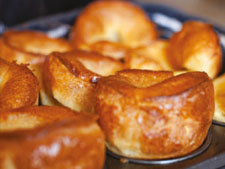 Everyone loves Yorkshire pudding — fact. A muffin tin is ideal for making these attractive individual puddings, but you can of course use the mixture to make one large pudding that you serve in slices — it’s your choice. Either is delicious.
Individual Yorkshire Puddings – Printer Friendly Download
Ingredients
- 150 g plain flour
- 6 eggs
- 150 ml milk
- 110 ml water
- sea salt and freshly ground black pepper
- beef dripping, melted for cooking
Serves 6 greedy people (makes 12 muffin-sized puddings)
To Cook
Sift the flour into a bowl and make a well in the centre. Add the eggs and incorporate gradually, using an electric hand whisk. Add the milk, water and seasoning and whisk until the batter is smooth. About 15 minutes before the beef is ready to come out of the oven, increase the heat to 220° C. Add 2 tablespoons of beef dripping into each of the cups in the muffin tin and place it in the oven to heat. After about ten minutes, add the batter to the tin and return to the oven on as high a shelf as you can for about 25–30 minutes, or until the puddings have risen and look crisp and golden. While the puddings are cooking, get everything else ready. Serve immediately.
Tags: Avoca Irish Butcher, Beef Dripping, James Whelan Butchers, Pat Whelan, Side dish, The Irish Beef Book, Yorkshire puddings
Posted on Tuesday, September 23rd, 2014 by Pat Whelan in Beef Recipes | No Comments »
 An impressive dish for a buffet table, this is simple to make and can be prepared ahead of time. Serve at room temperature.
Roast fillet with prosciutto – Printer Friendly Download
Ingredients
- 1.5 kg beef fillet, cut from the middle
- 1 tablespoon extra virgin olive oil or Irish rapeseed oil
- flaky sea salt
- freshly ground black pepper
- 20 slices prosciutto
- 3–4 tablespoons Dijon mustard
Serves 10
To Cook
Preheat the oven to 200° C/fan 180° C/gas mark 6. Heat a heavy frying pan until smoking. Rub the fillet with the rapeseed oil and season generously with sea salt and freshly ground black pepper. Sear the meat until browned on all sides. Allow to cool slightly. Lay the prosciutto out on greaseproof paper in overlapping rows so that it makes a rectangular shape. Coat the beef all over with mustard and place it on the prosciutto. Wrap the prosciutto around the beef and secure with string. Sit the fillet on a roasting tray and roast for 30 minutes for rare, 40 minutes (medium) or 50 minutes (well done). Check the internal temperature against the chart on page 66 to ensure that the beef is cooked to your liking. Leave the beef to cool in the roasting tray. Dab with kitchen paper to remove any excess juices. Carve into thin slices and serve on a platter, or serve whole and allow people to help themselves.
Tags: Aberdeen-Angus, dry-aged, Hereford, Irish Beef, James Whelan Butchers, Pat Whelan, prosciutto, roast, roast fillet with prosciutto, The Irish Beef Book