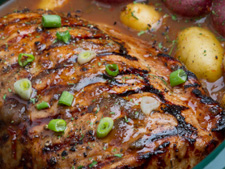
James Whelan Butchers: Kashmiri Lamb Curry

Posted on Wednesday, October 9th, 2013 by Pat Whelan in Lamb Recipes, Recipes | No Comments »

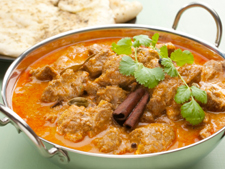
Kashmiri Lamb Curry

Kashmir is in North India near the Himalyan mountains.  This spiced, slow cooked lamb dish takes its name from that region.  It is often found on menus in restaurants as Rogan Josh.  While it is no doubt spicy, it was never intended to scorch the palate.

Kashmiri Lamb Curry Printer Friendly Download

Ingredients

  • 2 tbsps sunflower oil
  • 2 finely chopped onion
  • 1 kg of diced lamb
  • 300g natural yogurt
  • 75g chopped almonds
  • 2 Teaspoon medium curry powder
  • 2 teaspoon finely chopped fresh ginger
  • 3 garlic cloves, finely chopped
  • 1 teaspoon salt
  • 1 green chilli, deseeded and finely chopped
  • Juice of half a lemon
  • 400g tin of chopped tomatoes
  • 300 ml water
  • 2 bay leaves
  • Large handful of fresh coriander chopped
  • 100g raisins

To Cook

In a large mixing bowl combine the yogurt, almonds, curry powder, ginger, garlic and salt, stirring to mix well. Add the lamb to the yogurt mixture covering the meat well. (You could leave this to marinate in the fridge overnight or for at least a few hours before cooking.)

Heat the oil in a large saucepan and fry the onions with the bay leaf until golden brown, constantly moving them around the pan.

Add the meat and the yogurt mixture to the pan and stir fry for 5 minutes.  Add the chilli, the lemon juice and the tinned tomatoes to the mixture in the pan and stir- fry for another five minutes.

Add the water to the pan, cover and leave to simmer over a gentle heat for 60 minutes. Add the sultanas and the coriander and turn up the heat.  Stir until the sauce has thickened.  Serve the curry with rice and chopped coriander.

We hope you enjoyed reading this post by Pat Whelan of James Whelan Butchers. Pat is a 5th generation butcher, cook book author and the director of  James Whelan Butchers with shops in Clonmel, the Avoca Handweavers Rathcoole and Kilmacanogue, Dunnes Stores Cornelscourt, Rathmines and Swords in Dublin. Sign up to our newsletter for more updates from James Whelan Butchers

James Whelan Butchers: Osso Bucco

Posted on Monday, October 7th, 2013 by Pat Whelan in Beef Recipes, Recipes | No Comments »

Osso BuccoShin of beef is one of those cuts seldom used in recent times by the average cook.  The deeply flavoursome meat is bound by much connective tissue and when cooked long and slow melts and causes the sauce to become a taste event in itself and that’s before sampling the meat!  If you were a fan of the classic TV show The Sopranos, this Italian dish was one of Tony Sopranos favourite meals.

Osso Bucco – Printer Friendly Download

Ingredients

  • 8 slices beef shin cut at least 2cm/1 inch thick
  • Seasoned flour
  • 5 tablespoons butter
  • 2 tablespoons olive oil
  • 1 onion finely chopped
  • 3 celery stalks chopped
  •  2 carrots peeled and chopped
  • 2 garlic cloves finely chopped
  • 1 ¼ cups white wine
  • Can of chopped tomatoes
  • 1 ¼  cups chicken stock
  • 2 garlic cloves finely chopped
  • 3 tablespoons parsley chopped
  • Zest from a lemon finely grated

To Cook

Season the flour and coat the beef shins well. In a heavy base pan melt the butter and add the oil until very hot and fry the beef until browned all over. When this is complete, remove to a warmed plate and add the onion, celery, carrots and garlic until soft and aromatic. At this point, return the beef to the pan and add the wine.  Cook uncovered for 15 minutes or so.  Add the tomatoes and stock, then cover with a close fitting lid and simmer for 1 ½  – 2 hours.

Mix together the remaining garlic, parsley and lemon zest and stir through before serving.

We hope you enjoyed reading this post by Pat Whelan of James Whelan Butchers. Pat is a 5th generation butcher, cook book author and the director of  James Whelan Butchers with shops in Clonmel, the Avoca Handweavers Rathcoole and Kilmacanogue, Dunnes Stores Cornelscourt, Rathmines and Swords in Dublin. Sign up to our newsletter for more updates from James Whelan Butchers

James Whelan Butchers: Meat Loaf

Posted on Friday, October 4th, 2013 by Pat Whelan in Beef Recipes, Recipes | No Comments »

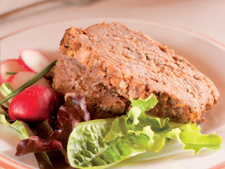
meat loafEveryone should have a meat loaf recipe in their repertoire. Served hot with vegetables it makes a great dinner, but cold and sliced it is perfect picnic or buffet food. As it is cooked without any added fat or oil, it’s also a healthy option for the diet conscious.

Meat Loaf – Printer Friendly Download

Ingredients

To Cook

Pre-heat the oven to 180°C/350°F/Gas Mark 4.  Using just half of the breadcrumbs put all the ingredients into a bowl and mix until well combined. Lightly grease a loaf tin and then press the meat mix into it.  Now press in the remaining bread crumbs.  Cover the tin with aluminium foil.

Alternatively, form the mixture into a loaf shape and roll in the breadcrumbs and wrap in aluminium foil.  Place in a baking dish and into the oven for 1 ½ hours.  If cooking in the tin, remove the foil 30 minutes before the cooking time is up to brown the top.

We hope you enjoyed reading this post by Pat Whelan of James Whelan Butchers. Pat is a 5th generation butcher, cook book author and the director of  James Whelan Butchers with shops in Clonmel, the Avoca Handweavers Rathcoole and Kilmacanogue, Dunnes Stores Cornelscourt, Rathmines and Swords in Dublin. Sign up to our newsletter for more updates from James Whelan Butchers

James Whelan Butchers: Beef Stew with Dumplings

Posted on Wednesday, October 2nd, 2013 by Pat Whelan in Beef Recipes, Recipes | 2 Comments »

BEEF STEW WITH DUMPLINGS I always consider this winter food.  Of course it is delicious at anytime of the year but somehow perfect on a cold, dark and wet evening. Dumplings always add a comforting dimension and are perfect for soaking up the gravy.

Beef Stew with Dumplings – Printer Friendly Download

Ingredients

  • 1 kg/ 2.2 lb  braising steak, cut into cubes
  • 4 tablespoons plain flour
  • Salt and pepper
  • 4 tablespoons vegetable oil
  • 2 large onions, chopped finely
  • 2 carrots, sliced
  • 2 celery stick, sliced
  • 1 turnip cup into cubes
  • 500 ml/1 pint beef stock
  • 2 bay leaves
  • 2 tablespoon fresh thyme leaves or 1 teaspoon dried thyme

DUMPLINGS

  • 145 g/6 oz plain flour
  • 2 teaspoons baking powder
  • ½ teaspoon salt
  • ½ pint  milk
  • 2 tablespoons oil

To Cook

Combine the flour, salt and pepper in a plastic bag.  Add the beef cubes and toss to coat.   Heat the oil over a moderate heat in a large saucepan or flameproof casserole dish and add the beef cubes.  Brown well on all sides.  This should be done in batches, removing the meat from the pan to a warmed plate until all the meat is browned.

Add the onion and cook until they start to turn translucent and then add the rest of the vegetables, stirring frequently to brown. Now return the beef to the pan and add the stock and herbs. Bring to the boil stirring well.

Cover tightly and reduce heat to as low as possible.  Simmer for at least 2 hours.

Approximately twenty minutes before serving  turn up the heat and bring to the boil and add the dumplings.

DUMPLINGS

To make the dumplings, sift the dry ingredients into a bowl and add the oil and milk.  Stir until the dry ingredients are mixed through and resemble a batter. Drop the dumplings onto the surface of the stew.

We hope you enjoyed reading this post by Pat Whelan of James Whelan Butchers. Pat is a 5th generation butcher, cook book author and the director of  James Whelan Butchers with shops in Clonmel, the Avoca Handweavers Rathcoole and Kilmacanogue, Dunnes Stores Cornelscourt, Rathmines and Swords in Dublin. Sign up to our newsletter for more updates from James Whelan Butchers

James Whelan Butchers: Pork Belly

Posted on Wednesday, October 2nd, 2013 by Pat Whelan in Foodie Articles, Good Food | No Comments »

When it comes to food and things food related, honesty is important.  I love it when someone introduces me to something I’ve never heard of before; a new method of cooking, an interesting ingredient or a great recipe.  Not for me is the feigned jadedness of the ‘know it all’ foodie.  I believe that no matter how long we reside on this planet, there will always be something new to learn about food from each other, how to eat it and how to prepare it, and it’s in that wonder, lies the joy.
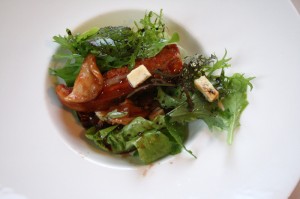
James Whelan Butchers Pork Belly

I’m also eternally fascinated by food trends.  The things that come in and go out of fashion, the renaissance of certain dishes, and the foods we come to associate with each decade.  Again, certain people will maintain the popular were always on their radar, before they reached the great unwashed masses, I don’t believe them.  Naturally, I give the benefit of the doubt to those who grew up in different countries and cultures, but for the average Irish person, many things were never on the menu until recently.  For those of us of a certain vintage who had even heard of cous cous or bulgur wheat as a child?  Or how many times were you served braised lamb shanks or Osso Buco of a school night?

Pork belly is a good example.  I don’t know why it wasn’t popular before as it is truly delicious.  Once regarded as a fatty, cheap cut of meat favoured by the Chinese and the Spanish, today it sits proudly on many restaurant menus as a beacon of great cuisine.   Today’s chefs have embraced the pork belly and are providing a great taste experience.  It’s now high time we started to cook it at home a little more.

Essentially pork belly is a layer cake of taste; a layer of meat, followed by a layer of wonderfully, delicious fat (oh yes, the ‘F’ word again – and I’m not apologising for it!), then another layer of meat and yet another layer of F., A., T., and, hopefully if you cook it properly, a lovely, crispy layer on the top that crackles beautifully when you tuck in.  All in all a superb textured taste, packed with flavour that went unnoticed in this part of the world for ages.

The thing is that while we weren’t cooking slabs of pork belly, it has always been here in the form of your average rasher, considered a lowlier cousin to the leaner tenderloin or chop and effectively the dowdy, plain girl at the dance. However, in the hands of a chef, the packed and flavourful pork belly becomes a supermodel and the one everyone wants to talk to.  Unlike supermodels however, where the animal is from and how it is reared will impact the quality of what you get.  To be fair I have had some prepared pork belly from Marks & Spencer and it wasn’t too bad.  However if you want a truly elevated experience ask you local butcher for one and cook it yourself.Paprika Pork Belly

Be warned, pork belly isn’t a fast cook dish.  Unlike many other pork cuts, pork belly can withstand long braising.  It is also important to find a belly with a good balance of lean and fat.  Too much of either will render the experience less than it should be; again talk to your butcher.  Usually the better balance is to be found in the front belly rather than the back.

The typical method for cooking pork belly is braising.  Braising is where you seal the meat quickly at the start on a high heat on the hob and finish cooking in liquid in the oven.  With pork belly many chefs return it to the pan after braising to crisp it up before serving but that’s a matter of choice. To cook pork belly properly can take anything from around the 3 hour mark in the ‘faster’ recipes up to the wonderful 24hour and even 30 hour versions, obviously the slower the time the lower temperature.  It will just depend on the recipe that you use.  Pork belly is also ideally suited to soaking up spices, from a simple salt rub to the more exotic Asian mixes or the light heat of something inspired by the Latino influence.   Again I urge you to compare the myriad of recipes and find the ones that appeal.

Finding something to accompany pork belly as a main should be carefully chosen.  Personally I love the taste so I like to keep it simple.  If my spices and herbs are leaning more towards the Asian side of things then a little rice is just fine.  Should I pull it back towards the West then a small amount of mash, polenta or even some fried onions or, if you really want indulgence, small black pudding fritters all served with a little red onion chutney is super.  However there are many diverse options, but always remember that while it can look relatively small on the plate it is a rich dish and therefore a little goes a long way.  Indeed, you could always serve it as a starter and really get the meal rolling.

If you’re still unsure don’t forget you can pop into James Whelan Butchers anytime and our experienced staff will be happy to answer any questions or contact us through our website or face book page.

This post was written by me, Pat Whelan, owner of James Whelan Butchers and a passionate advocate of local artisan food. My family have been producing quality Irish Angus beef for generations using a traditional dry aging process. This tradition is one that I continue to practice at our abattoir on our family farm in Garrentemple, Clonmel. These posts aim to impart some of the wisdom to readers and help them get the best out of the meat they eat! Our meat is available online here! I welcome your feedback to [email protected]

We hope you enjoyed reading this post by Pat Whelan of James Whelan Butchers. Pat is a 5th generation butcher, cook book author and the director of  James Whelan Butchers with shops in Clonmel, the Avoca Handweavers Rathcoole and Kilmacanogue, Dunnes Stores Cornelscourt, Rathmines and Swords in Dublin. Sign up to our newsletter for more updates from James Whelan Butchers

James Whelan Butchers at Avoca, Rathcoole

Posted on Tuesday, October 1st, 2013 by Pat Whelan in Foodie Articles, Good Food | 1 Comment »

James Whelan Butchers at Avoca Rathcoole

Following the successful launch of our first butcher shop in Dublin, at Avoca Monkstown in 2011, we are delighted to announce that we are bringing our craft butchery excellence and expertise to the new Avoca Food Market in Rathcoole.

The entire food market will include James Whelan Butchers and a number of new additions to Avoca.

We will have a 550 square foot specialist craft butcher shop in the new Avoca food market in Rathcoole, where customers can come and see at first hand how we approach our craft. As well as the opportunity to buy and taste our top quality meat products, customers will be able to see our skilled professional butchers in action in what will be a new food experience for the Irish consumer in an amazing setting.

The new Rathcoole food hall promises to be very exciting offering a range of great food under the one roof with 100 per cent focus on  delicious, seasonal, Irish food.

The Avoca Rathcoole store is on the N7 Naas Road just beyond Citywest on the western side of Dublin. It is modern, airy and colourful with lots of shopping and two exciting cafés with spacious terraces, Avoca Rathcoole has become a landmark destination. It’s been voted Retail Store of the Year in Ireland.

I would like to take this opportunity to thank all our customers for their support in making James Whelan Butchers so special.

We look forward to seeing you there in mid October.

Pat Whelan and all the team at James Whelan Butchers.


Location and opening hours

Find location and opening hours for James Whelan Butchers and Avoca, Rathcoole

James Whelan Butchers: Chilli Con Carne

Posted on Monday, September 30th, 2013 by Pat Whelan in Beef Recipes, Good Food | No Comments »

Chilli Con Carne

This is a simple, hearty dish that is a good alternative to spaghetti bolognese. The chilli content can be modified according to taste. The red kidney beans are a great addition, offsetting the power of the chilli while giving a textural lift to the dish.

Chilli Con Carne – Printer Friendly Download

Ingredients

  • 1 tablespoon olive oil
  • 1 large onion, peeled and finely chopped
  • 3 cloves of garlic, peeled and finely chopped
  • 1 red pepper, deseeded and finely chopped
  • 2 teaspoons ground cumin
  • 1 teaspoon paprika
  • 1 heaped teaspoon hot chilli powder
  • 500 g/1 lb minced beef
  • 400 g/14 oz chopped tomatoes, fresh or canned
  • 3 tablespoons tomato paste
  • salt and pepper
  • 400 g/14 oz can red kidney beans

To Cook

Heat the oil in a saucepan over a medium heat, add the onion and cook until translucent. Add the garlic, pepper and spices and stir. Simmer for a few minutes until well combined and the aromas of the spices are evident. Add the mince to the mixture and break it up as it is stirred into the vegetables and spices. Cook until the meat is well browned. Add the tomatoes, tomato paste and seasoning and simmer for 30 minutes or so, checking the liquid and adding a little water if it reduces too quickly.

Add the kidney beans and stir in. Continue to cook for another 10 minutes or so until the beans are well incorporated.

It’s great served with plain rice. Put the rice in a bowl and spoon the chilli over the rice. Top with a spoonful of sour cream to finish off.

We hope you enjoyed reading this post by Pat Whelan of James Whelan Butchers. Pat is a 5th generation butcher, cook book author and the director of  James Whelan Butchers with shops in Clonmel, the Avoca Handweavers Rathcoole and Kilmacanogue, Dunnes Stores Cornelscourt, Rathmines and Swords in Dublin. Sign up to our newsletter for more updates from James Whelan Butchers
James Whelan Butchers: Satay Beef

Posted on Thursday, September 26th, 2013 by Pat Whelan in Beef Recipes, Recipes | No Comments »

Satay Beef

I love barbecuing and these skewered satays are very popular with children. When barbecuing meat, brush it with oil before placing it on the hotplate, rather than pouring the oil on to the barbecue where it can cause flames and burning. Also soak the wooden skewers in water while the meat is marinating to prevent them burning when cooking.

Satay Beef – Printer Friendly Download

Ingredients

Satay Sauce

  • 30 g/1 oz butter
  • 1 medium onion, peeled and finely chopped
  • 2 cloves of garlic, peeled and crushed
  • 1 1⁄2 teaspoons mild curry powder
  • 3⁄4 cup roasted unsalted peanuts, blended or processed finely
  • 2 tablespoons soy sauce
  • 1 red chilli, seeds discarded and finely chopped
  • 1 1⁄2 cups water

To Cook

Combine the soy sauce, cornflour, sugar, ginger and water in a bowl. Add the meat and mix well. Let the meat marinate for at least 1 hour. Thread the meat on to the skewers and brush it with the oil. Barbecue until browned all over.

To make the sauce, melt the butter in a pan, add the onion and garlic and cook for a few minutes until aromas develop. Add the curry powder and the peanuts. Stir for 1 minute and then add the soy sauce, chilli and water. Bring to the boil, reduce the heat and simmer uncovered for 10 minutes until thick.

Satay sauce also makes a great topping for jacket potatoes.

We hope you enjoyed reading this post by Pat Whelan of James Whelan Butchers. Pat is a 5th generation butcher, cook book author and the director of  James Whelan Butchers with shops in Clonmel, the Avoca Handweavers Rathcoole and Kilmacanogue, Dunnes Stores Cornelscourt, Rathmines and Swords in Dublin. Sign up to our newsletter for more updates from James Whelan Butchers

James Whelan Butchers: Steaks with Brandy Cream Sauce

Posted on Wednesday, September 25th, 2013 by Pat Whelan in Beef Recipes, Recipes | No Comments »

I enjoy a fillet steak cooked rare and without anything getting in the way of the true taste of excellent beef.  However this dish is an exception, a truly perfect combination of texture and flavour.

Steaks with Brandy Cream Sauce – Printer Friendly Download

Ingredients

  • 2 tablespoons oil
  • 4 fillet steaks
  • 50 g/2 oz butter
  • 2 cloves garlic chopped finely
  • 2 teaspoons Dijon mustard
  • 2 tablespoons brandy
  • 2 tablespoons water
  • Salt and pepper
  • 4 tablespoons cream

Serves 4

To Cook

Heat the oil in frying pan and add the steaks, cooking according to taste.  Remove and keep warm.  Add the butter to the pan and when melted add the garlic and sauté for one minute.  Then add the mustard, stirring until smooth.  Add the brandy, water and seasonings and stir until the sauce bubbles.

Finally add the cream, reducing the heat and simmer for a minute more.

Serve steaks with sauce spooned over the top.

We hope you enjoyed reading this post by Pat Whelan of James Whelan Butchers. Pat is a 5th generation butcher, cook book author and the director of  James Whelan Butchers with shops in Clonmel, the Avoca Handweavers Rathcoole and Kilmacanogue, Dunnes Stores Cornelscourt, Rathmines and Swords in Dublin. Sign up to our newsletter for more updates from James Whelan Butchers
James Whelan Butchers: Stir It Up

Posted on Wednesday, September 25th, 2013 by Pat Whelan in Foodie Articles | No Comments »

Any kitchen hero usually masters the basics of stirring and frying early in their careers.  The frying will initially yield a few crispy edged eggs or a blackened sausage but it will be mastered quickly.  Stirring is perhaps even more fool proof but marry the two and we have trouble.  There is the general assumption that the Chinese have cornered the market on the stir fry.   We lament that we’ll never be able to make Chinese food at home that tastes like the local restaurant.  Mind you we’ll never really make fish and chips at home that taste like the local takeaway; you’ll never make pizza at home that tastes exactly like a pizzeria; you may never make a pasta dish the same way as your favourite Italian restaurant ……….and so on.

The aim of creating a stir fry is not to go into competition with the local Chinese takeaway or get a job there.  Learning to stir fry just gives you more meal options that are quick, healthy and tasty.   I have had my stir fry disasters but each was a learning curve.  On my journey to being competent with a wok, I have wound up down a few dead ends.  In my travels I have learned that you can’t just throw a load of vegetables and meat into a wok and expect it all to taste great.  You need to add spices and a little sauce sometimes to give it real taste and flavour.  I have also been foolish enough in the past to think that I could chop as I go. All preparation should be done before hand and be at hand; as it happens quickly.   HEAT THE WOK!  It’s fundamental, but many people don’t.  Pouring cold oil into a cold wok is a guaranteed way to a sticky, congealed mess at the bottom.  A good way of knowing if the wok is hot is to hold the palm of your hand about 3 inches above the wok’s surface.  If you can feel the heat then it’s ready.    Don’t cook all the ingredients together.  Some things take longer.  If you are following a recipe it may call for you to partially cook the meat or seafood and remove it from the pan before adding the vegetables.  Some vegetables will cook quicker than others.  Thicker vegetables need a little longer.  Don’t overfill the wok.  And finally when it comes to the ‘stirring’ part, use your head.  You need to keep things moving, but they also need to cook, particularly meat, so balance is key. Beef stir fry with noodles

The easiest way is to buy a ready made stir fry mix from your butcher. However there is something satisfying about starting a stir fry from scratch. It’s good to know the basics. In Chinese cooking there are two techniques for stir frying; Chao and Bao.   Mainly it is the Chao technique that is employed for most domestic situations.  The wok is heated to a high temperature, the cooking oil is added, then, traditionally, garlic, ginger (and sometimes chilli). After that it is the meat and then the vegetables followed by any liquid (usually a combination of broth and soy sauce or other seasonings and flavourings).  As the liquid heats a certain amount of steam is created and this finishes off any cooking. Again, depending on the recipe you may have removed the seared meat, only to add it back in at the end. Overall this should yield a very tasty meal.   Bao, on the other hand, requires a little more skill. With the Bao technique you heat the wok to a very, very high temperature. The metal should be so hot it glows a dull red!  With the pan practically on fire you then add oil or cooking fat with a high smoke point and then the seasonings, meat and other ingredients in quick succession. From this point it is all about speed. The food must be moved continually.  When the dish is ready, it must be poured out of the wok quickly and then the wok must be rinsed immediately to stop anything sticking and burning to the bottom.

When it comes to the liquid, there are a myriad of things you can do and remember that corn flour is your friend.  A little lemon or orange juice lightly thickened make lovely citrus sauces.  Fish stock (or chicken stock) with some spices and again thickened, will lift a dish dramatically.

Finally there is the issue of the wok. I’ve ruined a few and I’m not ashamed to admit it.  I’ve overheated them and burned a hole right through before I ever put so much as bean sprout in!  Without realising it I was doing the Bao technique and not rinsing the wok quickly enough and in the end the charred food at the bottom was impossible to remove.  I’ve spent pennies on a wok and it was rubbish but equally I splashed out for a famous chef’s expensive offering and that ended up in the bin also. Use your head, you will get what you pay for, but don’t be taken in by the celebrity marketing; shop around. Also if you live near one of the newer Asian shops that have sprung up,pop in and see what they have to offer; there’s fantastic value to be had in these stores. Stir frying is quick, healthy and something we can all do.

This post was written by me, Pat Whelan, owner of James Whelan Butchers and a passionate advocate of local artisan food. My family have been producing quality Irish Angus beef for generations using a traditional dry aging process. This tradition is one that I continue to practice at our abattoir on our family farm in Garrentemple, Clonmel. These posts aim to impart some of the wisdom to readers and help them get the best out of the meat they eat! Our meat is available online here! I welcome your feedback to [email protected]

We hope you enjoyed reading this post by Pat Whelan of James Whelan Butchers. Pat is a 5th generation butcher, cook book author and the director of  James Whelan Butchers with shops in Clonmel, the Avoca Handweavers Rathcoole and Kilmacanogue, Dunnes Stores Cornelscourt, Rathmines and Swords in Dublin. Sign up to our newsletter for more updates from James Whelan Butchers

James Whelan Butchers: Persian Koftah (Beef and Rice Meatballs)

Posted on Friday, September 20th, 2013 by Pat Whelan in Beef Recipes, Recipes | No Comments »

persian koftah

A friend of mine who is passionate about Middle Eastern cooking introduced me to this simple dish and it has all the elements of comfort food that I love. The rice and split peas in this meatball and tomato dish will stretch a small amount of mince into a meal that could feed ten people. However, it needs to be planned ahead, since the split peas and rice have to be soaked for several hours before using.

Persian Koftah (Beef and Rice Meatballs) – Printer Friendly Download

Ingredients

  • 1 cup split peas, soaked in water for 5–6 hours
  • 1 cup basmati or long-grain rice, soaked with the peas
  • 500 g/1 lb minced beef
  • 1 large onion, peeled and finely chopped
  • 4 eggs, beaten
  • 2 tablespoons fresh tarragon, finely chopped
  • 1 tablespoon mint, finely chopped
  • 1 tablespoon parsley, finely chopped
  • salt and pepper
  • sunflower oil for frying
  • 2 x 220 g/8 oz cans chopped tomatoes
  • 2 tablespoons tomato paste
Serves 6

To Cook

Preheat the oven to 180°C/350°F/gas mark 4. Drain the peas and rice. In a large bowl combine them with the meat, onion, half the beaten egg, herbs and seasoning. Mix well and form into meatballs. Use the remaining egg mixture to coat each meatball. Heat the

oil in a large pan and add the balls in batches and cook until golden, but not necessarily cooked through. Combine the tomatoes and the tomato paste. Place the koftah (meatballs) into a casserole dish and cover with the tomato mixture. Cook in the oven for 11⁄2 hours or so, until the tomato sauce has been absorbed. It may be necessary to add a little more liquid during cooking.

We hope you enjoyed reading this post by Pat Whelan of James Whelan Butchers. Pat is a 5th generation butcher, cook book author and the director of  James Whelan Butchers with shops in Clonmel, the Avoca Handweavers Rathcoole and Kilmacanogue, Dunnes Stores Cornelscourt, Rathmines and Swords in Dublin. Sign up to our newsletter for more updates from James Whelan Butchers

James Whelan Butchers: Slow-cooked Beef Pot Roast

Posted on Thursday, September 19th, 2013 by Pat Whelan in Beef Recipes, Recipes | No Comments »

slow-cooked beef pot roast

At weekends when we just want to relax with the kids and enjoy a meal together with not too much time taken to prepare it, this is often our first choice. It takes only 15 minutes or so preparation time and then it’s left to cook slowly for hours with only the effort of plating up involved.

Slow-cooked Beef Pot Roast – Printer Friendly Download

Ingredients

  • 2 tablespoons olive oil
  • 1.5 kg/ 3lb of beef shoulder/blade roast
  • 1 large onion, peeled and sliced
  • 4 cloves of garlic, peeled but left whole
  • 3 medium carrots, peeled and cut into large chunks
  • 2 celery stalks, sliced
  • 3 potatoes, peeled and cut in half
  • 1⁄2 cup red wine
  • salt and pepper
  • parsley, finely chopped, to garnish

To Cook

In a heavy-duty cast iron pan such as a Dutch oven heat the oil on a medium heat and when it is very hot add the meat and leave for a few minutes on each side, turning to brown and seal it. When the meat has browned all over, remove it to a plate. Add the vegetables and sauté until the onion is soft. Add the wine and seasoning and return the beef to the pot. When it reaches simmering point, reduce the heat and cover the pot with a tight-fitting lid. Let it cook for 3 hours or so until the meat is very tender, then lift the meat on to a warm serving platter, cover and keep warm.

Turn the heat high to reduce the liquid to a thick sauce. Strain the sauce and serve poured over the beef. Garnish with parsley and serve with boiled potatoes. A bunch of flavouring herbs may also be added, such as marjoram, thyme, parsley and bay leaf tied with string. Lift out and discard after cooking.

We hope you enjoyed reading this post by Pat Whelan of James Whelan Butchers. Pat is a 5th generation butcher, cook book author and the director of  James Whelan Butchers with shops in Clonmel, the Avoca Handweavers Rathcoole and Kilmacanogue, Dunnes Stores Cornelscourt, Rathmines and Swords in Dublin. Sign up to our newsletter for more updates from James Whelan Butchers