James Whelan Butchers: Rhubarb Chutney

Posted on Wednesday, August 8th, 2012 by Pat Whelan in Recipes, Side Dishes | No Comments »

This is the recipe I use that has a little kick to it, but I’m sure there are many variations that work just as well

Ingredients

  • 2lbs/900g Rhubarb washed and cut into chunks
  • 2lbs/900g Sugar
  • 1lb/450g Sultanas
  • 1 pint Vinegar
  • 1 oz/25g Salt
  • 1 oz/25g powdered Ginger
  • 1 Onion – finely chopped
  • ½ teaspoon Cayenne Pepper
  • ½ teaspoon ordinary Pepper

To Cook

Put all the ingredients into a pot. Bring it all to the boil. Reduct heat.
Let it bubble away until thick and dark brown (about 1 hour). Stir now and then.
(Do not let it burn at the bottom)
Pour into clean sterilised jars, put the lid on, let cool and store.
It should keep in a cool dark place for several months.

We hope you enjoyed reading this post by Pat Whelan of James Whelan Butchers. Pat is a 5th generation butcher, cook book author and the director of  James Whelan Butchers with shops in Clonmel, the Avoca Handweavers Rathcoole and Kilmacanogue, Dunnes Stores Cornelscourt, Rathmines and Swords in Dublin. Sign up to our newsletter for more updates from James Whelan Butchers

James Whelan Butchers: A Fresh Look at Asia

Posted on Tuesday, July 24th, 2012 by Pat Whelan in Foodie Articles | No Comments »

Given that I work with meat and am known as a general food lover, I suppose it is hardly surprising that the subject of food comes up in my conversations a great deal. I’m often asked for advice about cuts, preparation and cooking and while some will just indulge and join me in a nice chat about things that taste great, the other common issue is diet and weight. What I probably find most amusing are the different schools of thought on the subject. You have the ‘lean meat, fat is evil’ brigade, the ‘no carb’ bunnies, the point counting sisters and brothers, the “how many calories?” worry warts, the vegetable only zealots; the list is endless. Basically everyone is headed for that same utopian slim dream, but there seem to be many routes to it.

Creamy Thai Chicken CurryThere seems to be one thing that most of these diets and their self proclaimed healthy eating devotees have in common and that is the general rule that junk food was conjured in the bowels of hell in order to make us all fat. The spiritually enlightened wouldn’t dream of defiling their temple with anything but lean chicken, a stick of celery and a lettuce leaf! If the quality of the chicken, celery and lettuce is good I can appreciate that it is a nice snack combination, but the difficulty is I can’t live on just that. We naturally crave, or should I say ‘need’ variety. It’s what makes life and food the wonderful thing that it is. Sadly we have taken the junk food umbrella and crammed more and more foods under it. Chinese food often gets swept into the mix as high calorie junk food and the creamier dishes of Indian cuisine are also given the evil eye by the virtuous.

Because of these generalisations we tend to avoid whole cultures and we miss out on interesting tastes, new experiences and a chance to introduce new things to our own diet. Traditionally, food in both China and India is seen as health giving. In the household kitchens real people feeding their families try and create vibrant, fresh, light and tasty meals. This is especially true of China. While some western Chinese restaurants have chosen the route of too much, salt, MSG, sugar and trans fats, an authentic taste of China is good for you. The same can be said of Indian food. Obviously the creamy korma and tikka sauces are rich, but if we look to aromatic chicken or beef baked slowly in a clay oven we get a different picture. Even in restaurants the average Indian mixed grill is lean, protein rich and full of health giving spices.

When it comes to Asian food we have enough ingredients at our disposal these days to come pretty close to an authentic home cooked meal from these foreign lands. Chinese food should be fresh and fragrant. There are many layers of taste in Chinese food and we should be able to taste each note. Traditional Chinese food was never meant to be coated in batter, deep fried and concealed by a viscous, luminous sauce.

What I like best about Asian food is that it offers us alternatives for accompaniments. There is a great range of rice available from wild and long grain, brown rice to the more aromatic and soft Pilau or Thai Jasmine rice. Noodles can be thin light strands such as glass noodles or thick fat udon noodles and a myriad of types in between. (By the way glass noodles are naturally gluten free and so are perfect for coeliacs.) I also like the way real style Asian cooking makes use of nuts; from the cashew to the peanut the taste is great.Chinese food

I always keep a variety of noodles and rice in my store cupboard as I think they are fantastic for making up dishes with leftovers. If we have some left over chicken, adding in some vegetables, herbs and chilies and serving cold on a bed of glass noodles really stretches the meat. The other great thing about noodles is that they bulk out a soup to make it really feel like a meal. I recently saw a beef noodle soup recipe on the television and I have put it on my list of ‘must makes’ over the summer.

To be fair it is hard for us to know what exactly healthy Chinese or Indian food actually is, as we haven’t grown up with it. However it is only a matter of learning the basics and adapting them to our own taste. The aim isn’t to open an authentic Asian restaurant to satisfy Asian people; the goal is to provide rich variety in the food we feed our own families. It is about what we like and being comfortable using the myriad of wonderful foods available to us. Indeed it seems crazy to cook the same few dishes over and over again when we have so many choices at our disposal. Not only do we have choices but we have an abundance of free knowledge; the library, the internet and the television are full of great food ideas that won’t cost us a penny to learn.

So back to my dieting friends and those on the eternal quest for the supermodel body, my message to you is that your journey towards your goal is a noble one and I wish you great success, but please stop with the deprivation and sweeping statements about real food groups and food cultures. Real food was given to us for fuel, but also for enjoyment. We can enjoy all good things and still lose and maintain weight if we can just get the balance right. I encourage you to explore all that Asia has to offer in natural and good spices, rice and noodles; we are blessed to have it at our fingertips. Combine that with your choice of local home grown vegetables and meat and, without a doubt, you’ll have them all screaming for more. 

This post was written by me, Pat Whelan, owner of James Whelan Butchers and a passionate advocate of local artisan food. My family have been producing quality Irish Angus beef for generations using a traditional dry aging process. This tradition is one that I continue to practice at our abattoir on our family farm in Garrentemple, Clonmel. These posts aim to impart some of the wisdom to readers and help them get the best out of the meat they eat! Our meat is available online here! I welcome your feedback to [email protected]

We hope you enjoyed reading this post by Pat Whelan of James Whelan Butchers. Pat is a 5th generation butcher, cook book author and the director of  James Whelan Butchers with shops in Clonmel, the Avoca Handweavers Rathcoole and Kilmacanogue, Dunnes Stores Cornelscourt, Rathmines and Swords in Dublin. Sign up to our newsletter for more updates from James Whelan Butchers

James Whelan Butchers: The Rising Sun

Posted on Tuesday, July 17th, 2012 by Pat Whelan in Foodie Articles | No Comments »

A new Japanese restaurant has just opened in Clonmel. It’s good to welcome new businesses but I get even more excited when they are offering something new. Now I have no intention of attempting to explain Japanese food in one newspaper column. First of all I wouldn’t have the knowledge and secondly, like any nation that has a rich food culture, the subject is far too wide and varied to capture properly. However I have been to Japan several times and my food experiences have always been good. I’ve learned a little more each time and I can honestly say it is a country of unique flavours and distinctive cuisine. I was so impressed with their Wagyu beef, I even brought it home with me to breed and Whelan Wagyu will be available very shortly.

Japanese Miso SoupThe first thing to know about Japanese food is that it’s not “just sushi”. I can confirm that the entire Japanese nation does not survive on little packets of rice and raw fish flavoured with vinegar, even if they are delicious. The truth is that the Japanese eat very well and the traditional Japanese diet has always been considered a contributing factor to the general longevity enjoyed there. I believe their secret is that they have learned to balance meat, fish and vegetarian cuisine much better than we do here in the west. There are two other distinctions in Japan that I always marvel at. First of all if you think I am crazy about local food or that the French country people are big on farm gate and territory then the Japanese outdo us all. Local food is very important in Japan. And it’s not just about being local, it is also about quality and how it is produced. The other thing that stood out for me is the way they present food on a plate. The aesthetic is of the utmost importance and at the start of a meal it is considered polite to comment on how good the food looks on the plate or the artistry of the chef before you tuck in. This precise and sometimes elaborate food arranging even comes down to simple things like a lunch box. In Japan they are fond of a food arrangement commonly known as ‘Bento’. It is a tremendous insult to Bento to describe it as what we know as a TV dinner, but I use it to give you a visual as the general layout is not too far off the mark; each food in its own little compartment or section. However the actual food is a thousand times better. Bento traditionally consists of rice, fish or meat and one or more vegetable. While shop bought Bento boxes can be elaborately arranged even home prepared Bento is carefully placed. I like the idea that time is taken to make a meal look good, even if it is just a packed lunch. As humans we eat with our eyes as much as our mouths.

So if it is not all about sushi then what is the basis of Japanese food? It would be easy to list a few dishes but that would be very unfair. It would be like saying that Irish food is just Lamb stew and bacon and cabbage. I feel it will give you more of an overview if we look at some of the commonly used ingredients.

There’s no doubt about it but Japanese cuisine is largely based on rice; white or brown. Noodles are also common but more in modern Japanese cooking. Soy sauce is important, but there is a difference between Chinese Soy and Japanese Soy. Seaweed, several different varieties, is widely used (well they are an island nation) and Miso is a very common Japanese seasoning. There are many varieties of miso and it is used widely for sauces and spreads, as a meat and or vegetable seasoning and for adding to soup stock. The taste of miso has been described as salty, sweet, earthy, fruity, and savoury! Sake is a sweet sherry like drink that is also used as a common ingredient and Mirin is an alcohol made from rice but used exclusively in cooking. Rice vinegar is also common. While many people here might attempt to substitute white wine vinegar for rice vinegar in a recipe, the latter is milder and sweeter and so to achieve an authentic taste it is vital. By the same token a lovely Japanese girl explained that Sushi Vinegar is just rice vinegar with added flavourings. Sesame seeds and sesame oil, particularly dark sesame oil, shitake mushrooms, fresh ginger, white radish and spring onions and also used widely. Tofu and tofu products figure largely and there are plenty of spices; seven ingredient red pepper powder, ground curry powder, mustard and wasabi sauce.

Beef stir fry with noodles

This is by no means an exhaustive list but if you take these basics and add meat or fish you can see a general pattern of great taste, great flavours and generally healthy food emerging. While many of the spices and the seaweeds are dried, the rest of the ingredients would be fresh and therefore nutritious and healthy. Even the traditional and much loved Japanese Tempura batter used for deep frying is considerably lighter than the usual heavier batter we are used to. Tempura dishes are commonly eaten in Japan and everything from meat, fish and vegetables are coated and deep fried.

As a potted version of Japanese food this is really quite a poor description of this rich, fresh and mainly natural food. Perhaps the main thing we can learn from the older Japanese is balance. They also respect their food, the people who cook it and they take time to eat it. There are many small but pleasant rituals attached to eating in Japan that remind them daily about gratitude and nourishment; we could certainly learn a thing or two there.

Now I have no doubt that some of that tradition, like every corner of the earth, is being gently eroded by the modern world and the Japanese are facing their own problems with overly processed foods, but the authentic food is still an intrinsically good and balanced diet. I haven’t been to the new restaurant yet but I’ll let you know how it compares to those in Japan when I do. I would also encourage you to try it for yourself and make sure you spread the word that Japanese food is not just sushi.

This post was written by me, Pat Whelan, owner of James Whelan Butchers and a passionate advocate of local artisan food. My family have been producing quality Irish Angus beef for generations using a traditional dry aging process. This tradition is one that I continue to practice at our abattoir on our family farm in Garrentemple, Clonmel. These posts aim to impart some of the wisdom to readers and help them get the best out of the meat they eat! Our meat is available online here! I welcome your feedback to [email protected]

We hope you enjoyed reading this post by Pat Whelan of James Whelan Butchers. Pat is a 5th generation butcher, cook book author and the director of  James Whelan Butchers with shops in Clonmel, the Avoca Handweavers Rathcoole and Kilmacanogue, Dunnes Stores Cornelscourt, Rathmines and Swords in Dublin. Sign up to our newsletter for more updates from James Whelan Butchers

James Whelan Butchers: A Cheesy Feeling

Posted on Tuesday, July 10th, 2012 by Pat Whelan in Foodie Articles | No Comments »

We’ve come along way since those before us fell in love with the individually wrapped easy single, way back in the mists of time. We weren’t exactly the greatest country for cheese before then; a little Calvita cheddar perhaps, a chunk of stilton with a glass of port for the sophisticated and a little foil wrapped triangle here and there. We then embraced the easy single and sandwiches and burgers seemed forever doomed to be adorned with this tasteless, yellow, shiny square of plastic that is, in my view, unrecognisable as real cheese. Don’t bother to write and tell me I’m a cheese snob. You’ll never change my mind about the easy (or even worse ‘easi’ ) single and I refuse to buy the ‘it’s so convenient’ line. Cut a sliver off a block of real cheese and I guarantee it won’t take any longer. It may not be perfectly square, but unless you have severe OCD, the shape of the cheese shouldn’t be a problem.

The progress in the Irish cheese landscape is quite remarkable. From a simple cheddar loving nation, our palates have evolved to encompass so much more. Even corner shops now stock a few different varieties. If you go to any of the larger stores or a speciality shop or deli the choice can be quite overwhelming. I remember being in one place where the counter was laden with an amazing cheese selection from all around the globe. The choice was so great I almost retreated to the chill cabinet for a simple block of Cheddar.Cashel Blue

That seems to be the main problem these days, the abundant cheese treasure available confuses us and makes choosing cheese an overly complicated chore. Cheese can also be relatively expensive and so it is understandable why people don’t want to take too many risks with unknown varieties and brands. All you really need to understand are a few basics and then the world of cheese opens up and it’s a journey that you can enjoy for the rest of your life. There is a lot of cheese out there and many cheese regions in the world. However the chill cabinet or cheese counter in your local shop is probably the best place to start. It is also worth saying that it’s okay not to like certain cheeses. Enjoying or disliking a cheese is just that, it shouldn’t ‘say’ anything about you. Everyone has different tolerances for cheesy flavours. Even within cheese groups there are tolerance levels; not all cheese is created equal.

There are a few general categories of cheese. However, just like wine, every cheese of the same variety doesn’t taste exactly the same, but there should be a similarity. While the taste will always be a surprise with a new cheese, you should know what to expect. Let’s start with hard cheese.

Cheddar is probably the most widely available cheese. Cheddar is a ripened hard cheese. The more aged (mature) it is, the drier it appears. Experts would concur that it is best made from whole milk and aged for a long time. Despite the fact that poorer quality, tasteless cheddars have flooded the market, should you find a good cheddar cheese it should always be on hand in the fridge. It is very versatile for cooking, for sandwiches or for just shearing off a chunk and eating it. If you want my advice avoid any of the ‘low fat’ or ‘fat reduced’ cheddars; inevitably they’ve taken the taste away with the fat.

Brie and Camembert, which have become really popular here, are considered soft ripened cheeses. Typically they are aged for anything up to 4 months. While the cheese is soft, they have a hard rind. To eat or not to eat the rind is a personal choice. I don’t particularly like it but a friend tells me that the brie rind adds to the cheese’s flavour profile.Cashel Blue Tasters

Soft unripened cheeses are considered ‘fresh cheese’ and these are usually the ones that are mixed with herbs, fruits or nuts. They have a high moisture content and again are really useful in cooking. You can stuff mushrooms, olives, tomatoes or meat with soft cheese before baking. They are also a great base for canapés as they spread easily and provide a nice ‘gluey’ platform to balance other things on top of. I have even used soft cheese to thicken up a pasta sauce.

Blue cheese or, as my children like to call it, ‘sweaty smelly cheese’ (Before you judge them they are all under 10!) is probably the most divisive. In truth the blue parts of blue cheese are actually mould. Overall blue cheese will span the taste spectrum from mildly blue to quite salty with a very strong bite. A really good blue cheese will have earthy flavours also. The texture is dry and crumbly and the taste, although often perceived as an acquired one, is quite addictive. We have one of the world’s premier and award winning blue cheese brands on our doorstep, Cashel Blue Cheese, and so we have no excuse for not trying it.

Indeed we have many great cheese makers here in Tipperary. Even if we never left the environs of our own county we have quite a few to choose from. Explore some local cheese this week. We even stock a selection of fine cheese on our website and at our store in the Oakville Shopping Centre. Drop by any time.

We hope you enjoyed reading this post by Pat Whelan of James Whelan Butchers. Pat is a 5th generation butcher, cook book author and the director of  James Whelan Butchers with shops in Clonmel, the Avoca Handweavers Rathcoole and Kilmacanogue, Dunnes Stores Cornelscourt, Rathmines and Swords in Dublin. Sign up to our newsletter for more updates from James Whelan Butchers

James Whelan Butchers: A Visit from the Big Green Egg Double Decker Bus

Posted on Friday, July 6th, 2012 by Pat Whelan in Foodie Articles, Good Food | No Comments »

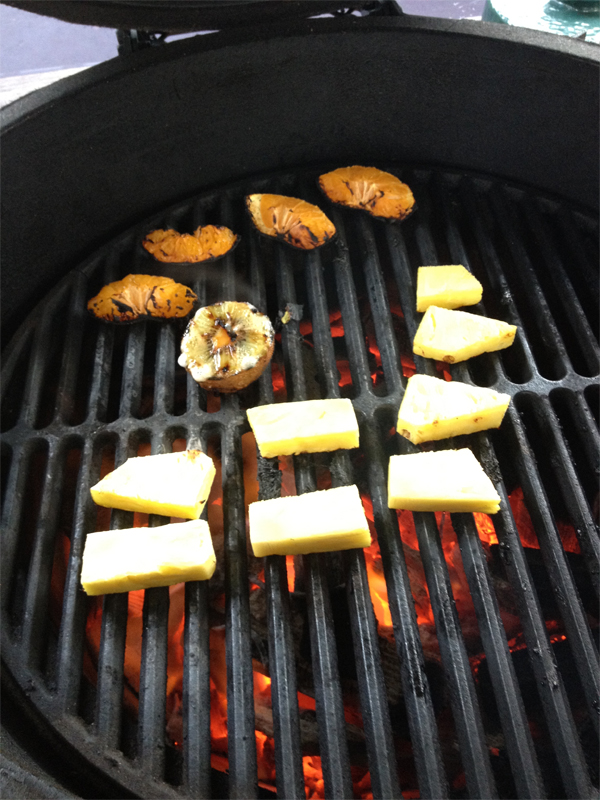
Grilling Fruit on the Big Green EggThere was quite a stir caused here recently in Clonmel, when the Big Green Egg double-decker bus arrived at the shop. I’ve owned a Big Green Egg for over a year now and as many of my followers on Twitter will know, I’m a huge advocate. It’s a different style of cooking, but develops flavours in a truly unique way.

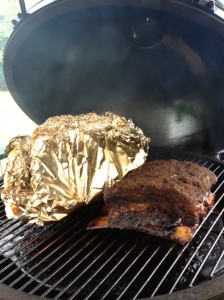
Brisket on the Bone

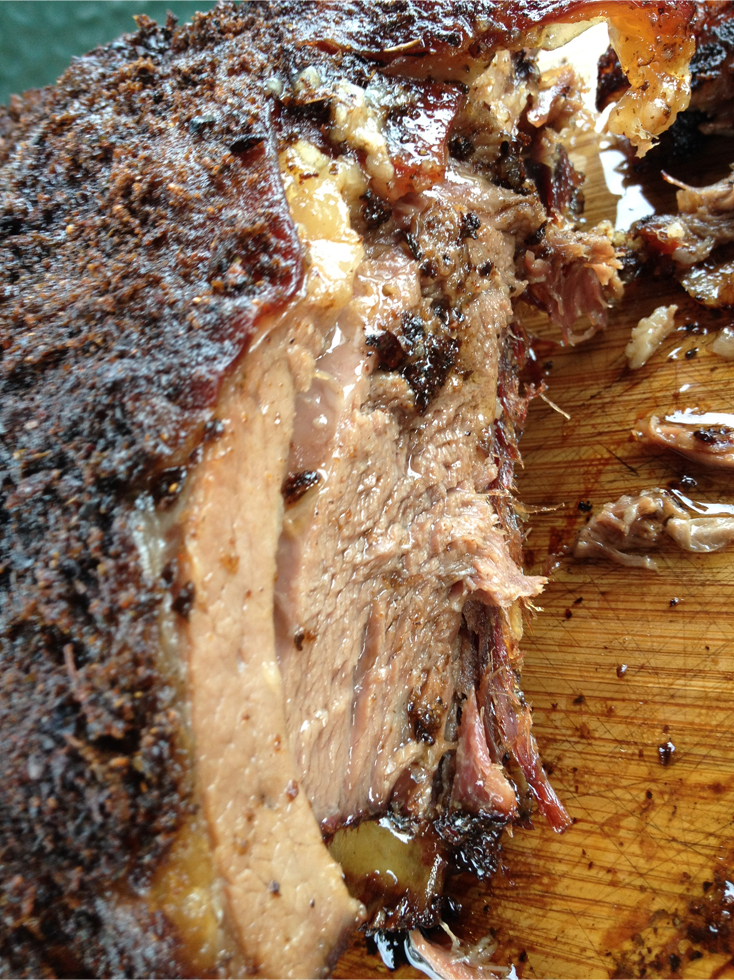
Things like shoulder of pork, beef short ribs, brisket on the bone are the cuts I enjoy most on the Big Green Egg. Last Christmas, I cooked the turkey on the Big Green Egg and it was voted by all our family and friends as the best ever. On the evening when the Big Green Egg bus pulled into town, we enjoyed brisket on the bone and beef short ribs, but for the first time ever, we cooked dessert on the egg. Grilled pineapple, grilled kiwi and grilled orange. I can’t recommend this enough!

The Big Green Egg Double Decker Rolls into Clonmel

You have to be prepared to wait as the cooking method is low and slow, about 9 hours for brisket on the bone, but the result is amazing and the subsequent meals, truly memorable.


9 Hour Slow Cooked Brisket on the Bone

I attach a link to Adam Perry Lang’s website and to the Big Green Egg website which are great resources for learning about this truly magnificent cooker.

We hope you enjoyed reading this post by Pat Whelan of James Whelan Butchers. Pat is a 5th generation butcher, cook book author and the director of  James Whelan Butchers with shops in Clonmel, the Avoca Handweavers Rathcoole and Kilmacanogue, Dunnes Stores Cornelscourt, Rathmines and Swords in Dublin. Sign up to our newsletter for more updates from James Whelan Butchers

James Whelan Butchers: Down Mexico Way

Posted on Friday, July 6th, 2012 by Pat Whelan in Foodie Articles | No Comments »

Despite the incessant rain, the wind and the very unseasonal weather, in true Irish spirit I declare that it is the summer. You may still have to wear your wellies and a raincoat in order to use that shiny new bucket and shovel at the beach, but wear them we will in order to indulge in a little sandcastle building. It’s the summer and we eat ice cream and build sandcastles in the summer!

Mexican beef tacosWith the longer days my tastes change accordingly. There is nothing I enjoy more than a steak with fried onions and a huge plate of salad. I like rocket leaves mixed with handfuls of fresh chopped coriander and after that, whatever salad vegetables are to hand; red onions and a little cucumber are always good. I just love the taste of peppery rocket punctuated with the distinctive and aromatic flavour of feathery fresh coriander. The other evening I added a new side to my simple summer steak. I found two ripe avocados in the fridge with a red pepper and some spring onions. I chopped the pepper small and onions small, mashed the avocados and mixed the two with a squeeze of fresh lemon juice and a little seasoning. A simple guacamole, my mixed salad and a perfectly cooked steak covered in soft delicious fried onions; paradise on a plate. The guacamole was such a hit that it has now become an integral part of the dish. Everything was cooked or assembled from fresh food, it took a total of around 15 minutes to prepare and it was a feast fit for a king. Who said great food had to be complicated?

The guacamole got me thinking about Mexican food in general. I am sometimes cautious due to their love of myriad different types of chilli pepper, but the overall Mexican flavours are delicious and, if you are cooking at home, the chilli content can be controlled. Just because a recipe calls for forty of the hottest chillies around, doesn’t mean I have to put them in!

Interestingly much of the food we take for granted today was largely unknown in the western world until Christopher Columbus sailed to the Americas in the 16th century. Corn, tomatoes, peppers of all kinds, beans, courgettes, avocado, chocolate, vanilla and even turkeys were unknown. They were all found in Mexico. It has a long standing tradition with agriculture and historians reckon Mexico’s agricultural history is around the same age as the ancient Middle Eastern culture of cultivating crops.

While Mexico is famous for hot and spicy flavours and tomato based dishes there are other much more subtle dishes in the Mexican repertoire. If you are going to look at traditional Mexican recipes then I suggest you have a vague knowledge of chillies and peppers, because they are used a lot in Mexican food. There are many, many varieties of chilli in particular, but the common fresh green ones are serrano, jalapeno and poblano; these are all quite hot. The habanero is small and the hottest chilli known to man! That comes in red and green. If you are using dried chillies then a mild one is ‘ancho’ and a very hot chilli is chipotle. Chipotle is very popular with chefs at the moment and I’ve seen it mentioned in several recipes recently on TV and in magazines. Our common bell peppers are otherwise known as capsicums. Canned or bottled red peppers are called pimientos. Coriander is a favoured herb, while corn, tomatoes and beans are basic ingredients in many dishes. Rice also features quite heavily. Like any culture with such a rich food history there probably is no such thing as the iconic Mexican dish. Each region has its own favourites and collectively they come together to serve up the full colour fiesta that we know as Mexican favourites; tortillas, quesadillas (which are filled tortillas), my own favourite chimichangas and the famous Mexican taco.Guacamole

However having not been brought up in a Mexican kitchen it may be a little daunting to try and recreate the flavours to an authentic standard. I suggest instead that you look and seek inspiration and add those notes and tones of Mexico to your own favourite dishes for something little different. Try a basic chilli con carne which translates simply as ‘chilli with meat’. The right spices, some mince and a tin of red kidney beans makes for a tasty yet inexpensive supper. Take a basic flour tortilla, fill with your favourite cheese filling, fold over and fry on a pan for a quick quesadilla. These make excellent snacks for hungry children just in from school or play. Like many countries, Mexico also has its own version of meatballs. In fact meatballs the world over are pretty standard, it’s the sauces that create the uniqueness. In Mexico a mix of pork and beef mince are the basis, with onion, breadcrumb, oregano, cumin salt and pepper. The sauce is hot. It is prepared in a similar way to an Italian tomato sauce but the obvious difference is the addition of a chopped hot chipotle chilli.

The sun may not be shining outside but we can have sunshine on our plates by using a little imagination. For more inspiration drop by James Whelan Butchers in the Oakville Shopping Centre or Monkstown, Co. Dublin or why not visit us online where you’ll find us open 24/7.

We hope you enjoyed reading this post by Pat Whelan of James Whelan Butchers. Pat is a 5th generation butcher, cook book author and the director of  James Whelan Butchers with shops in Clonmel, the Avoca Handweavers Rathcoole and Kilmacanogue, Dunnes Stores Cornelscourt, Rathmines and Swords in Dublin. Sign up to our newsletter for more updates from James Whelan Butchers

James Whelan Butchers: Gastro Pub At Home

Posted on Tuesday, July 3rd, 2012 by Pat Whelan in Foodie Articles | No Comments »


‘Gastropub’, a word that would give you the idea that it is an establishment that is a pub but should you also want to eat, then the food is going to be above average. It should always prove to be a good gastronomic experience and not just an astronomic one when it comes to price. The rise of the gastropub has been an interesting one indeed. It has been largely embraced by Irish cities but the truth of the matter is that not all ‘gastropubs’ were created equal. Just because you have the menu written on a blackboard, the staff wear trendy retro floor length aprons and you’ve got a wooden floor does not automatically make you a gastropub; like it or not the food counts! It is often the case that fairly ordinary pub grub is served but the presentation has been pimped; again not good enough. Just because you serve the ‘hand cut’ chips in a fancy funnel or a little steel bucket won’t necessarily make them good chips. A real local potato genuinely cut by hand and cooked with care and attention in good quality oil will make the chip a good one.

The phenomenon of the gastropub is about to come of age. Most commentators agree that its genesis can be found in London twenty years ago. At the time many pubs in Britain were seen exclusively as places to drink and little emphasis was put on serving food. The ones that did meals had a distinct ‘Rovers Return’ feel and the choices were limited to the odd hotpot, cold dishes such as a ploughman’s lunch or very ordinary sandwiches served without any real passion. In the 1980s and into the 1990s pub grub expanded to include traditional British dishes such as steak and ale pie, shepherds pie, bangers and mash, fish and chips, homemade burgers and traditional roasts. We saw a similar rise in the popularity of eating in pubs here although it was mainly dominated by a lunchtime trade. It was certainly a way for any pub to grow its daytime business and of course with less and less people going home in the middle of the day there was a need. The menus also expanded to include the slightly more exotic – chicken curry, lasagna and chili con carne.

Braised Beef and Guinness CasseroleIn 1991 two men, David Eyre and Mike Belben, took over the Eagle pub in Clerkenwell in London. They went a step further with the food and created a restaurant within the pub and it was here that the term ‘gastropub’ was coined. It would take five years to gain popular usage and for the media to jump on it and then it exploded. Suddenly many pubs in Ireland and England took another look at the food they served and aspired to be a gastropub. New York is still enjoying a love affair with the term and Scandinavian countries got the bug around 2009 and the sector continues to thrive there.

So what is the story here these days? Well we got the bug early, being so close to Britain and the idea was indeed a good one. A welcoming establishment, less formal than a restaurant with excellent food and the casual ‘drop by’ atmosphere of a pub should add up to a pleasant combination. It often is a great formula, but for my money too many of these places concentrate on the décor and good food presentation but the soul of the food is missing. In many of these places you can be let down and the first bite and as the surroundings and presentation are usually good, that fall is quite great as an expectation has been built up.

I could go on but this isn’t about finding a good or bad gastropub, it’s about asking what we can learn from them and translate it into our own home cooking. The first thing is to look at the menu. There is a common thread; and that is familiar and fairly common inexpensive dishes. Braising steak, mince, lamb shanks, sausage and battered fish seem to be the basics. All these are relatively inexpensive meats. Some of them require long slow cooking and the general feel is quite rustic so, unlike scientific baking, there is more flexibility in method and ingredients. Finally the big lesson comes in the presentation. It is very true what they say in that we also eat with our eyes. The same dish presented a few different ways can make all the difference. Many gastropubs have given this area a great deal of thought and it works. Chips come in various vessels, dips are on the side in tiny dishes, sometimes plates are dispensed with and small tiles, slates or chopping boards are used in their place. Shape or colour is often unusual, vintage or just mismatched with great effect. There is often a little culinary theatre employed – the steak knife appears speared through something within the dish, you get a part of the food wrapped up in some way that you have to participate to open it and put it on the plate, things have to be spilled and poured to create the finished meal. It’s all great fun but when we strip it back it just requires a little thought. For the average family buying little buckets for the chips or tiny dip dishes is not prohibitive at all. You can find allsorts of vessels and containers under €2 each that can be used for food presentation. All it takes is a little imagination.Steak and Kidney Pie

It’s not about trying to create the gastropub experience every time you serve steak pie or fish and chips; it’s about surprising and mixing it up every now and again. It’s about taking an easy and fairly common family meal and turning it into something special. It is often the case that we save our best cutlery, good delph, crystal glasses and excellent presentation skills for when we have people over. So we go to all this trouble for people that drop by rarely and that we see occasionally. Yet for the ones we love the most and those that support us the best, our own family, we are happy to give them the ordinary glasses and everyday plates! Of course I appreciate that it’s not always possible, but every now and again do something special for your nearest and dearest just to surprise them. The bangers and mash will still cost the same but it will feel like an entirely different meal. Bring the gastropub experience home and make it something that all the family can enjoy.  

We hope you enjoyed reading this post by Pat Whelan of James Whelan Butchers. Pat is a 5th generation butcher, cook book author and the director of  James Whelan Butchers with shops in Clonmel, the Avoca Handweavers Rathcoole and Kilmacanogue, Dunnes Stores Cornelscourt, Rathmines and Swords in Dublin. Sign up to our newsletter for more updates from James Whelan Butchers

James Whelan Butchers: Patriotic Food

Posted on Wednesday, June 27th, 2012 by Pat Whelan in Foodie Articles, Good Food | 1 Comment »


We share a great deal in common with our nearest neighbour the UK. We don’t think anything of watching British television or reading British magazines and embracing the texts and programmes as our own. We’ll watch cookery programmes, largely presented by British chefs and cooks and we forget we are watching something from another country as the ingredients, methods and tools used are all totally familiar. An indigenous French or Italian cookery programme would be watched with an entirely different mindset. Indeed even programmes made in America where the language is the same have obvious discrepancies when it comes to ingredients in particular. I am not aware of a general Irish supermarket that sells Marshmallow Cream or Graham Crackers, nor have I ever attempted to make a corn dog! Yet shows from Britain are watched avidly as if they are our own. Our own chefs even get in on the act and often pop up on UK shows and even host their own British made series.

Then a year like 2012 emerges when Britain is doing something unique to their heritage. Suddenly the food magazines and programmes unmask themselves as the British publications they are. I’m not talking about the Olympics, as we will have our own team, but I’m thinking of the Queen’s diamond jubilee. This year marks her 60th year as a monarch. To celebrate the fact that she has sat on the throne for six decades, Britain is currently in jubilee overdrive. Every food magazine and website is full of food for celebratory street parties and picnics. I’m suddenly aware of the huge differences between our nations. When was the last street party you attended? We just don’t tend to go in for it here. British food is being talked up and the other striking thing is their pride in the Union Jack and their enthusiasm to display it as a national emblem. Sadly in Ireland, apart from St Patrick’s Day, we don’t have the same passion for our flag. We don’t make cupcakes with the tricolour on the top or green, white and orange iced biscuits regularly. We don’t decorate our food with little flags or erect tricolour bunting to celebrate events. Our flag has been hijacked politically to a certain extent and that renders it less fashionable to us than the Union Jack is to the British. While I’m not envious of their monarchy, I am slightly envious at their freedom to express their patriotism. In Ireland being patriotic can often be mistaken for being political, when the two are not interdependent.

Anyway this whole British nostalgia trend got me wondering what we as a nation were doing in terms of food around the time of the Queen’s coronation. When they were embracing new dishes like Coronation Chicken were we creating new Irish dishes? So for the purposes of this article I took myself back to the 1950s.

The first thing we must note is that the food in the 1950s was undoubtedly more wholesome and closer to its natural state than it is nowadays. There wasn’t a buffalo flavoured crisp, Indian spiced nacho or any golden arches in sight. Food was quite simple; echoing life in general at that time. The trend was three meals a day, no snacking and little in the way of convenience food. Pasta and rice weren’t even on the radar, let alone be considered ‘foreign muck’. Luxury items such as chocolate were treats in the real sense of the word, meaning eaten occasionally as a moment to be savoured and enjoyed. I hear children today asking for food ‘treats’ daily, which effectively makes a nonsense of the word. One thing is certain that food in 1950s Ireland wasn’t the hobby or interest that it is today. Food was enjoyed, definitely, but it was as much about fuel and sustenance as it was about pleasure and interest. The proliferation of the amateur gourmand that abounds today would leave our 1950s cousins baffled.

Interestingly while food from that period is deemed more honest and real perhaps, it would also have to be said that if we were to adopt the average 1950s menu in today’s society we might find ourselves in bigger trouble with obesity than we already are. This has to do with lifestyle than the food itself. Our friends from the mid 20th century were much more active on a day to day basis and therefore burned up so many more calories than we do thanks to the modern advances. The restaurant scene was also on the cusp of birth in those days. Certainly outside of Dublin, stand alone restaurants for evening dining were uncommon if non existent and it was the 1950s that saw their relative small beginnings. Fish in Ireland has also enjoyed a more positive change. For an island nation we are not celebrated globally for our fish cuisine and that’s probably because fish was eaten as a penance with religious overtones. What we did have in Ireland in the 1950s was lots of meat, fresh eggs and real cream in abundance, unlike our British neigbours who were still filling in ration books. The 1950s saw the beginning of the food landscape we have today. It was the genesis of modern cooking, good baking and great quality food. Considering only one hundred years earlier Ireland had lost a sizeable number of the population to famine, this was a rapid turnaround. Our towns were evolving, farms had grown bigger and food was relatively plentiful and fresh. But it would be the 1960s and 1970s that would herald the biggest changes. So when the Queen was being crowned Ireland was a nation of bacon, sausage and eggs, or boiled eggs or porridge for breakfast. Meat and at least two vegetables in the middle of the day, often in stew form, plus a dessert while the evening saw a lighter bread based meal; soup or egg sandwiches for example. Friday was fish day and Sunday was the day for buns and cakes.

Today we can still choose natural and I would urge you to, but now we have knowledge, variety, better ingredients, better cooking methods and so, inevitably, better flavours and taste. Our biggest problem is food identity. We have come so far and absorbed so many cuisines that we have emerged a great food nation. Irish food today is super. We have great producers, artisans, chefs and restaurants. We have markets and small sole owned shops brimming with wonderful ingredients. We might not have an event as such to hang our hat on, but that shouldn’t stop us flying our Irish food flag proudly. Eat Irish meat, buy Irish cheese and enjoy and source Irish foodstuffs as much as you can; it’s good for our health and our economy and there is nothing wrong in being proud to be Irish.

We hope you enjoyed reading this post by Pat Whelan of James Whelan Butchers. Pat is a 5th generation butcher, cook book author and the director of  James Whelan Butchers with shops in Clonmel, the Avoca Handweavers Rathcoole and Kilmacanogue, Dunnes Stores Cornelscourt, Rathmines and Swords in Dublin. Sign up to our newsletter for more updates from James Whelan Butchers

James Whelan Butchers: Launch of Wagyu

Posted on Friday, June 22nd, 2012 by Pat Whelan in Good Food | 3 Comments »

Pat Whelan's Wagyu HerdWe’re delighted to announce the launch of our Wagyu beef counter. Growing our Wagyu beef has been something of an epic journey and we’re delighted to be able to share it with you. We have limited stock which is chilling nicely in our cold room and available for delivery in the next 2 weeks. To launch our Wagyu beef, we’re giving away five €50 vouchers to spend at our Wagyu counter. To enter this promotion simply retweet our tweets and sign up for our newsletter. If you are already a newsletter recipient you are automatically entered in the draw. Hope you have a great weekend and good luck!

We hope you enjoyed reading this post by Pat Whelan of James Whelan Butchers. Pat is a 5th generation butcher, cook book author and the director of  James Whelan Butchers with shops in Clonmel, the Avoca Handweavers Rathcoole and Kilmacanogue, Dunnes Stores Cornelscourt, Rathmines and Swords in Dublin. Sign up to our newsletter for more updates from James Whelan Butchers

James Whelan Butchers: Citrus Sunshine

Posted on Friday, June 22nd, 2012 by Pat Whelan in Good Food | No Comments »

The weather is strange at present, even by Irish standards. The rain is expected but the yo-yo-ing temperatures are beyond odd. Normally at this time of year the summer clothes are well and truly out, even if the day is slightly grey and overcast, as it is usually mild. Despite the longer, brighter evenings there is still an abundance of overcoats; unusually so if you ask me. I love each and every season but I’m not keen on this mixture. As far as I’m concerned it’s now early summer and so even if it looks wintry on the outside I think we should cook like summer on the inside. The difficulty is the rain and the cold don’t encourage light summery foods. A salad seems less than satisfying when the wind is howling and the rain pelting off the windows. There is a way around the dilemma and that’s by cooking warm foods with a summery attitude.

Looking to warmer countries the obvious and easy way to do this is by adding fruit. Nothing is more summery than oranges, lemons and other fresh fruits. We seem to leave it to the Chinese to add citrus flavours to meat, but Mexico, South America, Italy, Portugal and Spain also use their locally grown fruits to great advantage in savoury dishes. Summer Fruit

Fruit juices have traditionally been used as marinades for meat. The acid found in fruit naturally tenderises the meat. When put together the sweet of the fruit works its magic with the rich flavours of the meat and the resulting alchemy can be quite the treat for your taste buds. Marinades are often associated with barbeque meats and while they do work really well there’s nothing to stop you grilling indoors. If you are taking the marinade route be sure to keep it in the fridge and well covered. Three to four hours marinating should do it or overnight if possible, but be aware that you can overdo it. Left too long, meat can start to disintegrate in the acidic bath. Never underestimate the acidity of citrus fruits in particular.

I caught an episode of Saturday Cookbook last week where chef Mark Sargeant made a lovely Sticky Lemon Chicken recipe. I downloaded it and then, being me, wondered what it would be like if I substituted the lemon for an orange? Obviously it immediately changed the flavour but, I thought, in a very good way. It won’t work every time but there are many recipes using lemons that could be changed for oranges to give a little kick.

We are used to certain fruit and meat combinations; Duck a l’orange, Lemon Chicken, Sweet and Sour Chicken or Ham and Pineapple; all quite common. I had the great fortune while abroad once to have a superb beef in orange sauce. I didn’t think it could get much better until the same restaurant, a few days later, served a rather unusual dish of Spicy Orange Oxtail. Curiosity alone made me try it and it was great. I tried to recreate the dish at home but without much success. However I did find a recipe on line which came pretty close. The website was lowcarbcooking.co.nz and I did make a few changes, but basically it took a rather inexpensive oxtail and with a little time, spice and citrus, transformed it into something very special. I have added my adjusted recipe from that site at the end, should you want to try it.Lemon Chicken

If you don’t want the full on sticky and sweet flavour of fruit you could try just using the zest to give a little oomph. Lemon zest grated into Italian meatballs always adds a summery dimension. You could also mix oranges and lemons. I often add a little zest to chicken stuffing and then quarter up the fruit and let it cook in the cavity of the chicken. The resulting juices always lend something extra to the gravy. Don’t forget lamb and pork will also work well with orange.

If you are a little unsure then you could try making a fruit sauce. If you think about it most gravies and savoury sauces can be quite calorie laden. A fruit sauce can be a healthy, summer alternative. Freshly made fruit sauces are packed with nutrients. Personally I would put them with pork and poultry. If you want to dress up a midweek chop, there’s nothing like it. There are also great fruit choices; fresh pineapple, apple, orange, mango, kiwi, lemon, lime and even melon (but not watermelon). Salsa type sauces are probably the easiest. All you have to do is chop the fruits small in whatever combination you choose. Simmer them over a low heat in a little natural fruit juice until it dissolves slightly and thickens into a delicious sweet chunky sauce; it couldn’t be easier. A little extra effort is required if you want to make a smooth plum or peach sauce but it’s not difficult and there are many recipes to try. Don’t neglect traditional apple sauce for pork. If you think a shop bought one is good, try making your own and you may never go back.

It may not look like summer but that’s no reason not to cook like summer. Drop by the James Whelan Butchers’ website for some more inspiring ideas or drop into our shop at Oakville Shopping Centre Clonmel, where our craft butchers have many fresh, marinated meats ready prepared.

We hope you enjoyed reading this post by Pat Whelan of James Whelan Butchers. Pat is a 5th generation butcher, cook book author and the director of  James Whelan Butchers with shops in Clonmel, the Avoca Handweavers Rathcoole and Kilmacanogue, Dunnes Stores Cornelscourt, Rathmines and Swords in Dublin. Sign up to our newsletter for more updates from James Whelan Butchers

James Whelan Butchers: It’s A Butchers Life for Me

Posted on Friday, June 22nd, 2012 by Pat Whelan in Foodie Articles, Good Food | 2 Comments »

Recently, I had the great pleasure of working with Vodafone as part of group of Irish businesses who are working together, creating opportunities with one another and connecting with customers in unique ways. During that time, they followed me for two days capturing every aspect of our business from the farm and every aspect of that through to the abattoir, the maturation process of our meat and onto our shops in Clonmel and Avoca, Monkstown. They have given me some great images that they captured on that journey and I’ve put them in a slideshow to share with you. I hope you enjoy them.

  • Another great delivery by James Whelan Butchers

We hope you enjoyed reading this post by Pat Whelan of James Whelan Butchers. Pat is a 5th generation butcher, cook book author and the director of  James Whelan Butchers with shops in Clonmel, the Avoca Handweavers Rathcoole and Kilmacanogue, Dunnes Stores Cornelscourt, Rathmines and Swords in Dublin. Sign up to our newsletter for more updates from James Whelan Butchers

James Whelan Butchers: Opportunity Is Out There

Posted on Friday, June 22nd, 2012 by Pat Whelan in Foodie Articles, Good Food, Press | No Comments »

Against a background of ever-changing technologies,  businesses are adapting their ways of working. Here’s a video on how four Irish companies are using technology and unique ways of working to progress their business.

The internet has given me the opportunity to have a shop window in everyone’s home. I think we have to look at the mainstream technology that’s available to us today and make it work in a relevant way for our unique businesses. It’s not about significant financial investment, it’s about being clever, identifying an opportunity and then using everyday business tools to cease and maximize that opportunity. Is feidir linn!

We hope you enjoyed reading this post by Pat Whelan of James Whelan Butchers. Pat is a 5th generation butcher, cook book author and the director of  James Whelan Butchers with shops in Clonmel, the Avoca Handweavers Rathcoole and Kilmacanogue, Dunnes Stores Cornelscourt, Rathmines and Swords in Dublin. Sign up to our newsletter for more updates from James Whelan Butchers