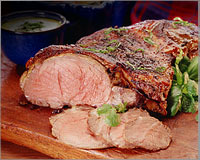
James Whelan Butchers: Gastro Pub At Home

Posted on Tuesday, July 3rd, 2012 by Pat Whelan in Foodie Articles | No Comments »


‘Gastropub’, a word that would give you the idea that it is an establishment that is a pub but should you also want to eat, then the food is going to be above average. It should always prove to be a good gastronomic experience and not just an astronomic one when it comes to price. The rise of the gastropub has been an interesting one indeed. It has been largely embraced by Irish cities but the truth of the matter is that not all ‘gastropubs’ were created equal. Just because you have the menu written on a blackboard, the staff wear trendy retro floor length aprons and you’ve got a wooden floor does not automatically make you a gastropub; like it or not the food counts! It is often the case that fairly ordinary pub grub is served but the presentation has been pimped; again not good enough. Just because you serve the ‘hand cut’ chips in a fancy funnel or a little steel bucket won’t necessarily make them good chips. A real local potato genuinely cut by hand and cooked with care and attention in good quality oil will make the chip a good one.

The phenomenon of the gastropub is about to come of age. Most commentators agree that its genesis can be found in London twenty years ago. At the time many pubs in Britain were seen exclusively as places to drink and little emphasis was put on serving food. The ones that did meals had a distinct ‘Rovers Return’ feel and the choices were limited to the odd hotpot, cold dishes such as a ploughman’s lunch or very ordinary sandwiches served without any real passion. In the 1980s and into the 1990s pub grub expanded to include traditional British dishes such as steak and ale pie, shepherds pie, bangers and mash, fish and chips, homemade burgers and traditional roasts. We saw a similar rise in the popularity of eating in pubs here although it was mainly dominated by a lunchtime trade. It was certainly a way for any pub to grow its daytime business and of course with less and less people going home in the middle of the day there was a need. The menus also expanded to include the slightly more exotic – chicken curry, lasagna and chili con carne.

Braised Beef and Guinness CasseroleIn 1991 two men, David Eyre and Mike Belben, took over the Eagle pub in Clerkenwell in London. They went a step further with the food and created a restaurant within the pub and it was here that the term ‘gastropub’ was coined. It would take five years to gain popular usage and for the media to jump on it and then it exploded. Suddenly many pubs in Ireland and England took another look at the food they served and aspired to be a gastropub. New York is still enjoying a love affair with the term and Scandinavian countries got the bug around 2009 and the sector continues to thrive there.

So what is the story here these days? Well we got the bug early, being so close to Britain and the idea was indeed a good one. A welcoming establishment, less formal than a restaurant with excellent food and the casual ‘drop by’ atmosphere of a pub should add up to a pleasant combination. It often is a great formula, but for my money too many of these places concentrate on the décor and good food presentation but the soul of the food is missing. In many of these places you can be let down and the first bite and as the surroundings and presentation are usually good, that fall is quite great as an expectation has been built up.

I could go on but this isn’t about finding a good or bad gastropub, it’s about asking what we can learn from them and translate it into our own home cooking. The first thing is to look at the menu. There is a common thread; and that is familiar and fairly common inexpensive dishes. Braising steak, mince, lamb shanks, sausage and battered fish seem to be the basics. All these are relatively inexpensive meats. Some of them require long slow cooking and the general feel is quite rustic so, unlike scientific baking, there is more flexibility in method and ingredients. Finally the big lesson comes in the presentation. It is very true what they say in that we also eat with our eyes. The same dish presented a few different ways can make all the difference. Many gastropubs have given this area a great deal of thought and it works. Chips come in various vessels, dips are on the side in tiny dishes, sometimes plates are dispensed with and small tiles, slates or chopping boards are used in their place. Shape or colour is often unusual, vintage or just mismatched with great effect. There is often a little culinary theatre employed – the steak knife appears speared through something within the dish, you get a part of the food wrapped up in some way that you have to participate to open it and put it on the plate, things have to be spilled and poured to create the finished meal. It’s all great fun but when we strip it back it just requires a little thought. For the average family buying little buckets for the chips or tiny dip dishes is not prohibitive at all. You can find allsorts of vessels and containers under €2 each that can be used for food presentation. All it takes is a little imagination.Steak and Kidney Pie
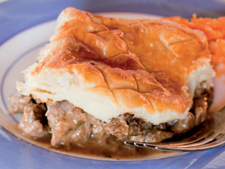
It’s not about trying to create the gastropub experience every time you serve steak pie or fish and chips; it’s about surprising and mixing it up every now and again. It’s about taking an easy and fairly common family meal and turning it into something special. It is often the case that we save our best cutlery, good delph, crystal glasses and excellent presentation skills for when we have people over. So we go to all this trouble for people that drop by rarely and that we see occasionally. Yet for the ones we love the most and those that support us the best, our own family, we are happy to give them the ordinary glasses and everyday plates! Of course I appreciate that it’s not always possible, but every now and again do something special for your nearest and dearest just to surprise them. The bangers and mash will still cost the same but it will feel like an entirely different meal. Bring the gastropub experience home and make it something that all the family can enjoy.  

We hope you enjoyed reading this post by Pat Whelan of James Whelan Butchers. Pat is a 5th generation butcher, cook book author and the director of  James Whelan Butchers with shops in Clonmel, the Avoca Handweavers Rathcoole and Kilmacanogue, Dunnes Stores Cornelscourt, Rathmines and Swords in Dublin. Sign up to our newsletter for more updates from James Whelan Butchers

James Whelan Butchers: Patriotic Food

Posted on Wednesday, June 27th, 2012 by Pat Whelan in Foodie Articles, Good Food | 1 Comment »


We share a great deal in common with our nearest neighbour the UK. We don’t think anything of watching British television or reading British magazines and embracing the texts and programmes as our own. We’ll watch cookery programmes, largely presented by British chefs and cooks and we forget we are watching something from another country as the ingredients, methods and tools used are all totally familiar. An indigenous French or Italian cookery programme would be watched with an entirely different mindset. Indeed even programmes made in America where the language is the same have obvious discrepancies when it comes to ingredients in particular. I am not aware of a general Irish supermarket that sells Marshmallow Cream or Graham Crackers, nor have I ever attempted to make a corn dog! Yet shows from Britain are watched avidly as if they are our own. Our own chefs even get in on the act and often pop up on UK shows and even host their own British made series.

Then a year like 2012 emerges when Britain is doing something unique to their heritage. Suddenly the food magazines and programmes unmask themselves as the British publications they are. I’m not talking about the Olympics, as we will have our own team, but I’m thinking of the Queen’s diamond jubilee. This year marks her 60th year as a monarch. To celebrate the fact that she has sat on the throne for six decades, Britain is currently in jubilee overdrive. Every food magazine and website is full of food for celebratory street parties and picnics. I’m suddenly aware of the huge differences between our nations. When was the last street party you attended? We just don’t tend to go in for it here. British food is being talked up and the other striking thing is their pride in the Union Jack and their enthusiasm to display it as a national emblem. Sadly in Ireland, apart from St Patrick’s Day, we don’t have the same passion for our flag. We don’t make cupcakes with the tricolour on the top or green, white and orange iced biscuits regularly. We don’t decorate our food with little flags or erect tricolour bunting to celebrate events. Our flag has been hijacked politically to a certain extent and that renders it less fashionable to us than the Union Jack is to the British. While I’m not envious of their monarchy, I am slightly envious at their freedom to express their patriotism. In Ireland being patriotic can often be mistaken for being political, when the two are not interdependent.

Anyway this whole British nostalgia trend got me wondering what we as a nation were doing in terms of food around the time of the Queen’s coronation. When they were embracing new dishes like Coronation Chicken were we creating new Irish dishes? So for the purposes of this article I took myself back to the 1950s.

The first thing we must note is that the food in the 1950s was undoubtedly more wholesome and closer to its natural state than it is nowadays. There wasn’t a buffalo flavoured crisp, Indian spiced nacho or any golden arches in sight. Food was quite simple; echoing life in general at that time. The trend was three meals a day, no snacking and little in the way of convenience food. Pasta and rice weren’t even on the radar, let alone be considered ‘foreign muck’. Luxury items such as chocolate were treats in the real sense of the word, meaning eaten occasionally as a moment to be savoured and enjoyed. I hear children today asking for food ‘treats’ daily, which effectively makes a nonsense of the word. One thing is certain that food in 1950s Ireland wasn’t the hobby or interest that it is today. Food was enjoyed, definitely, but it was as much about fuel and sustenance as it was about pleasure and interest. The proliferation of the amateur gourmand that abounds today would leave our 1950s cousins baffled.

Interestingly while food from that period is deemed more honest and real perhaps, it would also have to be said that if we were to adopt the average 1950s menu in today’s society we might find ourselves in bigger trouble with obesity than we already are. This has to do with lifestyle than the food itself. Our friends from the mid 20th century were much more active on a day to day basis and therefore burned up so many more calories than we do thanks to the modern advances. The restaurant scene was also on the cusp of birth in those days. Certainly outside of Dublin, stand alone restaurants for evening dining were uncommon if non existent and it was the 1950s that saw their relative small beginnings. Fish in Ireland has also enjoyed a more positive change. For an island nation we are not celebrated globally for our fish cuisine and that’s probably because fish was eaten as a penance with religious overtones. What we did have in Ireland in the 1950s was lots of meat, fresh eggs and real cream in abundance, unlike our British neigbours who were still filling in ration books. The 1950s saw the beginning of the food landscape we have today. It was the genesis of modern cooking, good baking and great quality food. Considering only one hundred years earlier Ireland had lost a sizeable number of the population to famine, this was a rapid turnaround. Our towns were evolving, farms had grown bigger and food was relatively plentiful and fresh. But it would be the 1960s and 1970s that would herald the biggest changes. So when the Queen was being crowned Ireland was a nation of bacon, sausage and eggs, or boiled eggs or porridge for breakfast. Meat and at least two vegetables in the middle of the day, often in stew form, plus a dessert while the evening saw a lighter bread based meal; soup or egg sandwiches for example. Friday was fish day and Sunday was the day for buns and cakes.

Today we can still choose natural and I would urge you to, but now we have knowledge, variety, better ingredients, better cooking methods and so, inevitably, better flavours and taste. Our biggest problem is food identity. We have come so far and absorbed so many cuisines that we have emerged a great food nation. Irish food today is super. We have great producers, artisans, chefs and restaurants. We have markets and small sole owned shops brimming with wonderful ingredients. We might not have an event as such to hang our hat on, but that shouldn’t stop us flying our Irish food flag proudly. Eat Irish meat, buy Irish cheese and enjoy and source Irish foodstuffs as much as you can; it’s good for our health and our economy and there is nothing wrong in being proud to be Irish.

We hope you enjoyed reading this post by Pat Whelan of James Whelan Butchers. Pat is a 5th generation butcher, cook book author and the director of  James Whelan Butchers with shops in Clonmel, the Avoca Handweavers Rathcoole and Kilmacanogue, Dunnes Stores Cornelscourt, Rathmines and Swords in Dublin. Sign up to our newsletter for more updates from James Whelan Butchers
James Whelan Butchers: Launch of Wagyu

Posted on Friday, June 22nd, 2012 by Pat Whelan in Good Food | 3 Comments »

Pat Whelan's Wagyu HerdWe’re delighted to announce the launch of our Wagyu beef counter. Growing our Wagyu beef has been something of an epic journey and we’re delighted to be able to share it with you. We have limited stock which is chilling nicely in our cold room and available for delivery in the next 2 weeks. To launch our Wagyu beef, we’re giving away five €50 vouchers to spend at our Wagyu counter. To enter this promotion simply retweet our tweets and sign up for our newsletter. If you are already a newsletter recipient you are automatically entered in the draw. Hope you have a great weekend and good luck!

We hope you enjoyed reading this post by Pat Whelan of James Whelan Butchers. Pat is a 5th generation butcher, cook book author and the director of  James Whelan Butchers with shops in Clonmel, the Avoca Handweavers Rathcoole and Kilmacanogue, Dunnes Stores Cornelscourt, Rathmines and Swords in Dublin. Sign up to our newsletter for more updates from James Whelan Butchers
James Whelan Butchers: Citrus Sunshine

Posted on Friday, June 22nd, 2012 by Pat Whelan in Good Food | No Comments »

The weather is strange at present, even by Irish standards. The rain is expected but the yo-yo-ing temperatures are beyond odd. Normally at this time of year the summer clothes are well and truly out, even if the day is slightly grey and overcast, as it is usually mild. Despite the longer, brighter evenings there is still an abundance of overcoats; unusually so if you ask me. I love each and every season but I’m not keen on this mixture. As far as I’m concerned it’s now early summer and so even if it looks wintry on the outside I think we should cook like summer on the inside. The difficulty is the rain and the cold don’t encourage light summery foods. A salad seems less than satisfying when the wind is howling and the rain pelting off the windows. There is a way around the dilemma and that’s by cooking warm foods with a summery attitude.

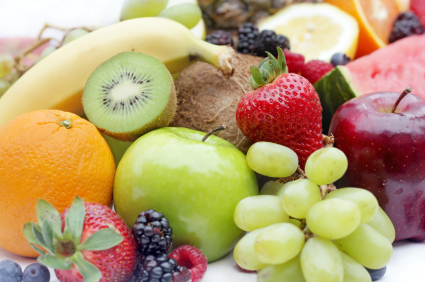
Looking to warmer countries the obvious and easy way to do this is by adding fruit. Nothing is more summery than oranges, lemons and other fresh fruits. We seem to leave it to the Chinese to add citrus flavours to meat, but Mexico, South America, Italy, Portugal and Spain also use their locally grown fruits to great advantage in savoury dishes. Summer Fruit

Fruit juices have traditionally been used as marinades for meat. The acid found in fruit naturally tenderises the meat. When put together the sweet of the fruit works its magic with the rich flavours of the meat and the resulting alchemy can be quite the treat for your taste buds. Marinades are often associated with barbeque meats and while they do work really well there’s nothing to stop you grilling indoors. If you are taking the marinade route be sure to keep it in the fridge and well covered. Three to four hours marinating should do it or overnight if possible, but be aware that you can overdo it. Left too long, meat can start to disintegrate in the acidic bath. Never underestimate the acidity of citrus fruits in particular.

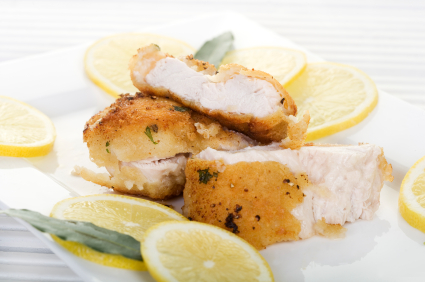
I caught an episode of Saturday Cookbook last week where chef Mark Sargeant made a lovely Sticky Lemon Chicken recipe. I downloaded it and then, being me, wondered what it would be like if I substituted the lemon for an orange? Obviously it immediately changed the flavour but, I thought, in a very good way. It won’t work every time but there are many recipes using lemons that could be changed for oranges to give a little kick.

We are used to certain fruit and meat combinations; Duck a l’orange, Lemon Chicken, Sweet and Sour Chicken or Ham and Pineapple; all quite common. I had the great fortune while abroad once to have a superb beef in orange sauce. I didn’t think it could get much better until the same restaurant, a few days later, served a rather unusual dish of Spicy Orange Oxtail. Curiosity alone made me try it and it was great. I tried to recreate the dish at home but without much success. However I did find a recipe on line which came pretty close. The website was lowcarbcooking.co.nz and I did make a few changes, but basically it took a rather inexpensive oxtail and with a little time, spice and citrus, transformed it into something very special. I have added my adjusted recipe from that site at the end, should you want to try it.Lemon Chicken

If you don’t want the full on sticky and sweet flavour of fruit you could try just using the zest to give a little oomph. Lemon zest grated into Italian meatballs always adds a summery dimension. You could also mix oranges and lemons. I often add a little zest to chicken stuffing and then quarter up the fruit and let it cook in the cavity of the chicken. The resulting juices always lend something extra to the gravy. Don’t forget lamb and pork will also work well with orange.

If you are a little unsure then you could try making a fruit sauce. If you think about it most gravies and savoury sauces can be quite calorie laden. A fruit sauce can be a healthy, summer alternative. Freshly made fruit sauces are packed with nutrients. Personally I would put them with pork and poultry. If you want to dress up a midweek chop, there’s nothing like it. There are also great fruit choices; fresh pineapple, apple, orange, mango, kiwi, lemon, lime and even melon (but not watermelon). Salsa type sauces are probably the easiest. All you have to do is chop the fruits small in whatever combination you choose. Simmer them over a low heat in a little natural fruit juice until it dissolves slightly and thickens into a delicious sweet chunky sauce; it couldn’t be easier. A little extra effort is required if you want to make a smooth plum or peach sauce but it’s not difficult and there are many recipes to try. Don’t neglect traditional apple sauce for pork. If you think a shop bought one is good, try making your own and you may never go back.

It may not look like summer but that’s no reason not to cook like summer. Drop by the James Whelan Butchers’ website for some more inspiring ideas or drop into our shop at Oakville Shopping Centre Clonmel, where our craft butchers have many fresh, marinated meats ready prepared.

We hope you enjoyed reading this post by Pat Whelan of James Whelan Butchers. Pat is a 5th generation butcher, cook book author and the director of  James Whelan Butchers with shops in Clonmel, the Avoca Handweavers Rathcoole and Kilmacanogue, Dunnes Stores Cornelscourt, Rathmines and Swords in Dublin. Sign up to our newsletter for more updates from James Whelan Butchers

James Whelan Butchers: It’s A Butchers Life for Me

Posted on Friday, June 22nd, 2012 by Pat Whelan in Foodie Articles, Good Food | 2 Comments »

Recently, I had the great pleasure of working with Vodafone as part of group of Irish businesses who are working together, creating opportunities with one another and connecting with customers in unique ways. During that time, they followed me for two days capturing every aspect of our business from the farm and every aspect of that through to the abattoir, the maturation process of our meat and onto our shops in Clonmel and Avoca, Monkstown. They have given me some great images that they captured on that journey and I’ve put them in a slideshow to share with you. I hope you enjoy them.

  • Another great delivery by James Whelan Butchers

We hope you enjoyed reading this post by Pat Whelan of James Whelan Butchers. Pat is a 5th generation butcher, cook book author and the director of  James Whelan Butchers with shops in Clonmel, the Avoca Handweavers Rathcoole and Kilmacanogue, Dunnes Stores Cornelscourt, Rathmines and Swords in Dublin. Sign up to our newsletter for more updates from James Whelan Butchers

James Whelan Butchers: Opportunity Is Out There

Posted on Friday, June 22nd, 2012 by Pat Whelan in Foodie Articles, Good Food, Press | No Comments »

Against a background of ever-changing technologies,  businesses are adapting their ways of working. Here’s a video on how four Irish companies are using technology and unique ways of working to progress their business.

The internet has given me the opportunity to have a shop window in everyone’s home. I think we have to look at the mainstream technology that’s available to us today and make it work in a relevant way for our unique businesses. It’s not about significant financial investment, it’s about being clever, identifying an opportunity and then using everyday business tools to cease and maximize that opportunity. Is feidir linn!

We hope you enjoyed reading this post by Pat Whelan of James Whelan Butchers. Pat is a 5th generation butcher, cook book author and the director of  James Whelan Butchers with shops in Clonmel, the Avoca Handweavers Rathcoole and Kilmacanogue, Dunnes Stores Cornelscourt, Rathmines and Swords in Dublin. Sign up to our newsletter for more updates from James Whelan Butchers

James Whelan Butchers: Baking Confidence

Posted on Wednesday, June 20th, 2012 by Pat Whelan in Foodie Articles, Good Food | No Comments »


I had an absolutely filthy thought recently. It was mid afternoon and I was working on some very boring paperwork in the office when suddenly, out of nowhere, a soft, slightly warm and moist fat scone slathered with real butter, juicy raspberry jam with a generous dollop of cream sauntered nonchalantly into my thoughts. I tried hard to ignore this naughty scone that was salaciously dancing around my head and winking provocatively at me, as I knew to respond would mean leaving my desk and the dull but important task at hand.

If I’m honest naughty thoughts, like this, are a common distraction during my day. I should add that it could just as easily have be a savoury and sophisticated seductress rather than something simple and sweet; one can never predict other than to know it is usually bad, very bad.

The problem I generally have with the sweet wickedness is that it is often better in my head than it ever actually tastes. This is, sadly, a reflection on the mediocrity of bakers at large, rather than my over active imagination. We’ve all been in that place where the carrot cake, cheese cake, cherry loaf or cupcake seduces us with their enviable good looks from behind a glass case. It is often bought with the promise of something wonderful only to cheat us by sometimes being too dry or even, dare I say it, tasteless. Overall I find you have to be careful where you have your cake should you want to eat it as well. Breads often suffer from the same fate. Bread can so easily give you that ‘come hither’ look, particularly when placed near bread ovens that give off that heady, bready aroma; reeling you in from the moment you step across the threshold.Baking Ingredients

The difficulty lies in the fact that good baking requires more science than art. While the latter is of course necessary, the former is where the taste comes from. Overuse of any one ingredient can throw the balance so easily when working with flour, sugar, butter, eggs, baking sodas and raising agents. There is plenty of room for error and it should be approached with all the precision of a science experiment. I would also be suspicious of the plethora of celebrity bakers out there. Baking really is a huge trend at the moment, everyone seems to be doing it and to be honest I would advise that you stick with tried and trusted. As it happens there is a new book on the horizon called Pastry by Richard Bertinet, published by Ebury. I’ve seen a few extracts and with sweet and savoury recipes and excellent tutorials about the science behind pastry, I would have to recommend it. Richard Bertinet is a French chef and baker and to be fair, the French definitely know a thing or two about pastry.

However back to our present dilemma of how to turn the baking mess around. First of all if you find a good baker, bakery or coffee shop then shout it from the rooftops and make sure everyone knows about it. We are quite blessed in this neck of the woods to have some great bakers on our doorstep. Hickeys Bakery in Clonmel, The Cookie Jar, Mags’ Home Baking in Nenagh, The Tipperary Kitchen and The Scullery to name a few. The other thing we can do to help, and yes I agree this is a bold move, but we must start telling people if we haven’t enjoyed their cake. I am as guilty of this as anyone out there and I’m in the retail trade. I have often just paid up and said nothing; it’s an Irish trait that is not at all virtuous. You don’t have to be rude or loud to get the point across, but I think most people would appreciate the honesty and constructive criticism. If we don’t tell people about a problem they will never know that they have one. The other thing is that if only one in ten chooses to be honest, the baker or coffee shop assumes that the one individual is just having a bad day or has damaged taste buds. As a consequence we all suffer; bad cake lingers on, the coffee shop/bakery plods along and you make a mental note not to buy or eat their cake again. This doesn’t help anyone.

Great baking, sweet or savoury is a something to be cherished. It is a skill, a science, a craft and while some people will be naturally gifted, just like the pianist who plays by ear, for most of us it will need serious adhering to the rules. However perseverance, application and concentration in the baking area will lead to untold treasures and compliments once mastered.

Steak and Kidney PieWhether it is a luscious pastry clad steak and kidney pie, tasty bread, a tea loaf or a special cake it should always, always, always taste as good as it looks. The flavours should be balanced and carefully matched as no amount of cream will disguise a disaster.

Going back to my filthy thought of the day, I never actually realised my scone fantasy. I knew a common supermarket lump of plastic wrapped, cooked dough with a shelf life of ‘forever’ could never match the smooth, jammy, siren in my head. I grabbed that tempting, cream covered hussy and pushed it firmly out the door of my mind. I went back to my work and it was only a matter of seconds before that minx’s cousin, spicy lamb meatballs, popped up centre stage. In the end I just gave up and went home for my tea.

We hope you enjoyed reading this post by Pat Whelan of James Whelan Butchers. Pat is a 5th generation butcher, cook book author and the director of  James Whelan Butchers with shops in Clonmel, the Avoca Handweavers Rathcoole and Kilmacanogue, Dunnes Stores Cornelscourt, Rathmines and Swords in Dublin. Sign up to our newsletter for more updates from James Whelan Butchers

James Whelan Butchers: Boozy Food

Posted on Wednesday, June 6th, 2012 by Pat Whelan in Good Food | No Comments »


It always amuses me when I meet the ‘non drinkers’ of this world who don’t think twice about pouring a bottle of whiskey into a Christmas cake, a jug of red wine into a beef stew or boiling a ham in a vat of Linden Village! I can’t tell you how many times I have floated out of teetotal households having sampled their ‘Mammy’s’ sherry trifle or Bailey’s cheesecake. Recently I found my cheeks flushing after a wonderful homemade but heavy handed Tiramisu. While we might sometimes frown at those who are overly fond of a drop, it appears to me that if you just eat your alcohol rather than drinking it, then you are considered practically a Pioneer regardless of the quantities. Oh and by the way, the crowd that claim “the alcohol burns off in the cooking” are using a big broad statement that isn’t strictly true.

Flambé cooking with alcoholThere are no hard and fast rules about how much alcohol remains in a finished dish after cooking. Of course any alcohol added to cold food, such as sherry trifle or tiramisu for example retains all the potency it had when it was still in the bottle! This shouldn’t be a problem for adults, but it might be a consideration for unsuspecting children. Should their behaviour change suddenly and they become more animated or boisterous, it might not be the additives in the fizzy drinks that are causing the problem. It is also worth noting that alcohol is a naturally occurring substance in many foods, particularly those with high sugar content such as fruit; those overripe apples can be a cocktail to a four year old! With hot dishes when food is cooked under a high heat and for long periods of time (soups and stews) then you can rest assured that the majority of the alcohol evaporates. Here’s the science bit; pure alcohol boils at 173 degrees F., a lower temperature than water which boils at 212 degrees F. What you will often find is that the recipes that want some of the alcohol to remain in the finished dish will have instructions to add the alcohol near the end of the cooking process thus preventing it from boiling out. Generally the amount of booze used in most recipes is usually minimal and is spread out over a relatively large volume of food.

The other common way to use spirits with food is for flambé purposes. Usually the alcohol itself is heated before applying it to hot (never warm) food and then ignited quickly. If everything isn’t sufficiently hot you might find it difficult to ignite in the first place resulting in the drink sinking into the food and not burning off. This can often lend an overpowering and unwanted flavour to the dish. Bottom line; unless you’re confident with a match, a bottle of brandy and your dinner or dessert, then I’d leave the ‘F’ word to the professionals.

My thoughts turned to alcohol and cooking when one of my customers told me about prawns cooked in vodka. It was her husband’s recipe and it sounded good. When I got a chance I googled it (yes, to Google is a new verb!) “prawns in vodka”. Well, unsurprisingly they’re all at it; from vodka enthusiasts to celebrity chefs. I couldn’t find a classic vodka and prawn recipe but there are plenty out there on the web to try. It got my own imagination going and I found myself staring into the alcohol cabinet and wondering what else I could do.

I think every household has some weird or wonderful underused mystery bottle. Usually it is a find from holiday or a gift from someone travelling, although these days with baggage and liquid restrictions those bottled gifts are definitely on the decline. I found a wonderful bottle of dark, dark rum from Holland and two or three bottles of unopened amaretto. I think we were on an amaretto coffee kick after one trip several years ago and so received a few gifts in quick succession. Our interest soon waned and so the amaretto has sat in the cabinet since. Until now that is because I added it to a basic oat flapjack recipe along with some glace cherries and all I can say is that it was a triumph! Of course I couldn’t just leave it at that and so I tried other batches with some bourbon and a few cream liqueurs, but the cherry and amaretto combination was definitely the best.

There are thousands of recipes that use alcohol as an ingredient. You’ll find it in sauces, marinades or as a main flavour. In some recipes, the alcohol is an essential component to achieve a desired chemical reaction in a dish. Alcohol causes many foods to release flavours that cannot be experienced without the alcohol interaction. For example beer contains yeast which leavens breads and batters, hence beer battered fish. Of course beer and stout are also good in beef pies. Some alcoholic beverages can help break down tough fibres through marinades. Wine and Kirsch were originally added to fondue because the alcohol lowers the boiling point of the cheese which helps prevent curdling.

Beer Basted BBQSo what do you do if a recipe calls for alcohol and you either don’t want to use it or haven’t got it? Well sometimes you may have to choose a different recipe (flambes are a particular case in point and there is no substitute for beer in batter). However there are plenty of substitutions for flavouring. For example there is no reason why I couldn’t have used almonds in my flapjacks rather than amaretto. When it comes to spirits and a particular flavour is specified, use the corresponding fruit juice, such as apple, apricot, cherry, peach, raspberry etc. or grape juice. Corresponding flavoured extracts can be used for small amounts. In the same way grape juice can often be substituted for wine. Cointreau or Gran Marnier are common enough but you could substitute with orange juice (just thicken and reduce it slightly). Apple cider or apple juice can be used in place of cider. Apparently rum can be substituted with pineapple juice and a little almond extract and chicken stock with a little white wine vinegar works where white wine is needed. There are many, many more and alcohol substitute charts are plentiful online. We will put one up on the James Whelan Butchers’ website so do drop by if you need to check it out.

Finally as a rule of thumb darker drink works better with darker meats and vice versa. For example beef in a red wine sauce or chicken in a white wine sauce, and whiskey on your porridge first thing in the morning may not be the best idea! Other than that do experiment and don’t forget to drop me a line if you come up with anything new.

We hope you enjoyed reading this post by Pat Whelan of James Whelan Butchers. Pat is a 5th generation butcher, cook book author and the director of  James Whelan Butchers with shops in Clonmel, the Avoca Handweavers Rathcoole and Kilmacanogue, Dunnes Stores Cornelscourt, Rathmines and Swords in Dublin. Sign up to our newsletter for more updates from James Whelan Butchers

James Whelan Butchers:Wagyu on the Way

Posted on Tuesday, June 5th, 2012 by Pat Whelan in Good Food | 3 Comments »

There are many life lessons in nature but sadly modern society and man’s arrogance often leads us to neglect simple instruction. The laws of sowing and reaping, getting your hands dirty and adding time; waiting and then waiting some more for a successful outcome in growing and rearing food is a good analogy for life in general. These days we don’t always get it but despite our love of instant gratification, clever and fast computerised solutions and our insistence of having something ‘NOW’, Nature has refused to bow down. She ignores our tantrums and foot stomping and regardless of how fast we want something, she has remained beautifully consistent. If we want real and authentic over artificial and synthetic, there is only one way; there is no compromise. I am in this reflective state as I have just returned from my daily routine check of my herd of Whelan Wagyu. It is a project that has become a passion and obsession and has taken almost two years of my life. It will reach fruition in the coming weeks, midsummer, when I will finally bring Whelan Wagyu to my customers and let them decide if this has all been worth it. It has been quite the rollercoaster; at times exhausting, in the early days concerning but ultimately exciting.

The story started when I discovered Wagyu beef on a visit to Japan some years ago. Wagyu beef, sometimes referred to as Kobe beef, is an international phenomenon. The reasons are manifold. Wagyu meat is striking because of its wonderful marbling which results in a never-before-experienced succulence that sends the taste buds reeling. The even better news is that the fat in the meat has more monounsaturated fats and melts at room temperature. This makes Wagyu beef suitable as part of a lower cholesterol diet, yet the high degree of marbling adds an extraordinary depth of flavour which makes Wagyu beef a culinary delicacy. Effectively, what’s not to like?

Pat Whelan's Wagyu Herd

Pat Whelan tending to his Wagyu herd

Having had the experience I returned home to Clonmel wanting to bring Wagyu to my shop and customers. However the idea of importing beef from Japan didn’t sit easily with my home grown, local food ethos. I believe in that as much today as I always have done. As a family business for over 40 years, it is without a doubt one of the reasons for our longevity. What doesn’t come from my own farm comes from farmers that I know personally. Being able to visit their farms and building relationships with them is an important pillar of what I do and who I am. This was not going to be possible with a supplier from Japan and that was before we even considered the ultimate monetary cost. I had to find another way.

It started me on a road that was nothing short of a leap of faith. I put one foot in front of the other, going gently and tentatively in relative darkness at first and will admit that some people close to me said I was crazy. The research was extensive and exhaustive and the early days involved a little anxiety, but we did it. Eventually here in Tipperary I mixed pure Japanese Wagyu with my own Aberdeen Angus and eventually the first Whelan Wagyu babies were born. It was a tremendous moment on the journey, but successful conception and birth were just the first tentative steps. The road ahead still loomed and once again nature led the way with the defining ingredient being time. My childlike desire for the process to speed along was totally ignored and nature worked at her own, steady pace. So for the past twenty four months, bar reading them a bedtime story, the little Whelan Wagyu have been minded like diamonds.

They have grown. I looked at them today and realised suddenly how close we are to the finish line; yes it is emotional. Of course the real result will not be revealed for several more weeks when the taste of Whelan Wagyu steaks will tell the real story. Two years invested and we are nearly there and, if they taste the way I believe they will, then this is just the beginning of Irish Wagyu for years into the future. It is a seed sown and hopefully a legacy I will leave.

As you can imagine they represent a great deal to me, not least the lesson about time and patience. They are also a personal achievement and testament of how ideals and values can be preserved without compromising progress. Challenges are necessary to move us all forward, but compromise is a price I am unwilling to pay. There is always a way if you look for a way and in my case I finally found a way to Irish Wagyu.

Whelan Wagyu will be available some time in July. You will treat it the same as you would any beef, there are no special cooking requirements so no need to be afraid of it. I can’t wait for my customers to try it and right now the clock is ticking. I’ll keep you posted.

We hope you enjoyed reading this post by Pat Whelan of James Whelan Butchers. Pat is a 5th generation butcher, cook book author and the director of  James Whelan Butchers with shops in Clonmel, the Avoca Handweavers Rathcoole and Kilmacanogue, Dunnes Stores Cornelscourt, Rathmines and Swords in Dublin. Sign up to our newsletter for more updates from James Whelan Butchers

James Whelan Butchers – AIM Awards Winner 2012

Posted on Friday, June 1st, 2012 by Pat Whelan in Good Food | No Comments »

All Ireland Marketing Awards Winner 2012

The trophy cabinet at James Whelan Butchers is close to bursting as Pat Whelan, innovator and owner, picked up yet another gong at the 2012 All Ireland Marketing Awards held recently at the Burlington Hotel in Dublin. The glittering ceremony, one of the finest in Ireland’s annual business calendar, was hosted by RTE’s Brian Dobson. There are just seventeen categories and James Whelan Butchers was up there among other winners that included household names such as Vodafone Ireland, Harvey Norman, Today Fm, Supervalu and Heineken.

James Whelan Butchers won the Small Business Marketing Award; a huge achievement as it is chosen from the entire country. In the world of marketing these awards are taken very seriously and considered the ‘oscars’ for the marketing profession.

James Whelan Butchers has had an incredible year. While maintaining the integrity of a traditional business built on solid values, Pat Whelan has also managed to successfully harness social media, drive innovative product creation and establish fresh markets despite a time of recession. His ongoing work in introducing Wagyu beef to Ireland was recognised along with the opening of the James Whelan Butchers’ concession in the acclaimed Avoca store in Monkstown, Dublin last December. Pat Whelan was also applauded for developing the profile of his business by expertly using social media. Through Facebook and Twitter platforms, Pat continues to grow a loyal following of people with a special interest in food.

Pat Whelan said, “I’m genuinely thrilled to have won this award, particularly when I know the fantastic small businesses that are doing such great things all over the country. Awards are never the reason for doing anything but it is an honour and I’m humbled and very grateful to receive it.”

AIM Best SME 2012

However awards do not make Pat Whelan complacent. He has just completed an overhaul of his popular shop in the Oakville Shopping Centre. The ongoing development of Whelan Wagyu beef is a huge passion and will be released to customers in the next few weeks and his continuing search for new ways to connect with people is always at the forefront.

You can experience James Whelan Butchers first hand at the Oakville Shopping Centre in Clonmel or his new butcher shop in Avoca, Monkstown or purchase James Whelan Butchers meat online 24/7 at www.jameswhelanbutchers.com.

James Whelan Butchers: Butcher Apprentice Programme

Posted on Wednesday, May 30th, 2012 by Pat Whelan in Good Food | No Comments »

Love meat?  Love people?  You may be the person we’re looking for to join our team.

With a 50 year tradition in producing and retailing the finest meat, James Whelan Butchers is looking to recruit trainee butchers for our retail stores  in Clonmel & Dublin.  We believe in “nose to tail” butchery and have a “farm to fork” philosophy and as an artisan Butcher, we want our customers to enjoy cooking our meat as much as we enjoy breeding rearing & selling our finest produce to them.

We’re looking for happy, enthusiastic people with a great customer service ethos who want to learn butchery skills, both on our shop floor and through structured sponsored training with Fetac (Level 5 qualification).   We need people  with great interpersonal skills who want to commit to a career in butchery with one of Ireland ‘s best butchers .

Do you think you have what it takes?  Please tell us all about yourself and why you want to join our award-winning team by emailing [email protected] by 15th June 2012

Find out more about what we do at https://www.jameswhelanbutchers.com/

We hope you enjoyed reading this post by Pat Whelan of James Whelan Butchers. Pat is a 5th generation butcher, cook book author and the director of  James Whelan Butchers with shops in Clonmel, the Avoca Handweavers Rathcoole and Kilmacanogue, Dunnes Stores Cornelscourt, Rathmines and Swords in Dublin. Sign up to our newsletter for more updates from James Whelan Butchers

James Whelan Butchers: Racking up the Wow factor

Posted on Wednesday, May 30th, 2012 by Pat Whelan in Foodie Articles, Good Food | No Comments »


One of the greatest secrets to excellent food is the old and familiar adage, “keep it simple!” If you are really clever you will also have twigged that sometimes the ingredients of any dish can do the talking for you. A good quality, flavoursome piece of meat and the freshest vegetables you can find are often all you need to have them cheering in the aisles and marvelling at your culinary skills. The difficulty is that somewhere along the line simplicity was traded for the smoke and mirrors antics of the professional and celebrity chef. The idea that some things can never be reproduced in a domestic kitchen to any great degree of competency is, in my opinion, nonsense.

Rack of Lamb with Black Pudding and Red Wine JusNow before I insult all my good friends in the industry, I don’t deny the talent, craft, skill and dedication of the professional, but it depends on an entirely different set of criteria to that of your average family cook. My thesis is that while Joe and Josephine Blogs will always marvel at the labour intensive ‘handmade, truffle filled, star shaped ravioli with a little butter and mushroom jus’ on their occasional visit to a restaurant, it doesn’t mean that the rest of the time at home means bland food hell. We eat every day!

What we sometimes need is a sense of adventure; a desire to try something new but not necessarily anything too complicated. For example at this time of year why not cook a rack of lamb? This is something that is often seen as only perfected by the professional. I disagree. The key to this is buying the best lamb you can get your hands on and then following the traditional rules of cooking it. With a little preparation, the meat itself and the oven do all the work! The same theory applies to the accompaniments. Two excellently chosen sides will trump quantity or variety any day.

So why are people so afraid of rack of lamb? I suppose it is considered quite a luxurious dish, probably stemming from the fact that it is the most tender part of the lamb and therefore considered quite exclusive. It also has quite a regal look about it and that’s why sometimes you see those little paper hats covering the ribs. Preparing the rack involves cleaning the fat of those ‘sticky out’ bones, (this technique is called ‘frenching’) however, if you go to a good butcher they will do that for you. I would suggest three to four cutlets per person.

Take your time when preparing the lamb. I like to coat it in a little oil mixture that I make using olive oil, chopped fresh rosemary, two garlic cloves (chopped) and a pinch of mustard powder. I lightly coat the rack with this mixture and then I heat some oil in an oven proof pan and sear the meat. Do not put the meat into the pan until it is good and hot and then be very careful not to let it burn. It will only take approximately 2 minutes on each side to sear. Do not leave it go past 3 minutes or you could be in trouble. Once it is seared, wipe any excess fat from the meat, cover the bone tips with a little tinfoil to stop them going black during cooking and put the meat, bone side down onto an oven proof dish ready for the preheated oven. You could, if you wanted to, roll the whole piece in breadcrumbs at this point, but that is optional.

Usually you are trying to achieve a nice brown colour on the outside with a little pink still in the centre of each cutlet. Have the oven preheated and then the general rule of thumb is 20 minutes for rare and 25 minutes for medium rare; the latter being my preference. Once again I make the comment about owning a meat thermometer. It is a foolproof way of checking if the meat is cooked through and no kitchen should be without one.

Like any meat it should be left to rest for 10 to 20 minutes before carving and if you want a real sense of theatre then do so at the table! This is not for the fainthearted and I prefer to cut and plate up out of sight, that way you can wipe away any drips before you present it to a guest.

At James Whelan Butchers we take particular pride in our naturally reared, wholesome Tipperary lamb with its deep red colour and remarkably sweet, grass fed taste. Prepare to wow your guests with this sophisticated roast that makes for beautiful presentation and is easy to carve, making it a perennial dinner party favourite. There are several spring lamb recipes and serving ideas on our website so do check that out also and don’t let anyone tell you that a perfect rack of lamb is only achievable in a restaurant. Try it out this weekend and see if home cooking a rack of lamb is not only delicious but tremendous value as well.

We hope you enjoyed reading this post by Pat Whelan of James Whelan Butchers. Pat is a 5th generation butcher, cook book author and the director of  James Whelan Butchers with shops in Clonmel, the Avoca Handweavers Rathcoole and Kilmacanogue, Dunnes Stores Cornelscourt, Rathmines and Swords in Dublin. Sign up to our newsletter for more updates from James Whelan Butchers