James Whelan Butchers: Hot Pot Anyone?

Posted on Wednesday, November 9th, 2011 by Pat Whelan in Foodie Articles | No Comments »


I was saddened to hear of the recent passing of the actress Betty Driver who, for forty years, portrayed one of the best known barmaids on TV. As Betty Turpin from the Rovers Return on Coronation Street, she made a simple North of England lamb stew into an iconic dish that we all associated with her and the show. Betty’s hotpot appeared to be a dietary staple for those who lived and worked on the street. It was a lunchtime favourite with the soap characters and nourished many an angst ridden soul through various torrid storylines. Ironically it turns out that in real life Betty Driver not only considered herself a poor cook but was also a vegetarian!

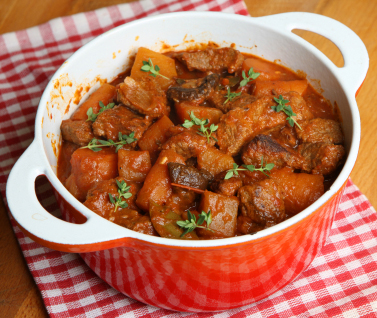
Lamb Hot Pot

Lamb Hot Pot

Lancashire Hotpot is basically just another regional stew. Every country and every area has its own take on the one pot dish. As a region the north of England has what we might consider a split personality. Although steeped in agricultural history because of its beautiful natural landscape it also has a huge industrial history. The marriage of these two sectors produced a rich culinary heritage. Traditional dishes of Lancashire were often based on economical ingredients which made for inexpensive but tasty and nutritious dishes that would keep hard working families well fed, particularly during a cold English winter. Like most indigenous stew like dishes, hotpot was inspired out of necessity. It is usually based on a set of guidelines rather than actual ingredients as ‘what was to hand at the time’ was thrown into it. Usually the recipes were handed down from mother to daughter and so how your mother made hotpot was the recipe you ended up with. And so on any given terraced street the hotpot served in number 6 may have tasted quite different to that of number 26. Indeed legend has it that a Lancashire woman’s prowess in hotpot making determined the marriage prospects of their daughters! It’s hard to imagine choosing a wife based on your future mother in law’s ability in the kitchen.

It’s hard to trace the origins of individual one pot stews but by all accounts in the 1700s hotpot would have started life as a warm punch and evolved into a meat stew by the middle of the 19th century. Hotpot is and was traditionally made with lamb. No one individual is credited with creating the hotpot and the way the dish has changed over the years it is rather like a train that went into a tunnel painted green and emerged a better and brighter shade of red, but no one is quite sure who painted it or when exactly the change occurred. Our information is mainly based on mentions of hotpot in novels and other historical literature. We are given to believe that the hotpot we know today has its origins in the Lancashire cotton industry. As it is a quick and simple dish to prepare with a long slow cooking time it is believed that female mill workers would prepare it in the morning, place the hotpot in the range oven and so it would cook all day and be ready when they came home. It was also seen as a warming dish for miners. There were plenty of cold, underground pits in Lancashire and workers would wrap it in a blanket to retain the heat and take it down into the mines. In the difficult conditions of a coal pit a break for tasty hotpot was, no doubt, a welcome respite. There are even accounts of the aristocracy being quite partial to a little hotpot. In several books and records we read how the upper classes enjoyed hotpot as a picnic dish for the races. It would be prepared in tall pots and again, wrapped in a blanket and taken with them on a day out. The tall pot was necessary as traditionally it was made from hill sheep that were quite long boned and the chop would stand in the dish. Along with the millworkers, the miners and the aristocracy, the farming community also lays claim to having a hand in the popularity of Lancashire hotpot. It was regarded as a shepherds’ family dish often taken out to the moors with the same principle as the miners.

So just for fun rather than giving you any hotpot recipe I thought it only fitting to give you a recipe for Betty’s Hotpot. If it’s good enough for the workers in the knicker factory on Coronation Street surely it is good enough for us. Betty used to make her hotpot in small individual dishes to accommodate the pub portion but you can make it in one large casserole instead. According to Coronation Street experts they say that Betty always suggested it should be served with red cabbage and chips. I was a little surprised at the mention of chips as there are potatoes in the dish itself but who am I to question the experts? Betty Driver, 1920 – 2011. RIP.

We hope you enjoyed reading this post by Pat Whelan of James Whelan Butchers. Pat is a 5th generation butcher, cook book author and the director of  James Whelan Butchers with shops in Clonmel, the Avoca Handweavers Rathcoole and Kilmacanogue, Dunnes Stores Cornelscourt, Rathmines and Swords in Dublin. Sign up to our newsletter for more updates from James Whelan Butchers
James Whelan Butchers: Food Extravaganza 2011 with Rachel Allen

Posted on Tuesday, November 8th, 2011 by Pat Whelan in Occasions, Press | No Comments »

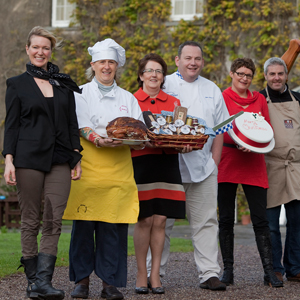
Celebrity chef, Rachel Allen, to put her tasty twist on Tipperary Food this Christmas

Food Extravaganza 2011 with Rachel Allen

Food Extravaganza 2011 with Rachel Allen

Top TV cook, Rachel Allen, will be making a special “Trip to Tipp” next month to host a Tipperary Food Producers Christmas Cookery Extravaganza.

Up to 500 foodies are expected at the Clonmel Park Hotel on December 7th to see the celebrity chef create special festive dishes from the best of local Tipperary artisan food produce.

Rachel Allen, who is part of the world famous Ballymaloe Cookery School in East Cork and who is well known from her regular Television shows and for her bestselling cook books, will prepare a variety of delicious dishes for the Tipperary food showcase. As well as her unique take on traditional Christmas favourites, she will also be offering exciting new ideas using the finest of local ingredients.

Tipperary Cheese and wine will be served at the informative Christmas Cookery demonstration. Clonmel-based wine expert, Gary Gubbins of Red Nose Wine, will be giving guidance on wines to accompany the variety of dishes from the cookery demonstration. Well known food blogger Imen McDonnell, will give a live butter-making demonstration.

“I am very excited about coming to Tipperary to do this demonstration. Tipperary food has such a fantastic reputation and the local producers are doing great work to promote this wonderful asset. I will be doing traditional recipes but there will be a few surprises thrown in there too” said Rachel Allen.

The evening has been organised by the Tipperary Food Producers Network, which is appealing to consumers this Christmas to support small, artisan food producers and to shop and buy local.

“For every €10 spent with local food businesses, €34 goes back to the local economy. But for every €10 spent with large retail multiples, only €16 is returned to the local economy. We have some of the best food on our doorstep here in Tipperary and we urge local people to support their local producers,” according to Chairman of the Tipperary Food Producers Network, Pat Whelan.

“This Christmas we are urging consumers to visit their local baker, butcher, farm shops, cheesemonger, retailers and farmers markets – all who provide top quality food at reasonable prices.”

Mr Whelan said the network is delighted to have someone of the calibre of Rachel Allen coming to Tipperary to do the Christmas Cookery Extravaganza.  “She is a huge supporter of local food and we look forward to seeing her put her unique twist on the ingredients we have to offer here in our County.”

The Tipperary Food Producers network has 30 members who between them employ approximately 220 people with an annual turnover of over €24m. The network includes producers of meat, beverages and bread, soup, sweets, pastry, catering, dairy, cheese, farm shops, preserves and condiments, jams, fruit and vegetables.

Tipperary Food Producers

Tipperary Food Producers

Members of the network include Cashel Blue Cheese, Crossogue Preserves, Crowe Farm Meats, Cooleeney Cheese, Cloughjordan house, Baylough Cheese, Boulaban Farm, Brownes, Fine Foods Cashel, Hickeys Bakery, Mags Home Baking, Tipperary Kitchen, Inch House, James Whelan Butchers, Oakpark Foods, Ponaire Irish Handcrafted Coffee, Red Nose Wine, Russell Catering, Seymour Organic Farm, The Apple Farm, The Cookie Jar, The Scullery, O’Donnell’s crisps and The Auld Mill Bakery.

The Christmas Cookery Extravaganza is part of a strategy by the Tipperary Food Producers Network to develop into a regional brand. It is continually highlighting what Tipperary Food has to offer, and the natural linkages food has to the social, economic, tourism and cultural aspects of life in Tipperary.

Christmas Beef Fillet

Christmas Beef Fillet

Tickets for the event on at 7.30p.m. in the Clonmel Park Hotel, Clonmel, on Wednesday December 7th,  are €20. Those interested are advised to book as soon as possible to avoid disappointment. Tickets can be purchased from James Whelan Butchers or any of the businesses mentioned above. This is strictly a ticket only event and tickets will not be available on the night at the door.

www.tipperaryfoodproducers.com

We hope you enjoyed reading this post by Pat Whelan of James Whelan Butchers. Pat is a 5th generation butcher, cook book author and the director of  James Whelan Butchers with shops in Clonmel, the Avoca Handweavers Rathcoole and Kilmacanogue, Dunnes Stores Cornelscourt, Rathmines and Swords in Dublin. Sign up to our newsletter for more updates from James Whelan Butchers

James Whelan Butchers: The Humble Spud

Posted on Wednesday, November 2nd, 2011 by Pat Whelan in Foodie Articles | No Comments »


I received a glorious gift of fresh carrots from a friend’s garden last weekend and decided to make carrot and coriander soup. Once October hits I love making fresh soups for these cooler days and I always feel very smug indulging in something so irresistibly tasty, safe in the knowledge that it is so virtuous. As I prepared everything for the pot, including one large potato, I was struck by how much we take the humble spud for granted. The onion is of course king of the kitchen for flavouring practically everything but the versatility of the potato should also be celebrated. Sadly I think our love affair with the potato while strong in reality has waned in prose.

Fresh Carrots

Fresh Carrots

Perhaps it is because the potato (or the lack of them!) is associated with one of the darkest periods in Irish history that our modern cubs seem to disregard them. People generally love mashed potato, roast potatoes, chips and crisps and yet the general consensus from the health world is that they should be avoided. If we look a little more closely the spud isn’t the problem, but how we cook them. It is well worth mentioning that potatoes are a very good source of nutrients. Potatoes make it easier for the body to absorb protein; much easier than the digestive efforts of breaking down complete proteins in meat and dairy. Potatoes are a good source of potassium and are rich in Vitamin C and B6. They contain essential amino acids, are considered to be antioxidant dense and some varieties even carry high amounts of folic acid. Oh yes, the spud is very good for you. In fact history tells us that potatoes were the main staple of indigenous South American highland natives for centuries. The Spanish grabbed a few and took them back to Europe and along the way discovered that eating potatoes prevented scurvy. As a crop potatoes also have a lot going for them. Lots of potatoes can be grown in a small area and so are popular with GIY enthusiasts. You can even grow edible potatoes in patio containers and window boxes.

And so we know that the potato began its journey in the highlands of Peru and is considered one of the oldest vegetables on the planet. However it is only in the past 500 years or so that it has become rooted in European and North American culture. According to spud history, ancestors of the legendary Incas were the first to cultivate potatoes, high up in the South American Andes. It is believed that they held strong beliefs associated with the potato and used them as a means of telling the time and, even, predicting the future! According to one report that I read potatoes were so important to the people of this region that their descendants have more then 1000 different names for potatoes in their native language today. It wasn’t until the 15th century that the Spanish explorers returned with these ‘exotic’ foods to mainland Europe. Legend has it that later that century Sir Francis Drake stopped off in Colombia and stocked up on potatoes for his long voyage home from the Caribbean. It is thought that Drake gave a few left over spuds to Sir Walter Raleigh, who planted them on his estate in Youghal and some time later Raleigh presented Queen Elizabeth I with a gift of potato plants. Unfortunately her cooks had never even seen a potato before and made a meal out of the stems and leaves rather than the tuber (root). The dish made the royal family quite sick, with the result that potatoes were banned in England for one hundred years. It actually became a very unpopular crop, widely regarded as a food fit only for peasants and animals. Yet the peasants discovered how versatile it was and ingeniously made several delicious dishes that endure today. It was Marie Antoinette who finally popularised the plant in the 18th century, by wearing potato blossoms in her hair. Potatoes became all the rage, and they rapidly became indispensable to all sectors of society.

Potatoes

Potatoes

As it happens Ireland was the first European country to cultivate potatoes as they were ideally suited to the cool, moist climate here. Unfortunately, as we all know, under British rule we produced an abundance of food for export while our own people were left overly reliant on the potato and disaster struck when the crop failed causing more than one million people to starve to death during the famine. It is a very sad period of our history and astonishing that a land like ours, so rich in food production and steeped in food heritage should ever have faced a food crisis.

Interestingly while potatoes were first brought to North America in the 1620s, it is believed that it was the post famine Irish settlers in New Hampshire who, hungry for a taste of home, first cultivated the crop. As Irish immigrants continued to flock to America, increased demand for potatoes led to the establishment of a thriving potato industry. Today in America the potato is reported to be the nation’s favourite vegetable.

The difficulty with the potato is that we sometimes fail to experiment properly. We are happy to mash, bake, roast or chip them but what about all the great French inspired potato dishes? I love gratins, dauphinoise or boulangere – all rustic dishes with peasant origins that are delightful and comforting. Try grating them to produce rosti, latkes, or how about ‘pommes paillasson’ which are basically a fried potato based pancake. The Spanish frittata would be nothing without the spud and many a one pot meal can’t do without it as a topping. There are literally hundreds of websites with as many ideas on how to cook the humble spud. Indeed there is an irony in that title as I often think the unassuming, humble spud is really a royal member of any cook’s arsenal. I welcome your feedback to [email protected]

We hope you enjoyed reading this post by Pat Whelan of James Whelan Butchers. Pat is a 5th generation butcher, cook book author and the director of  James Whelan Butchers with shops in Clonmel, the Avoca Handweavers Rathcoole and Kilmacanogue, Dunnes Stores Cornelscourt, Rathmines and Swords in Dublin. Sign up to our newsletter for more updates from James Whelan Butchers

James Whelan Butchers: Two for Tea

Posted on Wednesday, November 2nd, 2011 by Pat Whelan in Foodie Articles | No Comments »


I got a little verbal rap on the knuckles from a customer the other day. Although good natured, she rightly pointed out that I have a tendency in this column to concentrate on families or large groups. She accused me of being oblivious to the singles and couples out there who also had to eat. Of course there was no slight intended on my part, but perhaps having a young family myself, that is my personal frame of reference.

Italian Cuisine

Italian Cuisine

Before I sat down to write this week her words echoed in my mind. Couples could be the obvious newlyweds, but there are also empty nesters, flatmates or single parent and child duos along with all those living alone as a one person household. As I looked around me I realised that much of the world is geared towards families. We constantly hear of family discount offers while in supermarkets food is often sold and packed in large quantities aimed at families and the smaller quantity offering can be poorer value by comparison. When you consider the electricity cost of turning on the oven it is as expensive to cook for two as it is for four. Perhaps the group who find it most difficult are the new empty nesters. They may have gone from a crowd to two in a very short space of time and making that adjustment is tricky. If you have been used to cooking for four or five for years and years, reconditioning yourself to two smaller portions can be unnerving. You might find that even your pots and pans are geared towards the bigger numbers.

If you have a freezer I would imagine that you can easily take advantage of meat offers, however vegetables can be a nightmare. They don’t last long and so buying in bulk isn’t really an option. I would suggest keeping all vegetables in the fridge if you can. Shopping at local and country markets is a great option for couples as you can buy as much as you need and no more. Bread also freezes quite well; just make sure it is wrapped properly in cling film, in a freezer box or in a freezer bag. However if you do want to use the bread for breadcrumbs, make them before freezing.

I mentioned the cost of turning on the oven earlier. If you are cooking something like a stew, make enough so you can freeze a few portions for another time. Lasagne, shepherds pie, fish pie and tarts all freeze very well. And don’t forget our great grandmothers would always have stuck in a tray of biscuits or scones if there was room in the oven while the main course was cooking!

Chicken is a great staple of the duo, but rather than buying chicken breasts, why not buy a whole chicken and learn how to joint it? Cut off the legs before roasting and use them in a casserole. If you want to freeze any cooked leftovers make sure they are cool before you do so. Also it is good to freeze food on the day it is cooked.

Cooking for Two

Cooking for Two

The good news for duos is that you can occasionally splash out on luxuries without breaking the bank. For most large families fillet steak might be out of the question but as a treat for two it is certainly accessible. One large duck breast is also plenty for two people and items like prawns and scallops (when in season) are easy to throw on a pan when there are only two at the table. Luxury herbs and spices are also available to you.

Trying to do a stir fry for a crowd can be very difficult, but stir fries for two fit an average frying pan quite well. There is also less pre preparation and slicing so it makes these dishes ideal. Use small amounts of meat, thinly sliced with lots of vegetables. Start out with sliced onion, chopped garlic and fresh ginger in olive oil on a medium heat. You can add vegetables such as broccoli and cauliflower cut into small florets. Grate carrots and add a few green beans. Quarter a tomato and add it in at the end. Finish it all off with a little sweet chilli sauce. Of course the taste is quite a personal thing so check for seasoning and add a little soya sauce if necessary. Noodles, rice or couscous should all be in the store cupboard and can me measured easily for two. When it comes to pasta invest in spaghetti measuring rings. They are inexpensive and surprisingly accurate with the portion size.

The Italians certainly know how to do meals for busy couples. A common staple would be pasta drizzled with a little olive oil, some Parma ham, peas and a few fresh tomatoes all tossed together. Chopped anchovies, olives or smoked salmon are quick and easy too. Heat them all together for a few minutes (about 6); add some cooked pasta to the pan and just before serving grate over some cheese – bellissimo!

If you are a single or a duo, the freezer is definitely your best friend. You can buy large packs of sausages and divide them into smaller groups for the freezer. At James Whelan Butchers we also do a huge range of pre-prepared individual portions and cuts which make it easy when catering for small numbers.

The main thing to remember is to get the balance right between cost, value and nutrition whether you are looking after yourself, you are part of a couple or a larger family. We really are what we eat. Check out JamesWhelanButchers.com for more ideas when it is just the two of you. I welcome your feedback to [email protected]

We hope you enjoyed reading this post by Pat Whelan of James Whelan Butchers. Pat is a 5th generation butcher, cook book author and the director of  James Whelan Butchers with shops in Clonmel, the Avoca Food Market Monkstown and Avoca Rathcoole. Sign up to our newsletter for more updates from James Whelan Butchers

James Whelan Butchers: Thrift in the Kitchen

Posted on Tuesday, October 4th, 2011 by Pat Whelan in Foodie Articles | No Comments »


Thrift Stamp

Wartime Thrift Stamp – James Whelan Butchers 2011 ©

During the war years and beyond culinary skills were tested to the limit. Housewives were proud to play their part in helping with the war effort. Many, self taught, embraced the art of cooking enthusiastically. They used limited resources ingeniously, respecting the available ingredients and avoiding waste. Above all, they were prepared to put the time in to get a good meal out. “

The above is a quote written by Jane Fearnley Whittingstall for the foreword of a new book called The Thrifty Kitchen; Wartime Lessons for the Modern Cook. Of course vintage everything is all the rage right now and so 70 years on from the start of the Second World War we are looking back to its kitchens for inspiration. Perhaps our vintage passion is also driven by the economy and the fact that we are all looking for ways to make cuts to the household budget.

Wartime strategies are not a bad place to start. In Ireland it wasn’t a war situation but historically known as, “the emergency”. It often surprises school children to find out that even though the republic wasn’t directly involved in fighting the war we still had rationing, although it wasn’t as severe as the UK. Some of the more important food stuffs that were rationed during and after the war in Ireland were tea, sugar, butter and flour. Bread was rationed in 1942. Tobacco, soap and clothing as well as shoes were other items. Ration books not only noted what was bought but when it was bought and in which shop. Fortunately though, unlike the UK, eggs and meat were not rationed in Ireland.

Apple and blackberry crumble

Apple and blackberry crumble – James Whelan Butchers 2011 ©

Were we to follow a full wartime cook’s strategy, particularly of the British kind, we might find ourselves knee deep in tins of spam, powdered eggs and very odd cuts of meat! I think the nostalgia trip we are on now calls for the timeless principles of the wartime cook rather than actual replication of what he or she did. Despite the fact that we are constantly being told that the world is regressing to poorer times, I think the media message is gloomy and inaccurate. Yes we are in a recession but to even attempt to compare ourselves to the hardships endured by ordinary people during wartime is an insult. Wouldn’t the wartime cook have loved a freezer? Wouldn’t the wartime cook have enjoyed freely available ingredients without rationing? Wouldn’t the wartime cook have enjoyed today’s cooking gadgets and ovens that have both reduced the effort and the time taken to cook meals? Wouldn’t the wartime cook have enjoyed the knowledge (recipes and skills) that is freely available to anyone who cares to find it these days?

While I very much enjoyed the foreword for the book by Jane Fearnley-Whittingstall, her assertion that “Above all, they were prepared to put the time in to get a good meal out” could be perceived as accusatory. Many people today would be happy to put the time in if they had it to spare. In this modern world it is a priceless commodity and many people with full time jobs, children to rear and houses to run find themselves constantly battling with the time issue as well as money. These days we sometimes have to trade one for the other. For example we often decide to pay a little more for a pre prepared cut ready for the oven rather than prepare it fully at home. They are today’s choices and they have to be made regularly and should be made guilt free.


Beef & Vegetable Casserole

Beef & Vegetable Casserole – James Whelan Butchers 2011 ©

The principles of wartime cookery though, coupled with all our modern advantages, certainly have the potential to help us during these tough times. One of the first things a wartime cook would have done was to shop sensibly and seasonally. Obviously things available out of season will have a premium price. Shopping sensibly is also quite easy today. If you have a freezer you can take advantage of special offers on meat. Wartime cooks also knew how to deal with cheaper cuts of meat. Usually in a quality butchers the cheaper cuts of meat are not inferior in taste but just require a particular cooking method which is usually a slow method. For example stews, pot roasts, shins and shanks are all wonderfully tasty but require several hours cooking time. Usually the preparation time is quite short and so these are great ‘make ahead’ dishes or maybe it is time to invest in a slow cooker. Wartime cooks avoided waste and so leftovers were always seen as ingredients for another dish or the making of a new meal. Even meat carcasses and bones were used to make stock and soups. Free fruit and vegetables were welcomed by the wartime cook. Bramble fruit such as blackberries would be turned into jam, crumbles and other sweet treats. An abundance of wild nettles made great soup and allotments that yielded carrots and other veg were always popular. It would have been the original GIY movement. Indeed even in Ireland during the Emergency parts of the Phoenix Park were given over to allotments. And finally one of the other notable differences between our wartime cousins and us is that they would rarely turn the oven on for just one dish. They knew that if the gas was on cooking one pot, as long as there was room, it could cook or heat two or make enough for several meals.

You don’t have to return to the old fashioned, labourious time intensive methods of the kitchen staff of Downton Abbey to save a few quid. All we need is some old fashioned common sense. Let’s capitalise on our freezers, the great offers from retailers, our time saving gadgets and our faster ovens. With a little bit of thought and forward planning I reckon we’d have the wartime cooks drawing big breaths of admiration for our money saving savvy without any compromise on taste.

At James Whelan Butchers we are acutely aware of the current financial climate and so each week we endeavour to help with a range of special offers. Drop by any time and we challenge you not to be amazed by the value and the quality that is attached to our name. I welcome your feedback to [email protected]

We hope you enjoyed reading this post by Pat Whelan of James Whelan Butchers. Pat is a 5th generation butcher, cook book author and the director of  James Whelan Butchers with shops in Clonmel, the Avoca Handweavers Rathcoole and Kilmacanogue, Dunnes Stores Cornelscourt, Rathmines and Swords in Dublin. Sign up to our newsletter for more updates from James Whelan Butchers

James Whelan Butchers: Lamb Stew Hot Pot 

Posted on Friday, September 30th, 2011 by Pat Whelan in Lamb Recipes, Recipes | No Comments »

Lamb Stew Hot PotYou can also use neck of lamb or gigot chops to make this stew. This is a great nutritionally complete dinner in one pot for the whole family.

Lamb Stew Hot Pot – Printer Friendly Download

Ingredients

  • 675g diced leg of lamb
  • 4 tablesp. plain flour
  • Salt and freshly-ground black pepper
  • 1 teasp. chopped fresh thyme
  • 1 small onion, sliced
  • 1 large leek, sliced
  • 2 large carrots, sliced
  • 100g swede, cut into cubes
  • About 600ml chicken stock
  • Dash of Worcestershire sauce
  • 675g even-sized potatoes
  • 40g butter
  • Chopped fresh parsley, to garnish

Serves 6

To Cook

Preheat the oven to Gas Mark 4, 180ºC (350ºF). Trim the lamb very well and cut into bite-sized pieces. Place the flour in a shallow dish and season generously, then use to coat the lamb. Arrange half of the lamb in the bottom of a round dish and add a sprinkling of thyme. Scatter the onion, leek, carrots and swede on top, then season and add another sprinkling of thyme. Arrange the remaining lamb on top to cover the vegetables completely and sprinkle over the remaining thyme.

Pour enough chicken stock to just come up above the last layer of lamb. Cover the casserole with a lid and place in the oven for about 1 hour until the lamb and vegetables are just tender and the stock has thickened slightly.

Place the potatoes in a pan of boiling salted water and bring to the boil, then simmer for 10 minutes. Drain in a colander and set aside for 5 minutes until cool enough to handle. Slice the potatoes lengthways into 1cm thick slices and lay them in a slightly overlapping layer on top of the stew.

Melt the butter in a small pan or in the microwave and brush over the potatoes. Season to taste and cook in the oven for another 40 minutes until the potatoes are cooked through and nicely golden and the lamb stew is bubbling up around the edges of the dish. Sprinkle the chopped parsley on top and serve straight to the table.

We hope you enjoyed reading this post by Pat Whelan of James Whelan Butchers. Pat is a 5th generation butcher, cook book author and the director of  James Whelan Butchers with shops in Clonmel, the Avoca Handweavers Rathcoole and Kilmacanogue, Dunnes Stores Cornelscourt, Rathmines and Swords in Dublin. Sign up to our newsletter for more updates from James Whelan Butchers
Meet Pat Whelan, the Butcher from Clonmel

Posted on Wednesday, September 28th, 2011 by Pat Whelan in Good Food | No Comments »

Pat Whelan is a member of a dwindling brotherhood, independent butchers. In the 21st century world of supermarkets, it’s getting increasingly hard to find these food artisans who thrived in a bygone era when people  moved away from farms and no longer raised their own meat. His shop, James Whelan Butchers, in Clonmel, County Tipperary, Ireland, has been in business since 1960. The current shop, in a strip mall adjacent to a major supermarket, was opened in the 1970s, The location was appealing because it had ample parking. When asked why he became a butcher, Whelan answers, “It’s part of my DNA. It seemed natural for me to do. It’s was never a question of doing anything else.” What Whelan calls the “art of butchering” has been in his mother’s family for five generations. His dad is still involved in the business.

Pat Whelan with his Black Aberdeen Angus - Photo by Moya MacAllister

Pat Whelan with his Black Aberdeen Angus – Photo by Moya MacAllister

He’s even more unique. He raises his own Aberdeen Angus Beef and lamb and on the family’s 200 acre farm, Garrentemple Clonmel.  The shop’s pork, ham and poultry come from local farmers (members of the Tipperary Food Producers, a group he helped found in2007). To maintain control over the integrity of the product, every animals is finished on the farm. “All animals have a residency period here,” Whelan says. “When you can walk through the entire process from raising to butchering there’s a great sense of satisfaction and fulfillment that money can never buy.” All the meat is slaughtered and processed in their on-site abattoir.

Read more from Santa Fe Travelers blog.

We hope you enjoyed reading this post by Pat Whelan of James Whelan Butchers. Pat is a 5th generation butcher, cook book author and the director of  James Whelan Butchers with shops in Clonmel, the Avoca Food Market Monkstown and Avoca Rathcoole. Sign up to our newsletter for more updates from James Whelan Butchers

James Whelan Butchers: THE BREAKFAST GROOVE

Posted on Tuesday, September 20th, 2011 by Pat Whelan in Foodie Articles, Good Food | 1 Comment »


I’ve noticed an interesting food trend since the kids have gone back to school and most people have returned to a more strict routine. People are genuinely concerned with school or work lunches; constantly trying to balance variety, value and nutrition. They give equal thought to the main meal of the day, again being quite concerned with cost, diet and trying to avoid becoming an expert in “100 ways with mince!” I’m delighted that people are taking such care, but sadly few seem to care about breakfast; possibly the most important meal of the day.

Healthy Continental Breakfast

Healthy Continental Breakfast

With the practical extinction of construction workers the breakfast roll has also gone into decline. The builder’s mainstay of all that protein wrapped up in a giant bread roll has almost gone the way of the dodo. The Food Police would tell you that it’s probably just as well given that they believed it to be a heart attack in tinfoil masquerading as breakfast, but ask anyone who worked all day on a cold hard site and they will tell you that it was a necessity.

Before you write to me in disgust I am not suggesting that we all start eating breakfast rolls before heading out for a day at the office or school desk, but I am asking you to consider breakfast as a much neglected meal that might require a makeover. I must also warn you that it may need you to get up 10 minutes earlier but, trust me, if you get in on the breakfast thing it will revolutionise your life and you won’t regret it.

Just like evening meals, seasons and weather will impact on choice. Thinking about what to eat for breakfast at breakfast time is daft. Nobody can handle the pressure of such early morning choice and so all our good intentions are left to one side as we once more reach for the cardboard box of cereal or perhaps that should be the cardboard cereal box! There’s nothing wrong with cereal but why have it everyday.

Bacon Eggs and Sausages

Bacon Eggs and Sausages

Porridge, breakfast sandwiches, fruit mixes with yogurt, cold meat with tomatoes, scrambled egg on toast, boiled eggs with soldiers, Danish pastries or croissants, a full Irish – with a little imagination you could have something different but nutritious every day and breakfast would be a meal worth getting out of bed for. It’s virtually impossible to lure kids to the table with the smell of a cornflakes box, but the aroma of a freshly cooked breakfast, hot coffee or warm croissants wafting through the house might be more convincing in making them spring from the feathers to face the day.

Most people claim lack of time as the reason for being less than inventive in the mornings and yet the experts will tell you it is the most important food of the day. Recent studies have even indicated that along with health and body function, foods also positively or negatively impact mood and brain power also. One has to wonder if there is an overall impact when a teacher with a less than adequate breakfast presides over a classroom full of students who have also failed to get a good breakfast into them. The same could be said of the workplace and yet we are not prepared to invest an extra 10 to 15 minutes in the morning and a little thought and organisation the night before. Other people say they can’t face anything first thing in the morning. I think they’ve just trained their bodies not to expect anything and so the hunger signs are overridden. Now this is just the physical impact and we haven’t even looked at the positive mental benefits to be had from simply taking the time to sit down and have an enjoyable breakfast before facing into the mayhem of the day. We wouldn’t expect our cars to get us to work without any fuel and yet we’ll happily expect our bodies and brains to do it.

Staring into the cupboard or fridge first thing in the morning is pointless. Give breakfast some thought during the day. Can you draw up a variety of things to have so that every morning is a little different? If creating that kind of variety everyday is too tricky start with two or three changes in a week. If the family like toast try different breads perhaps and add a few different toppings; jam or marmalade. We have to think in terms of fuel and the activities of the day. Once at school children rarely have an opportunity to eat again for at least 2 hours and if it has taken 30 minutes to get out of the house and to the school gates they need food that will release energy slowly and keep them going. Even then their first morning break will only be a snack and it can be another hour or so before they have lunch. No wonder they come in ravenous after school and could almost eat the fridge along with its contents.

Healthy Fruity Breakfast Muesli

Healthy Fruity Breakfast Muesli

Breakfast, breakfast, breakfast! It is every bit as important as any other meal and yet we are happy for it to be poured from a cardboard box everyday, leaving our health in the hands of a large global corporation believing that they care!!

It’s time to start thinking about what we eat. Have cereal one day, porridge with seeds and or berries the next or try a big bowl of fruit topped with yoghurt. Try a bacon sandwich with country relish one morning and then scrambled eggs on toast the next. Cook what cafes like to call a ‘mini’; often one sausage, one rasher, a fried egg and a fried tomato. Finish the week on a French note with a cheese and ham filled croissant and indulge them all at the weekend with French toast or maple syrup topped pancakes with sliced fresh bananas or an indulgent full Irish. It’s just about using your imagination.

There are some great breakfast products produced locally in Tipperary. We have cheese, bacon, sausages, premium breakfast puddings, fresh breads and bakes, relishes, jams and marmalades. The list is superb, it is all produced locally and there’s no need to start the day on anything but a tasty note. I want everyone to think about breakfast this week and I set you a challenge to get up a little earlier to prepare it. Once you get into the breakfast groove you won’t go back and I guarantee that by the end of the week you will definitely notice a difference in your daily energy levels.

We hope you enjoyed reading this post by Pat Whelan of James Whelan Butchers. Pat is a 5th generation butcher, cook book author and the director of  James Whelan Butchers with shops in Clonmel, the Avoca Handweavers Rathcoole and Kilmacanogue, Dunnes Stores Cornelscourt, Rathmines and Swords in Dublin. Sign up to our newsletter for more updates from James Whelan Butchers

James Whelan Butchers: Beacon of Light for All Small Food Producers

Posted on Friday, September 16th, 2011 by Pat Whelan in Good Food | No Comments »

Minister Simon Coveney Talking at the Cashel Blue Dairy Launch

Minister Simon Coveney Talking at the Cashel Blue Dairy Launch – James Whelan Butcher 2011 ©

Yesterday, I was delighted to attend the official opening of the Cashel Blue Dairy at Beechmount Farm, Fethard, Co. Tipperary opened by Simon Coveney, Minister for Agriculture, Marine and Food. It was an amazing event and what was more amazing as I travelled through the lush pastures of Tipperary hidden behind mature beech trees on a quiet country road is this fantastic facility producing a world-class product, a real live model of how modern agriculture should be in Ireland. There gathered in front of the dairy, surrounded by what must have been 150 of the finest dairy cows in Ireland, were the great and the good of the Irish food scene both locally and nationally. I was delighted to see so many of our local Tipperary food producers, coming to share this very proud day with the Grubb family. It was great to hear Louis Grubb recall the early days of Cashel Blue, while it seems to some that 1984 was a long time ago, to me it only seems like yesterday.

Cashel Blue Tasters

Cashel Blue Tasters – James Whelan Butchers 2011 ©

For those of you who don’t know, or have never heard of Cashel Blue cheese, which I don’t believe there is anyone, it all sprung from Jane Grubb’s passion for creating Ireland’s first blue cheese. The process was very basic at first with single batches of the cheese being made from the fresh cows milk on the farm. Once the product was made Louis and Jane Grubb began selling in the local country markets. Within a couple of years, production of Cashel Blue cheese increased with the building of their first on site dairy. This enabled the Grubb family to export to countries throughout the world including the US, UK and Australia. With popularity growing for this niche product both nationally and internationally the plan was made to invest in a state of the art dairy that would enable large scale production of both Cashel Blue and Crozier Blue (a blue cheese made from sheep’s milk).

Tipperary Food Producers Supporting their fellow producers

Veronica Molloy, Pat Whelan, T.J. Crowe and Barbara Russell – James Whelan Butchers 2011 ©

Yesterday marked the official opening of Cashel Blue cheese new state of the art dairy. Speaking at the event the Minister Coveney hailed the Grubb family as a model business which started selling to local country markets in 1984 and now export their famous Cashel Blue cheese to thousands of customers all over the world. The dairy is located on the grounds of the Grubb family’s home  in the heart land of the Tipperary countryside. The company currently employs a team of 20 staff, all of whom live within 15 miles of the factory which shows the Grubbs commitment to keep jobs in the community.

We hope you enjoyed reading this post by Pat Whelan of James Whelan Butchers. Pat is a 5th generation butcher, cook book author and the director of  James Whelan Butchers with shops in Clonmel, the Avoca Handweavers Rathcoole and Kilmacanogue, Dunnes Stores Cornelscourt, Rathmines and Swords in Dublin. Sign up to our newsletter for more updates from James Whelan Butchers

James Whelan Butchers: The Food Makeover

Posted on Friday, September 9th, 2011 by Pat Whelan in Foodie Articles, Good Food | 1 Comment »


In conversation with a friend recently I found myself wading into the murky waters of food and weight loss. We would both find ourselves in that rather tricky position of having a desire to fit into a smaller trouser size but possessing an even greater desire for a steak pie, nice wine, good sausage, local cheese and all the other scrumptious food available on our doorstep. We wondered if we lived in a less ‘food centric’ county would we be thinner! Perhaps; but with our collective love of food, moving was out of the question.

Pat Whelan Thinks Dieting is Pure Folly

Dieting A Pure Folly

We both agreed that dieting was pure folly. I don’t care what regimen you try, be it the crazy Hollywood stuff of the baby food diet or even the more sensible programmes based on true science, in my mind a diet is a diet and that equals deprivation which will ultimately, in my case, always fail. I am just unsuited to self punishment or depriving myself of anything. The mere thought of it makes me sad and I’d rather be cuddly and happy than thin and miserable. The thought occurred to both of us; is it possible to still eat all the things you like and yet maintain a healthy weight? Or is it simply the case that a lettuce leaf, half a tomato and cardboard cracker bread is the only miserable path to perfectly svelte?

In the shop I often hear people talking about diet and weight loss. More often than not, the same people that were talking about it five years ago are still talking about it now. They’ve tried all the well known routes. “Are you sure that’s lean, I’m on the Atkins?” “That steak is far too big, Weight Watchers say that a portion is about the size of my palm”. “What kind of bread is in those breadcrumbs?” These are the usual questions and just to protect the identity of the insane I won’t quote some of the others. (Oh alright, here’s one of my favourites, “What kind of a heifer did that meat come from?” I’m never really sure what the person asking this question really wants to know, but it always makes me laugh.)

So we’ve decided that small changes are less traumatic for everyone and possibly more sustainable long term. So where do you start? Well I tried to create a better burger and I did surprisingly well. Making burgers in the past I would often have added some breadcrumbs and even an egg into the mix. I left both of these items out and using good quality lean steak mince I just added some onion, garlic, a tablespoon of half fat crème fraiche and a few herbs and seasoning and made a burger. It was great and I didn’t miss the breadcrumbs at all. I made the burger slightly bigger than usual and didn’t bother with the bun, but loaded some rocket and coriander on to the plate. Instead of covering it with cheese I caramelised some red onions using balsamic vinegar and a little honey and while they took about 30 minutes to cook, they added some lovely moistness to my burger. All in all it was a great feast and by the time I’d finished I hadn’t missed the bun.

Pat Whelan Healthier Breakfast Omelette

Pat Whelan Healthier Breakfast Omelette

I also tried a makeover on a simple omelette. If I’m having a late breakfast I will often opt for an omelette as it feels like a substantial brunch. I love bacon and ham in omelettes but this time I used some smoked bacon and a little less of it and loaded up with the mushrooms and onions. I also threw in a few sliced peppers, loads of fresh herbs and I cut back on the eggs by using three egg whites and just one yoke. I admit it was light, but you could get used to it and while the colour was definitely paler, the taste wasn’t as compromised as I thought it would be.

I was definitely onto something and so my quest continued. I felt like the government, making little cuts here and there and small adjustments to this and that. One tablespoon of butter instead of two or half a teaspoon of sugar instead of a rounded one and in one or two instances I just opted for a tomato based sauce rather than a cream sauce and didn’t skimp on taste whatsoever. Just in case you are wondering, at no time did I resort to using a sugar or butter substitute.

There are so many dishes that can be made over that I’m actually getting a little excited about it now. For example in a cooked breakfast I could use one less sausage or replace it with a rasher. Instead of two fried eggs I could have just one, but add in a heap of fried mushrooms. There are many different options and it’s all about choice. I have a new slogan, “Moderation for the nation without deprivation or starvation!” or how about “A substitution revolution for a new constitution!”. (You’re right, I’m better at producing meat than rapping any day, but you get my drift.)

Pat Whelan's Healthier Fry Up

Pat Whelan’s Healthier Fry Up

If you do come up with any good ‘makeovers’ of common recipes let me know and we’ll try and pass it on through the website at Jameswhelanbutchers.com. I’ve decided that maintaining a healthy weight should never mean compromising on taste or the food that you love. I welcome your feedback to [email protected].

We hope you enjoyed reading this post by Pat Whelan of James Whelan Butchers. Pat is a 5th generation butcher, cook book author and the director of  James Whelan Butchers with shops in Clonmel, the Avoca Handweavers Rathcoole and Kilmacanogue, Dunnes Stores Cornelscourt, Rathmines and Swords in Dublin. Sign up to our newsletter for more updates from James Whelan Butchers

James Whelan Butchers: Stop Sheep

Posted on Friday, September 2nd, 2011 by Pat Whelan in Foodie Articles | No Comments »

Elementary Age Schoolboy Eating Healthy Packed Lunch In Class

The last time I checked, most human adults were in possession of a decent enough brain. The brain, that vital organ that sits between our ears, helps us survive, work and raise our young without doing them too much damage. It is our ability to assess and make choices using the brain that largely separates us from the animal kingdom. However, when it comes to food we have been so bullied, harassed and harangued about food that we have practically given up all rights to decision making about our own health.

This is often evidenced in the month of September with the return to school and routine and the ongoing modern dilemma of what to put in a lunchbox. Parents look with horror at 30 weeks of trying to come up with interesting and varied lunchboxes for their children when the school or healthy eating campaign has limited the choice to tortilla wraps, a bag of raisins and a Clementine! Okay, I exaggerate slightly but the rules these days can be quite restrictive and all are trotted out in the name of health.

I wish to challenge the assumption and ask who kidnapped our good friend ‘balance’ and where are they hiding him. Release him now so that we can return to some sanity on the subject of healthy eating. Besides the school lunch issue, it’s all beginning to get out of hand. Did you know that moves are afoot to ban advertising cheese and butter to children? This isn’t the first time I’ve said it, in fact I wrote an entire column on the subject some months ago, but butter is not the enemy. Are children up and down the country tucking into pounds of butter with a spoon these days? Are they foraging in the fridge and eating blocks of cheese out of their hands? Of course this kind of behaviour wouldn’t be good for you. Equally though, limiting your diet to bowls of ‘healthy’ muesli will also cause deficiencies. Balance, balance, balance!Healthy Tortilla Wrap

As a purveyor of meat I personally don’t like the taste of Big Mac’s or Burger King Burgers but even I know the odd one, if that’s what you like, is not going to kill you. The junk food label has become a wieldy and lofty behemoth that is confusing everyone. What is junk food? In my book junk food is food that is of a very poor nutritional quality that the body effectively ‘junks’ as there is nothing to be taken from it. Is that a reason not to eat it? No, it’s a reason not to eat it all the time. It’s a little like saying that we should only watch the television if it is an informative documentary and frivolous movies should be outlawed. These days so many things are shoved under the umbrella of junk food. Everything from fast food to chocolate is pushed in under there as food contraband. Chocolate is not the enemy either. It is perhaps the amount of chocolate or the quality of chocolate you are consuming that is the problem. Chocolate in moderation is fine. A square or two of plain inexpensive Dairymilk can transport you back years in an instant and conjure memories that are always pleasant. Should you allow this transportation three times a day? Of course not, that would be out of balance. How about a packet of crisps? Is Mr Tayto really an evil villain out to make the children of the world obese? Again we need to clearly define the words ‘treat’ and ‘snack’ in order to make these decisions. Instead we allow the food police with their strict policies and little regard for our taste buds or pleasure to dictate the rules.

Healthy Back To School FruitI am sickened at the amount of information put out their everyday that scaremongers, overrides common sense and is pulling the wool over the eyes of the public. Study after study which provides endless column inches in press releases for the papers is often printed as scientific fact. If you bother to scratch the scientific surface you will find that the ‘scientists’ have been paid for their work by a company or body with a vested interest. The ‘to spread or not to spread real butter’ debate is always a great example of this. In isolation of course there is ‘fat’ in butter, but when you look at it as part of a balanced diet then it fits in perfectly. Cheese is the same. Nobody should restrict themselves to a cheese only diet, but enjoying cheese as part of a balanced diet is not a problem. I get particularly angry when they start to advertise chemically produced, dairy product substitutes or lookalikes and brand them a healthy alternative. Don’t get me started.

I also have a huge problem with the idea of just rolling out information, facts and figures. It is a form of food dictatorship through which we learn nothing only other people’s discoveries and assertions that we all regurgitate to each other as fact. “But I read it in the paper the other day, it must be true!”

We can be sheep and given that we live in an image conscious world and one that is scared to death over obesity the last thing we should do is continue to swallow the lines from the white coated, bespectacled crowd without questioning and checking out their facts thoroughly. We need some common sense around food, but the problem is that common sense is often not very common. Let’s get back to basics. Real food for real humans as close to its natural state as possible. Living in Tipperary you have little excuse not to eat well. We have fantastic cheese makers and other dairy producers, meat, vegetable, fruit and herb growers along with a host of other artisan food producers. Find them, support them and cherish them because food is also about enjoyment and pleasure as well as nutrition. In Tipp we can combine them all. Let’s get interested in food and where it comes from and how it’s made. Armed with that kind of knowledge we can run the oppressing Food Police out of Dodge in no time!

We hope you enjoyed reading this post by Pat Whelan of James Whelan Butchers. Pat is a 5th generation butcher, cook book author and the director of  James Whelan Butchers with shops in Clonmel, the Avoca Handweavers Rathcoole and Kilmacanogue, Dunnes Stores Cornelscourt, Rathmines and Swords in Dublin. Sign up to our newsletter for more updates from James Whelan Butchers

James Whelan Butchers: Tipperary Food Producers Long Table Dinner a sell-out success

Posted on Friday, September 2nd, 2011 by Pat Whelan in Good Food | No Comments »

Long Table Dinner 2011 - Dining Mouth-watering Tipperary Food Producers Long Table Dinner a sell-out success

THE FOUNDER of the Grow It Yourself (GIY) network, Michael Kelly, has urged consumers to grow their own food and support local producers in order to transform the food chain and “bring some common sense” back into our relationship with what we eat.

He told 300 guests who gathered for the sell-out Tipperary Food Producers’ Long Table Dinner at Rockwell College near Cashel on Wednesday, August 24th, that it is now time for us all to step up to the plate and change our eating habits for good.

We must ask ourselves why we are importing €5 billion worth of food every year when we could be supporting a viable local food economy at home, he said.

GIY is a not-for-profit organisation that aims to make home-grown food the norm by inspiring individuals and communities to grow their own food and giving them the skills they need to grow successfully.

Mr Kelly said when we go to our local supermarkets the chances are that we see imports of highly-processed, unseasonal produce on the shelves. Broccoli from Kenya, mange tout from Senegal, carrots from Guatemala and so on.

“The way the food chain currently operates has implications for our health, community, the environment, the economy and Irish jobs.  So, what’s the solution? Write an angry letter?  Lobby a politician?  No we at GIY believe that we need to grow more of our own food and support our local producers more.” Mr Kelly added.

He said events like the Long Table dinner reinforces how a local food network can be a viable and immensely more satisfying alternative “to the lunacy of the modern food chain, which relies on imports of processed, unseasonal food. “

Singing Waitor Entertainment

Mr Kelly added: “The fact that the entire feast at this Long Table Dinner comes from Co Tipperary emphasises that if supported, local food producers can literally step up to the plate.  This is not about one or two parts of the meal being local, but the entire meal – local and seasonal fruit, vegetables, meat and condiments.”

“The Tipperary Food Producers model works. It encourages local food producers to come together to help themselves, and local people supporting them benefiting at the same time from the best of local, seasonal produce. There’s no reason why this incredibly successful template couldn’t be replicated around Ireland,” Mr Kelly said.

Among those gathered for the Long Table dinner were the region’s producers, their families and lovers of good food. All were treated to canapés and drinks on arrival,  followed by an amazing banquet in the Rockwell College main hall which was bursting with flavour, colour and aroma.

The sumptuous menu included locally produced meats, breads, vegetables, cheese, cakes, condiments and fruit – the ultimate culinary tour of Tipperary.

The pre-dinner canapés consisted of Cashel Fine Foods black pudding and apple filo parcel with red onion chutney and Gortnamona goats cheese and chargrilled courgette bruchetta with red pepper relish.

The starter was thyme and garlic baked Tipperary mushroom and smoked bacon salad with a selection of Tipperary breads. Guests cleansed their pallets with Boulabán Farm Tipperary apple and calvados sorbet with lemon balm, before tucking into a main course which consisted of a range of the choicest meats that Tipperary has to offer.

Long Table Dinner 2011 - Lamb Main Course

They included dry-aged seared Tipperary Angus Beef Tournedo from James Whelan Butchers, Crowes Farm free-range slow roasted pork belly served with Inch House black pudding and apple farm jelly, Seymour’s organic lamb cutlets and Una O’Dwyers’ gourmet smoked bacon and cheese sausage en Croute.

This was served with local new season potato and leek gratin, local steamed melange of summer vegetables and a salad of organic salad leaves and herbs selected by Sarah Baker from Cloughjordan House.

Desert was a mouth-watering Tipperary Berry Tiramisu and those who had room left tucked into a Tipperary cheese board including Cashel Blue, Cooleeney, and Baylough smoked cheddar.

The meal was washed down with wines from the iconic Mas de Daumas Gassac vineyard in the South of France and imported by Gary Gubbins of Red Nose Wine in Clonmel. Roman Guibert is a past pupil of Rockwell College.

Chairman of the Tipperary Food Producers Network, Pat Whelan, said the meal showcased what makes the region special and sets it apart.

“The quality, the unmistakable taste and freshness of all the local produce served here tonight augers exceptionally well for our Network. But we need to spread the word. It is more important than ever that we support our local producers and local jobs. We are proud to have 30 producers involved in total employing 220 people directly and with a cumulative turnover in the region of €30m.”

Mr Whelan thanked Rockwell College for the superb venue for the meal. “What better setting for a fine, local, artisan meal than in this historical building which is synonymous with Tipperary for generations, ” he commented.

We hope you enjoyed reading this post by Pat Whelan of James Whelan Butchers. Pat is a 5th generation butcher, cook book author and the director of  James Whelan Butchers with shops in Clonmel, the Avoca Handweavers Rathcoole and Kilmacanogue, Dunnes Stores Cornelscourt, Rathmines and Swords in Dublin. Sign up to our newsletter for more updates from James Whelan Butchers