James Whelan Butchers: Little Lambs

Posted on Tuesday, April 16th, 2013 by Pat Whelan in Foodie Articles, Good Food | No Comments »

As a nation we like to talk about the weather it is our ‘got to’ ice breaker for any and every occasion. It is strange that we have such a fascination with the elements given that we live in a relatively moderate climate and extremes are unusual. However, this winter has been one of them. It has been very difficult to watch as the farmers in the North of Ireland struggle against high walls of compacted snow. It’s lambing season, but one seriously hampered by the weather and, sad to say, in some situations completely annihilated. It seems so wrong to see little lambs with snow all around when they should be lolloping around green, dewy fields.

Lamb Hot Pot

Thankfully the sun has been shining down here in the South the last few days and suddenly there’s a glimpse of the proper season. That mix of watery sunshine and longer evenings triggers those lamb thoughts instantly. Going for the papers last Sunday morning people were generally in slightly lighter clothes, one or two slightly shivering, but putting it up to the weather all the same. I imagined them all scurrying home for a leg of lamb roast. I’m not sure if there is anything more elegantly simple, succulent and tasty than spring lamb. With the major advances in animal husbandry lamb is now available year round, but I’m glad to say high demand is still intrinsically linked with springtime.

Today’s lambs are tender creatures, except for the shanks, neck and shoulder. Even these not so tender parts make wonderful dishes if cooked correctly, which usually means slowly. I love slow cooked lamb shanks in tinfoil parcels. It’s a superb rustic dish and visually appealing an

d considering it uses one of the cheapest parts of the lamb, an absolute winner if you want to stretch a few euro. However it does take around 4 hours in the oven so it’s a meal you need to plan. On a flat piece of tinfoil lay up some slices of carrots, onion, leek and celery, then liberally butter the lamb shank and sprinkle with coriander and pop on top of the vegetables an season with salt and pepper. Pull up the sides of the tin foil to form a parcel. Pour in about a half to a glass of white wine into each foil packet. Place in t

he oven at around 140° for 3 to 4 hours, depending on the size of the shanks. The rest of a lamb is tender enough to be cooked by dry heat like grilling and roasting. Even shoulder chops can be grilled, although personally I prefer a moist heat method such as braising. Slow Roast Lamb

When it comes to roasting you just can’t beat the leg and I like to dress it with fresh rosemary and garlic; classic but simple. I usually use 1 tablespoon of good quality olive oil, 2 good dollops of Dijon mustard (lovely and mild), 1 tablespoon of chopped, fresh rosemary, 1 teaspoon of rock salt (Maldon is an excellent brand), half a teaspoon of freshly ground black pepper and 1 tablespoon of minced garlic (roughly 2 to 3 cloves). Mix all of these ingredients together to form a rough paste. Brush the meat with this mustard and rosemary paste and let it sit for up to two hours at room temperature before cooking.

The leg is probably the most versatile cut of the lamb. While it is sold on the bone it can also be completely boned and is often found butterflied, rolled, and tied for roasting. This type of roast is perfect for stuffing; just remove the net, fill the cavity left by the bone with a stuffing of choice and tie it up again. Half legs of lamb are also available but for information the shank end is less meaty and a bit chewy; the sirloin end is meatier and tender, but either makes an ideal roast for about four people.

I like my lamb accompanied by oven roasted herbed potatoes. Recently though I found a lovely recipe for boulangere potatoes where you allow the juices from the lamb drip down into the potatoes while cooking and this really is a treat. You can keep the whole spring theme running through the meal with young, barely cooked fresh green beans.

When it comes to leftover lamb I would encourage you to break out and explore the spicier, more aromatic side of life. Lamb is very popular in Asian cooking, particularly traditional Indian dishes. If you haven’t conquered the art of Asian cooking, experimenting with leftovers is a good place to start. Try a simple lamb korma or lamb byrianni for a refreshing change.

As it happens I stumbled across a relatively new small indoor farmer’s market on my travels recently. One stand was selling slabs of freshly backed red onion, gruyere and rosemary bread. I felt they were a little expensive, but I bought them as a treat. I made a braised lamb dish to go with last week’s cold weather and instead of potatoes or rice we had the bread as an accompaniment instead. It was great and made a nice change from the usual. There are plenty of these easy, rustic bread recipes floating around and so I am on a mission to try and make some different varieties. Watch this space for how I get on. Don’t forget it you want any further information on lamb or how to work with different cuts drop by our website or call into James Whelan Butchers in the Oakville Shopping Centre, Clonmel.

This post was written by me, Pat Whelan, owner of James Whelan Butchers and a passionate advocate of local artisan food. My family have been producing quality Irish Angus beef for generations using a traditional dry aging process. This tradition is one that I continue to practice at our abattoir on our family farm in Garrentemple, Clonmel. These posts aim to impart some of the wisdom to readers and help them get the best out of the meat they eat! Our meat is available online here! I welcome your feedback to [email protected]

We hope you enjoyed reading this post by Pat Whelan of James Whelan Butchers. Pat is a 5th generation butcher, cook book author and the director of  James Whelan Butchers with shops in Clonmel, the Avoca Handweavers Rathcoole and Kilmacanogue, Dunnes Stores Cornelscourt, Rathmines and Swords in Dublin. Sign up to our newsletter for more updates from James Whelan Butchers

James Whelan Butchers: Latin America

Posted on Friday, March 22nd, 2013 by Pat Whelan in Good Food | No Comments »

Inspiration for food, how we eat and how we cook is all around us. It is often a simple phrase, something in a newspaper, an innocent observation perhaps that will strike a mental chord and turn into a food thought. Writing also shares that space of infinite inspiration in the world around and about us. The news this week has been particularly fruitful for both. The Conclave in Vatican City has been to the fore and the faithful of all creeds, the agnostic and the atheist all looked on together in anticipation of the new head of the Catholic Church, united in a moment of pure theatre and curiosity. Believer and non believer mesmerised by the cloak and dagger, smoke and mirrors ritual the church engages for such elections. The doors close, we watch and wait and then, just like a stage magician, there is a puff of smoke and, ‘boom’, a shiny new pope emerges. He is the first Pope from outside Europe for a long time and the first ever Pope from South America and so immediately his hometown comes into sharp relief. Argentina is of interest and I immediately wonder about their food.

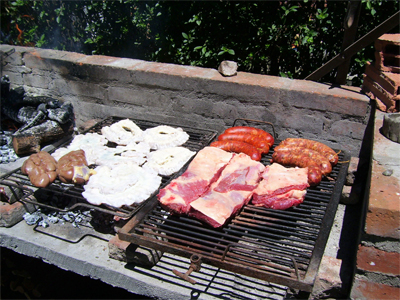
We know that as an area beef is very prominent, but all protein is popular in this Latin American country. They love to grill and big, big barbecues are called asados, (translated as meat feast) where everything is grilled quite slowly. They have a saying that sums up the Argentine attitude to food, “Everything that walks may end up on the grill”. I can also tell you that from a ‘nose to tail’ eating experience, “everything in and on the ‘everything that walks’ may also end up on your plate.” A friend of mine had the opportunity to try out a delicacy in a steak restaurant in Buenos Aires. Wanting a new taste experience he tried some ‘Criadilla’ or Mountain Oysters; bull testes to you and me. He was expecting something quite large and was surprised to see that when cooked and plated they weren’t notably bigger than his own. Having had sweetbreads (sheep testes) in the past he was expecting something similar in taste, but he discovered that not all testicles taste the same; he felt let down by the “leathery, coppery, mouldy taste” (his words, not mine). Thankfully aside from bulls’ balls there is plenty more to Argentine food. Argentina Grill

Argentina is largely a melting pot of Italian and Spanish populations. Before the European invasion in the 1500s it was Native Indian. So you mix these cultures together along with the lush and yielding landscape and the good weather and you have an exciting mix. There is a wide range of livestock reared and agricultural products are in abundance. They do consume a great deal of beef, but there is diversity also. As a nation the people have a reputation for their love of food. Many social gatherings pivot on a shared meal as the centrepiece and, not too unlike Ireland in the past, the Sunday family dinner is considered the most significant meal of the week. There is also a great deal of fresh food in Argentine cuisine and an emphasis on the homemade including fresh pasta. A homemade dish is considered an honour for the guest and is also seen as a way of showing affection.

Like all big cities Buenos Aires has a huge variety of restaurants and styles including international cuisine, but the little local ‘bodegones’ (traditional taverns) offer great local food. In these little places you will find breaded and fried meats, similar to the Italian Milanese style. Thin strips of meat is breaded and fried and used in warm sandwiches or eaten as snacks. Small pastries filled with savoury meat, cheese and many other fillings are also common snacks and all of this is accompanied by fresh salads of tomatoes, onions and lettuce. Pizza and pasta are very prominent and Italian style ice-cream can be found all over the city. Chorizo sausage, blood sausage and other cured meat, just like you would commonly find in Spain, is sliced razor thin and used in crust less bread sandwiches. And when it comes to sweet treats, Argentina’s treasured national food, dulce de leche, is one of my all time favourites. This smooth, creamy, toffee like paste is used to fill cakes, to pour over pancakes or ice-cream and even, dare I say it, spread over toast for breakfast! It is the type of food that makes diet club leaders break out in a cold sweat and keel over. It has to be tried to be appreciated but only try the finest quality you can get your hands on.

So when it comes to food in Argentina we would be very surprised at how familiar everything would be. The huge European influence has created an indigenous cuisine that is meat rich, often Mediterranean in style, home cooked and full of fresh vegetables. Actually it would be relatively easy to recreate an Argentine meat feast here. However you’ll have to skip the Mountain Oysters, we just don’t stock them at James Whelan Butchers.

This post was written by me, Pat Whelan, owner of James Whelan Butchers and a passionate advocate of local artisan food. My family have been producing quality Irish Angus beef for generations using a traditional dry aging process. This tradition is one that I continue to practice at our abattoir on our family farm in Garrentemple, Clonmel. These posts aim to impart some of the wisdom to readers and help them get the best out of the meat they eat! Our meat is available online here! I welcome your feedback to [email protected]

We hope you enjoyed reading this post by Pat Whelan of James Whelan Butchers. Pat is a 5th generation butcher, cook book author and the director of  James Whelan Butchers with shops in Clonmel, the Avoca Handweavers Rathcoole and Kilmacanogue, Dunnes Stores Cornelscourt, Rathmines and Swords in Dublin. Sign up to our newsletter for more updates from James Whelan Butchers

James Whelan Butchers: Go Irish

Posted on Friday, March 15th, 2013 by Pat Whelan in Foodie Articles | No Comments »

It’s that time of year again when all over the world there will be people dying everything they can get their hands on green. Others will be decorating anything that moves with a shamrock, while various statues and national monuments abroad will be lit brightly in a Halloween-ish hue. We, in the real Ireland, shall look on with great amusement and for our own efforts the business community will wash their vans and trucks, chuck a bit of bunting at them and drive them through the obligatory, usually wet, St Patrick’s Day parades in towns and villages all over the country. Why is it that people abroad ‘do’ our national day so much better than ourselves; it is a true paradox. They take it so much more seriously. They seem to respect it and celebrate it with a degree of enthusiasm that we just can’t seem to muster. It is nothing short of a phenomenon – there is no other little country in the world that gets such global recognition for its patron saint.

Because of the annual interest in Ireland around March it’s always interesting to look at some of the websites and magazines suggesting ‘Irish’ food and recipes to cook in honour of the big day. In a way it feels as if we have progressed and moved on to the current cosmopolitan (if broke) position while the sentimental view is largely unaltered. I looked at one website that reported us as huge soda bread eaters! This was certainly true of the past, but today you’re more likely to find focaccia bread, garlic loaf or a French stick in an average Irish kitchen. When did you last make soda bread, some brown scones or a porter cake? The meat section was equally mystifying. It suggested ‘common’ recipes for Dublin Coddle, Chicken Stroganoff pheasant and, of course, Irish Stew. Apart from a beef stew, I can’t remember when I last had any of the others. To be fair they got the full Irish breakfast bang on the money, complete with black and white pudding. It’s no wonder people are still visiting Ireland for the first time and are relatively surprised at our outward looking food landscape. 

So what if we were to go back to our roots and revisit some of those favourites? I definitely think a loaf of soda bread would have to make it onto the list. I have very fond memories of visiting farms as a child and young adult where there would always be a slice on the go. If you were lucky you could hit it just as a fresh one was unwrapped from the clean tea towel. Light fruit cake loafs were also popular and in some places you even got a slice with an extra (if unnecessary) spread of country butter, though by far my favourite was a hot apple tart preferably without the cloves.

I was never a huge fan of what is commonly known as traditional Irish stew. All that mutton and potato that always had a sort of light beige-y colour never excited me. I prefer a rich brown beef stew and while I love the taste of lamb, a roast leg at this time of year is always to be favoured. However learning how to create a good stew gives you endless recipes. Change the liquid and general taste of the dish by adding red wine, or a good quality stout or ale (never, ever lager!). Put it in a pastry crust or add some suet dumplings. As stewing beef is also economical it is a great family dish and any leftovers freeze very well. Cook it as slow as you can to really get the best out of it. If you really want to try a traditional Irish stew, try using lamb chops as opposed to mutton and sweet, new baby vegetables. I think it gives a nicer overall look and taste to the dish. While bacon and cabbage is also synonomous with our little island and always great if cooked properly, try a ham joint instead. I love to see a nice glazed ham being cooked as I know I will enjoy it with a little Irish cheese in a sandwich later. If you are having people over for celebrations don’t forget that we have plenty of traditional Irish vegetables and cheeses that shouldn’t be overlooked. Leeks, cabbage, turnips and potatoes have great versatility and flavours that give that traditional Irish feel to many dishes and can also be used to make lovely soups as starters. Finish it all off with a traditional bread and butter pudding, with a jug of custard and it’s an Irish feast fit for St Patrick himself.

When I look back over this list you can’t help but be transported back to childhood. It also strikes me that it is all accessible food. Nothing is overly expensive and the common factors are simple, fresh, local and Irish. We have great, filling hearty recipes and while we sometimes tend to dismiss traditional dishes as ‘plain food’, we really should take another look. In the past perhaps that bland reputation had more to do with our cooks rather than the food! Today we have acres of resources, books, programmes, websites and apps telling us the best way to cook everything and anything; no excuses. Good Irish food is great at any time of the year. Take another look.

This post was written by me, Pat Whelan, owner of James Whelan Butchers and a passionate advocate of local artisan food. My family have been producing quality Irish Angus beef for generations using a traditional dry aging process. This tradition is one that I continue to practice at our abattoir on our family farm in Garrentemple, Clonmel. These posts aim to impart some of the wisdom to readers and help them get the best out of the meat they eat! Our meat is available online here! I welcome your feedback to [email protected]

We hope you enjoyed reading this post by Pat Whelan of James Whelan Butchers. Pat is a 5th generation butcher, cook book author and the director of  James Whelan Butchers with shops in Clonmel, the Avoca Handweavers Rathcoole and Kilmacanogue, Dunnes Stores Cornelscourt, Rathmines and Swords in Dublin. Sign up to our newsletter for more updates from James Whelan Butchers

James Whelan Butchers: A Little Dish

Posted on Friday, February 22nd, 2013 by Pat Whelan in Foodie Articles, Good Food | No Comments »

If we’ve never met then I can say with some degree of certainty that no one would ever choose to use the word ‘dainty’ in a description of me. The food I like and enjoy also falls into the more robust category. For example I like meaty, rustic, slow cooked one pots that are drenched in flavour. I’m rather partial to the idea of being the overarching creator in the kitchen, where I constantly adjust to taste with a pinch of this or a smidge of that until the bubbling meaty gravy sings on my taste buds. I always follow some vague cooking principles from my head but I add my own twists here and there. As I sample and savour the juices it usually elicits an audible ‘Oh yes’ or ‘Lovely’ to myself, which heralds an even greater taste sensation when we finally get to the actual ‘meat on a plate’ moment. I also enjoy succulent joints of meat and luscious pies accompanied by in season vegetables. While I’m fond of the new and always keen to try it, I’m not ashamed to say that I love the traditional and in particular old dishes that have undergone a modern make over. My point in sharing these insights is really to emphasise that my subject this week is not an obvious fit for me. Cooking and serving food in small portions in little pots is something I didn’t think I’d ever particularly enjoy and yet here I am extolling the virtues of ……….wait for it……..the ramekin!

I had an epiphany of sorts. It began with a naughty little minx of a highly calorific dessert actually. Oh yes, the kind of dessert that adds inches to your waistline while you are just looking at it. It’s one that has enormous pulling power and you can smell the whiff of temptation even when it’s just a flat group of letters on a menu. I talk of none other than that brazen siren known as Crème Brulee. Of course my recent encounter was with an extra special version that involved some delectable, plump raspberries. ‘Summer Berry Crème Brulee’ was the title on the menu. I laughed as I noticed it came just before the words ‘Fruit Cocktail’. You really have to feel for the fruit cocktail in this instance. It’s like being photographed beside some current, buff bodied god that women swoon over. Needless to remark the fruit cocktail didn’t get a look in; all eyes were on the Summer Berry Crème Brulee.

And so it arrived looking deceptively innocent and small in its own personal ramekin. As I cracked the torched, sugar glazed topping like an Arctic polar bear doing a little fishing, my spoon pierced right through to the end of the dish and the fresh raspberries squirted their tart, acidic juices all over the custard. Oh this would be a slow one indeed, no need to rush it, I was going to appreciate every lick of tasty nuance – this could take some time! Now I really don’t want to suggest that it was the gastronomic equivalent of a sexual experience as, after all, it’s only food, but I would have to admit that offered a secret assignation right this second or a repeat performance of the Summer Berry Crème Brulee, I have a funny feeling the raspberry and custard would come out on top.

While the contents were obviously the star, that dainty little dish added to the overall charm. For a start I liked the way it controlled the portion; there was no chance anyone else at the table was getting any more than me. I could also see the merits of cooking and serving in the same dish; less washing up. That triggered the idea that the kids would probably get a kick out of these miniature adult servings that would be just right for them as a main were we to substitute a savoury dish in place of a creamy dessert.

I was more enthused than I had expected when I finally got around to digging out the ramekins from the back of the cupboard where they have resided unloved for quite some time. I can now tell you honestly that the ramekin is quite versatile. Mine are just the standard size, but if you do come across a more generous or extra large version I suggest you snap them up. On the other hand for breakfast, brunch, starters, desserts or small children, the ordinary ones are perfect. I started with some individual toad in the hole. These were a triumph. The sausage was almost cooked before I popped it into the little basin of batter, where it lay lazily against the side. As it cooked, the batter rose up around the sides and the result was a crispy, golden risen Yorkshire pudding with a delightful fat sausage jutting out the top at an angle, rather like the flake in a ’99. Macaroni and Cheese also works really well cooked like this. It was a bit messy and fiddly to start with but I also like the fact that you can cook the individual portions separately. If you do have people coming and going at different times it doesn’t mean re-heating things which can sometimes take the enjoyment level down a notch. Having an extra ramekin hanging around the fridge also meant I had a ready made, portion controlled evening supper. Some leftover chicken from one night made some great miniature chicken pot pies with filo pastry. I made up the filling, placed it in the ramekins, topped it with a little filo pastry and popped the whole lot on a tray into the freezer ready to go as a starter when I need them. I might even use them as part of a weekend lunch. Of course putting my ramekins into the freezer meant I had to buy some more, but at an average of about €1.50 to €2 each for standard ramekins, they are affordable.

Finally ramekins really come into their own when it comes to eggs. If you want to impress at breakfast then the ramekin will fool people into thinking you’ve made a huge effort every time. You can do something really simple like breaking the egg into the dish with a little butter, pepper and salt and baking them in the oven. Or you can find one of the gazillion more involved baked egg recipes on line. They have everything in them from bacon and cream to spinach and asparagus and most are idiot proof to cook. (A word of caution though be extra careful around the breakfast soufflés, they can be tricky to perfect.)

My message to you this week is to embrace the ramekin. With a little thought you too could be creating your diminutive, culinary masterpieces with surprisingly satisfying results. Maybe you already are! Let me know how you get on.

This post was written by me, Pat Whelan, owner of James Whelan Butchers and a passionate advocate of local artisan food. My family have been producing quality Irish Angus beef for generations using a traditional dry aging process. This tradition is one that I continue to practice at our abattoir on our family farm in Garrentemple, Clonmel. These posts aim to impart some of the wisdom to readers and help them get the best out of the meat they eat! Our meat is available online here! I welcome your feedback to [email protected]

We hope you enjoyed reading this post by Pat Whelan of James Whelan Butchers. Pat is a 5th generation butcher, cook book author and the director of  James Whelan Butchers with shops in Clonmel, the Avoca Handweavers Rathcoole and Kilmacanogue, Dunnes Stores Cornelscourt, Rathmines and Swords in Dublin. Sign up to our newsletter for more updates from James Whelan Butchers

James Whelan Butchers: It’s a Butcher’s Life for me 2

Posted on Friday, February 22nd, 2013 by Pat Whelan in Foodie Articles, Good Food | No Comments »

[slideshow post_id=”4367″ width=”auto” height=”650″ showthumbs=”true” resizeimages=”true” gallery link=”4367″ orderby=”ASCE” gallery order=”ASCE” orderby=”random”]

We hope you enjoyed reading this post by Pat Whelan of James Whelan Butchers. Pat is a 5th generation butcher, cook book author and the director of  James Whelan Butchers with shops in Clonmel, the Avoca Handweavers Rathcoole and Kilmacanogue, Dunnes Stores Cornelscourt, Rathmines and Swords in Dublin. Sign up to our newsletter for more updates from James Whelan Butchers

James Whelan Butchers: Light & Creamy

Posted on Tuesday, February 19th, 2013 by Pat Whelan in Good Food | No Comments »

It’s been a while since Shrove Tuesday and Valentines Day came in the same week but an early Easter for 2013 has decreed it.  Looking ahead it’s going to be a very busy March as we seem to be packing all the spring celebrations together; St Patrick’s Day, Mothers Day and Easter will come close together.  The retailer in me that has a habit of looking ahead while, according to the current trend for ‘mindfulness’ I should be living in the ‘now’.  Well here I am being mindful of the fact that the year is whizzing by.  By the time you read this another tonne of pancakes will have been consumed and the annual batter fest will be over and we’ll definitely be hurtling towards spring.

I love all the seasons and I particularly enjoy those moments of change; there is freshness when we are on the cusp of a new season.  I always marvel at the change from winter to spring.  It is gentle and subtle; sometimes hardly noticeable.  Just as you think the cold will never end suddenly little clues start appearing; you look out the window and appreciate the sudden stretch in the afternoon light; as you hurry along in the cold, muffled up in scarf and gloves the sight of a little crop of snowdrops are another sign.  And outside of Mother Nature the giant red cardboard hearts in the artificial light of the newsagent’s window are yet more evidence that the game is up for winter and now it’s only a matter of time.  And so it’s time to change up our cooking once more.  The original idea of Pancake Tuesday was the day that all the nice stuff in the kitchen was used up before the Lenten fasts began.  Of course for many this is no longer a consideration, but the practicality of cleaning out the cupboards and using up what’s there is still very valid.  Our store cupboards need a seasonal check and it is a great way of avoiding waste.

In the last week or two I have become interested again in natural yoghurt as an ingredient.  I was searching for a way to achieve creaminess without loading up on calories or making a dish too rich.   Asian and Greek dishes often use yoghurt and it has certainly added a spring like dimension to a few dishes this past few days.

It is a super marinade.  For all those of you about to embark on a romantic dinner for two perhaps some Tandoori chicken could add the spice you are looking for.  Many Indian, African andMediterraneanmeat recipes use yoghurt marinades.  It is a simple process of mixing the spices and herbs required with the natural yoghurt.  For savoury dishes choose spices and herbs such as cumin, coriander, chives and chilli powder.  Prick the meat with a fork and then liberally spread the marinade all over.  Leave it overnight in the fridge in a covered container.  You are looking for at least 12 hours if possible and longer if you can.  When you are cooking the marinated meat make sure it is fully cooked and turn it frequently if you are grilling it.

For a great little side dish or salad topper, chop up some tomatoes, cucumber, red pepper and spinach.  Sprinkle in some fresh chives and run a spoonful or two of natural yoghurt through it.  This is light and fresh and a great cool contrasting side if you are having a hot Indian dish.   You can also substitute natural yoghurt for sour cream in dips.  It’s a great deal lighter on the calorie front.

Natural yoghurt is milk that has had a number of harmless bacteria added causing it to ferment.  Most natural yoghurt is sold as ‘live’ which means it still contains living bacteria.  It is believed that these harmless organisms work with the gut’s natural bacteria and suppress the harmful ones.  Mind you, as with anything, quality is everything.  Buy the best you can and local if at all possible.  The great thing about natural yoghurt is that you can use it straight from the pot.  If you are planning to cook with it I tend to bring it up to room temperature before you add it to a hot dish.  If it is too cold it might curdle and separate.  I also add it slowly with a spoon and you will find that the higher the fat content the better they are to cook with.   I tend to buy the large pots and I find that they keep perfectly well in the fridge for up to four days once opened.  It’s remarkably versatile.  This Valentines Day you could use it as a marinade, bake some nice breakfast muffins with it, make a pre dinner dip and a salad dressing and finally add some fruit and honey for a healthy dessert.

I have added a really easy recipe below to ease you into cooking with yoghurt.  Even if your cooking skills are limited to just turning on the oven, then you will still have remarkable success with this Creamy Coconut Chicken dish that is fool proof to prepare and very mild in the spice stakes.  It is a lovely easy Valentines’ night dish for two and, if you do have time to let it marinate, you could prepare it all the day before.  I would take it out of the fridge and bring it to room temperature for about 30 minutes before popping it in the oven to cook.  However if you are pressed for time you can cook this straight away. Don’t forget to be on the look out for those tell tale signs of spring and enjoy your week.

Serves 2

Ingredients

  • 2 large (or 4 small Chicken Breasts)
  • 1 onion
  • 4 tblsp Mango Chutney
  • 2 Cloves of garlic (crushed)
  • 2 teaspoons of grated ginger
  • 1 tblsp desiccated coconut
  • 1 tblsp ground almonds
  • 1 teaspoon garam masala (or any curry powder to hand)
  • 1 tblsp fresh coriander
  • 300g Natural Yoghurt
  • A handful of Fresh Spinach (Optional)

Preparation

  1. Preheat the oven to 180°
  2. Slice the onion and spread around the base of an oven proof bowl.
  3. Slice the chicken breasts into strips and spread around on top of the onion.
  4. Spoon the mango chutney over the top, coating the chicken as evenly as possible.
  5. In a separate bowl combine all the other ingredients, putting the yoghurt in last.
  6. Spread the mixture over the top of the chicken.
  7. (Marinade at this point if possible)
  8. Bake in the centre of the oven for 30 to 35 minutes until the chicken is thoroughly cooked.
  9. With about 10 minutes to go, take it out of the oven and with a large spoon mix in the spinach.   It will wilt down and shrink very quickly.
  10. Serve with rice.

We hope you enjoyed reading this post by Pat Whelan of James Whelan Butchers. Pat is a 5th generation butcher, cook book author and the director of  James Whelan Butchers with shops in Clonmel, the Avoca Handweavers Rathcoole and Kilmacanogue, Dunnes Stores Cornelscourt, Rathmines and Swords in Dublin. Sign up to our newsletter for more updates from James Whelan Butchers

James Whelan Butchers: Living the High Life At Home

Posted on Monday, February 4th, 2013 by Pat Whelan in Foodie Articles | No Comments »

I happened to be in London in October 2010 when The Savoy Hotel, situated on the Strand, reopened its doors after almost three years of extensive renovations. Sad to say I wasn’t in London for the opening, I was just there at the same time. It opened to much fanfare and local media coverage and I did have a stroll through out of interest in that first week. It oozed old world elegance with magnificent sparkling chandeliers reflecting off the seemingly vast acres of art deco floor tiles dotted with tastefully upholstered furniture and punctuated with giant vases of blooms. And yet the understated opulence was inviting and welcoming; I didn’t want to leave.

The Savoy Hotel has a rich history hugely linked to the London Theatre. It was originally built in the late 1800s by the famous impresario Richard D’Oyly Carte with profits from his Gilbert and Sullivan operas. At the time it caused quite a stir as it was the first luxury hotel in Britain. It had electric lights throughout the building, electric lifts and, practically unheard of at the time, en suite bathrooms in most rooms. Constant hot and cold running water and lavish furnishings were the icing on the cake. Naturally in our modern world all of the above are pretty much standard in a budget hotel today but at the time they were magical innovations. The real gems, though, were the people employed. Mr Carte hired manager Cesar Ritz (yes he did eventually go on to own his own hotel!) and French chef Auguste Escoffier. Between the two they set the bar high and established an unrivalled standard of hotel service and elegant dining. The Savoy attracted royalty, the wealthy and the famous, even Winston Churchill frequently took his cabinet to lunch at the hotel.

Roast Rack of Pork with ApplesToday, of course, the hotel has many rivals in the luxury market, but few can compete with such a fabulously rich history. Enter the elegant deco mirrored dining room that has persevered the table layout from last century and the decadent semi circular banquettes, and it’s not hard to imagine those halcyon days of Churchill dragging on a cigar, Oscar Wilde holding court, Frank Sinatra regaling a story over dinner or Marilyn Monroe making heads turn as she sashayed to her table; all of whom have dined at the Savoy.

Today Gordon Ramsey has his name over the door at the Savoy Grill and everyone is welcome. I came across one of the Saturday and Sunday lunch and dinner menus on line the other day and found an interesting option called ‘The Weekend Roast’. The idea is that at lunch or dinner you select one starter, one roast main course and one dessert from a choice of four, to be served to your whole party at £55 Sterling per head. Effectively it’s what you do at home, everyone eating the same dish. And you would be wrong to think it was all very fancy. I have no doubt it will be perfectly prepared, cooked and presented, but here are the current choices on the main course:

Rack of pork with crackling and apple sauce

Roast sirloin of beef with Yorkshire puddings and horseradish

Leg of lamb with garlic, rosemary and mint sauce

Roast Creedy Carver chicken with bread sauce

All served with a selection of seasonal vegetables

It just goes to show that in our constant striving to do ‘something different’, the guys at the top are taking the classics and just doing them really well. I suppose what I am trying to say is that for a lot less than £55 Sterling per head, you can have a spectacular weekend roast at home. (Asking the family to pay you an additional 12.5% service charge is up to you!)Slow Roast Lamb

You can come into James Whelan Butchers or go to our website and choose any of the above roasts. You will be guaranteed grass fed, succulent roasts ready to pop into the oven. On our website and in store we will help you with the best way to cook it and even suggest the seasonal vegetables to go with it.

It’s not that hard to get a roast right. As a quick rule of thumb there are two schools of thought on roasting: cook the meat from start to finish at a consistent medium temperature, which produces a juicy, evenly-cooked roast; or put it in a very hot oven to start, and then lower the temperature for the remainder of the cooking time, which helps brown the roast and its juices. Always let the meat warm up to room temperature for at least an hour or two before putting it in the oven.

Preparing the meat is also worth considering. With a chicken I would always make sure the skin is dry to the touch and then generously butter it while also placing knobs of butter at the leg and wing joints. A sprinkling of salt and pepper never goes astray at this point either. With lamb I have always found success with making small slits in the surface and sticking in a slice of garlic and a sprig of rosemary at measured intervals. When it comes to beef I would dust the fat surface with a mixture of flour and mustard powder. Don’t salt beef at this stage as it will draw out the juices. I like to baste meat, even if it is supposedly self basting, but always remember that every time you open the oven door you are affecting the temperature, so you’ll need to take this into account when calculating the overall cooking time. And finally, rest, rest, rest….the joint. This is vital regardless of the meat you are serving. Take the meat from the oven and let it rest for a minimum of 20 minutes before carving or serving. Don’t worry, in a warm working kitchen it won’t go cold.

Recipe for Roast Rib Eye BeefA roast dinner is all in the planning and preparation, but once underway it is actually much easier to cook than most people think. While I love to embrace and experiment with new food ideas, we should never loose sight of the value of a roast dinner enjoyed by family and friends. The memories will last forever and are therefore worth every minute of the preparation. If you have any queries by all means drop by the shop, James Whelan Butchers in Oakville Shopping Centre where we will be happy to help or check us out online. Enjoy your weekend roast.

This post was written by me, Pat Whelan, owner of James Whelan Butchers and a passionate advocate of local artisan food. My family have been producing quality Irish Angus beef for generations using a traditional dry aging process. This tradition is one that I continue to practice at our abattoir on our family farm in Garrentemple, Clonmel. These posts aim to impart some of the wisdom to readers and help them get the best out of the meat they eat! Our meat is available online here! I welcome your feedback to [email protected]

We hope you enjoyed reading this post by Pat Whelan of James Whelan Butchers. Pat is a 5th generation butcher, cook book author and the director of  James Whelan Butchers with shops in Clonmel, the Avoca Handweavers Rathcoole and Kilmacanogue, Dunnes Stores Cornelscourt, Rathmines and Swords in Dublin. Sign up to our newsletter for more updates from James Whelan Butchers

Christmas 2012 at James Whelan Butchers

Posted on Friday, January 25th, 2013 by Pat Whelan in Good Food | No Comments »

Christmas is such as special time in the business, the excitement, the fun, the laughter and the great food. This year, I brought the camera with me on one of the days leading up to Christmas. I’d like to share with you some of the images here. They capture the spirit of the season and the uniqueness of our trade. Enjoy!

We hope you enjoyed reading this post by Pat Whelan of James Whelan Butchers. Pat is a 5th generation butcher, cook book author and the director of  James Whelan Butchers with shops in Clonmel, the Avoca Food Market Monkstown and Avoca Rathcoole. Sign up to our newsletter for more updates from James Whelan Butchers

James Whelan Butchers: Skirt and Kidney Chow

Posted on Monday, January 21st, 2013 by Pat Whelan in Foodie Articles, Good Food | No Comments »

If there are positives to be taken from the current financial climate then for butchers it has to be the renewed interest in the cheaper and less regarded cuts of meat. I’m quite thrilled by this because in our more affluent years we gradually lost out on so much when it came to taste and flavour as we turned our noses up at some of the cheaper cuts of meat. I am also conscious of the environmental impact we made when we disregarded so much of an animal that was perfectly good for human consumption, purely on the basis of our arrogance and perceived sophistication which really boiled down to nothing less than ignorance.

While many of us may not want to be reminded of it, our heritage was built on eating an animal nose to tail and acknowledging and fully embracing its ultimate sacrifice so that we could be nourished and made strong. It would also have to be recognised that when it came to offal and the tougher cuts of meat, these were often the only things left behind for the ordinary Irish once the rest of the meat had been shipped off. This was particularly the case when we were under British rule. The best meat was often butchered here and sent to Britain making the eating of offal and off cuts very popular in port towns and cities. Here in the south, Cork and Waterford have long traditions of this as it was through these ports that many animals and meat passed through. The elderly of these cities will be very familiar with dishes such as crubeens (pigs’ trotters), tripe, drisheen, liver and skirt and kidney stew.

So what are skirt and kidney? While it definitely sounds like it could be a show that my children might watch on The Cartoon Network, they are part of the pig. Skirts are thin strips of meat found on the inside of the ribs and backbone. Skirts are very tender because they are found near the pig’s diaphragm and this is a muscle the pig tends not to use too much. Kidneys, as the name suggest, are just that. When skirt and kidney are stewed gently together the result is delicious and oozing with flavour. There are many traditional recipes from the very simple that use just pepper, water and potatoes to the more elaborate that include an abundance of herbs, soup mix and vegetables and finally thickened with a little corn flour. 

Recently I happened to catch an episode of Saturday Kitchen on BBC. Saturday mornings are usually not a good time for watching TV in my house but on this rare occasion I happened across a marvellous recipe by Atul Kochhar who was a guest on the show. He introduced a wonderful traditional spicy lamb stew from South Africa. The interesting part of this recipe is that it was originally created as food for the field workers. Because of this it was served (literally) in bread dishes. Loafs of bread were cut in half, the soft white part largely removed and the empty loaf shell was then filled with the lamb stew for the worker to take back to the field. As he ate the stew he would tear off part of the ‘dish’ and eat it at the same time. How very inventive; no washing up and no worrying about what to do with the plates when lunch was over. The recipe was called Bunny Chow. I made it as suggested with the lamb along with a few necessary tweaks and it was great, but I didn’t bother with the bread bowl and just served it with rice. However it did occur to me that this would be a great way to serve a Skirt and Kidney Stew. Traditionally it was a dish that was served with bread anyway, so this was just a new twist on the old; and so my new dish was born; Skirt and Kidney Chow. What is really lovely about serving it this way is that by the time you get to the end the loaf has soaked up all the lovely juices and so the dish is tasty and warming to the last bite. (Of course when I served the stew in the hollowed out loaf I did put the loaf dish on an actual plate as it made more sense. We are, after all, in Clonmel and not on the African plains!) I suppose the even better news for everyone is that Skirt and Kidney stew is probably one of the most economical dishes you can make. Indeed it was featured on an episode of the RTE radio series, The Frugal Household – need I say anymore.

Depending on where you buy your skirts and kidneys you may need to do a little trimming. Make sure all the membrane is removed and all the ‘plumbing’ is removed from the kidneys. Any good butcher should be able to do this for you. Everything should be cut to about 1” pieces. There are many varying recipes available but personally I recommend that once on the heat this should be simmered gently for 1 to 1½ hours to bring out the full flavour.

Once the skirt and kidney stew is cooked it really is up to you how to serve it. The hollowed out bread is a novelty, but not a necessity. If you haven’t used potatoes in the actual stew itself then you could serve it with creamy mash or just slices of fresh buttered bread, either of which would work really well. Below is the recipe I used but as you will see it is one that can be played around with very easily. I’m on a mission to at least get people to try these old fashioned cuts. I love them for the flavour but if the driving factor for you is value then it’s a double win.

This post was written by me, Pat Whelan, owner of James Whelan Butchers and a passionate advocate of local artisan food. My family have been producing quality Irish Angus beef for generations using a traditional dry aging process. This tradition is one that I continue to practice at our abattoir on our family farm in Garrentemple, Clonmel. These posts aim to impart some of the wisdom to readers and help them get the best out of the meat they eat! Our meat is available online here! I welcome your feedback to [email protected]

We hope you enjoyed reading this post by Pat Whelan of James Whelan Butchers. Pat is a 5th generation butcher, cook book author and the director of  James Whelan Butchers with shops in Clonmel, the Avoca Handweavers Rathcoole and Kilmacanogue, Dunnes Stores Cornelscourt, Rathmines and Swords in Dublin. Sign up to our newsletter for more updates from James Whelan Butchers

James Whelan Butchers: A Butcher’s Life for Me

Posted on Wednesday, January 9th, 2013 by Pat Whelan in Foodie Articles | 1 Comment »

There’s a tremendous beauty in the English language. We, unlike some of our European neighbours, have been blessed with an abundant tongue based on rich, ancient foundations. We have an instrument of expression that when used correctly can work incredible magic. Words can make us fall in love, do things we don’t want to do, create mental pictures or even stir up emotions we didn’t even know existed. There is power in words and yet we are often lazy, assuming that some subjects don’t deserve a richer word currency. Sad to say, recent recruitment advertising that I have seen for butchers is a perfect example. It looks like there are openings for apprentice butchers in many parts of Ireland which is great news, including my own business, exposing the fact that there is not a lack of jobs in the industry, but a lack of skills. However looking at the distinctly dull and lifeless call to arms, I can see many approaching just because there’s a paying job at the end of it. I caution that a paying job is never a good driving factor for a life in this world.

While the word ‘passion’ is often bandied about and overused these days it should be fully applied to butchers. I want people with an ardent interest in the area to come forward to fill any positions I may have or take up any training programmes we create. I want those bordering on the obsessive because then and only then will we have a chance at creating a healthy legacy. On that note, I am often asked if “I minded taking over the family business”! It always amazes me that anyone would think I was obligated or forced in some way to follow in my father’s footsteps. I genuinely loved every part of the business. I had butchery in my blood and for me it was a natural step. I was simply fulfilling my purpose and calling and while I’m thankful that I have such a strong ancestral link to raising stock for food and this noble craft, I firmly believe that it would have been my perfect job had I been the very first in my line to become a butcher.

Many people miss the fundamental reasons someone might want to take up this trade. I often find myself standing at a fence in the dew drenched, quiet early mornings, marvelling at the wonder of the animals I rear and the link they provide between us and the land. While I take great care in raising them and enjoy their inherent, melancholic majesty, I am also starkly aware of their ultimate upcoming sacrifice. These gracious, primal mammals provide us with food that keeps us healthy and makes us strong. I fully acknowledge the responsibility of ensuring that we make the most of such selfless surrender. As a butcher it is up to me to find out everything I can about the animal and the nourishment it can provide. I am responsible for making sure that every part of the animal that is a source of nourishment can be used as such. It is up to me to know how to cook any cut of meat, nose to tail including the bones, and to have personal experience of that so I can pass it on – that is a calling, a purpose and so much more than just a job. It is in this kind of thinking that one finds the joy.

Besides the cerebral there is also the physical. Part of the work of a butcher is not pretty. It is bloody, heavy and serious work. That neatly tied, attractive little package or the dark red fillet of steak that makes eyes at you from behind the gleaming glass of a butcher’s counter was once part of a large and wieldy carcass that required a deft combination of skill and art to bring it to such an aesthetic end. I can recall many days in the slaughterhouse where I emerged after ridiculously long hours of carrying, carving and cutting spent and exhausted. I often imagined a crowd outside that steel door just waiting to celebrate and applaud my wondrous achievements of turning the gory and slightly macabre into things of beauty that people enjoyed bringing to their kitchens. Of course the brass band and the cheering crowds only existed in my head as few people picking up a Sunday roast truly appreciate where it has come from. It is worth remarking that we are particularly unaware of this in Ireland. In France you will notice that a skilled butcher or baker is something to be celebrated and indeed treasured by the community. In Ireland sometimes the job of butcher or baker don’t have the craft recognition they deserve. Hence the dull recruitment ads that include uninspiring sentences such as “Trimming excess fat off meat and finishing to customer specifications will be required”. Where is the art and the craft, the nourishment, the acknowledgement of the ability to butcher an animal and provide real nutritious food that promotes life? Where is the fun? Where is the joy?

We must also remember that many of our human rituals are based around and linked to food. The food providers in our lives are vital. Being a butcher is more than just a job. There has to be an appreciation of the intrinsic nature of the work and what you are really doing rather than the soul less single minded goal of a pay packet. This is the only way to happiness and a fulfilling career in any walk of life.

At James Whelan Butchers we do provide an 18 month programme with an accredited FETAC qualification on completion. We only create the very best butchers that will carry our signature of excellence into the industry. We want the passionate and enthusiastic so if you or someone you know is interested they can contact us via the website or [email protected]

We hope you enjoyed reading this post by Pat Whelan of James Whelan Butchers. Pat is a 5th generation butcher, cook book author and the director of  James Whelan Butchers with shops in Clonmel, the Avoca Handweavers Rathcoole and Kilmacanogue, Dunnes Stores Cornelscourt, Rathmines and Swords in Dublin. Sign up to our newsletter for more updates from James Whelan Butchers

James Whelan Butchers: Just Enjoy It!

Posted on Monday, December 17th, 2012 by Pat Whelan in Foodie Articles | No Comments »

I got to work at breaking light the other day in order to write before the mayhem of the day began. As I walked along the leaves crunched beneath my feet and my breath hit the air in little visible white clouds. It was cold, dry and very festive; perfect Christmassy weather. Who wouldn’t like shopping and planning for Christmas on such a day? I’m convinced it’s the rain that stops us enjoying the chaos of the season. Rain always brings out the angry drivers, the frustrated parents and hungry children. It’s the permanent threat of a shower that has largely curtailed the growth of street food in this country. However as it is the run up to Christmas many places have put it up to the elements and Christmas markets and experiences have sprung up all over the place. We seem to have finally borrowed a little festive spirit from our mainland European neighbours.christmas tree


I popped down to the Winterval Festival in Waterford a few days ago. While it’s not quite as festive as Munich or Bruges, the experience overall was lovely and particularly as it is the first year. We tried the street food and enjoyed standing in the cool air clutching our hot sausages served in crusty bread while soaking in the aromas of smoke and spices. The sauce dripped down faces and landed on scarves and gloves, but nothing that a proffered wet wipe couldn’t handle. We were less successful with the cupcakes. Trying to eat a tower of icing as you walk along is quite the challenge and shoveling that much sugar and butter into your system in one go is probably not to be advised. However the pleasure of buying it from a little wooden hut and eating on the street was not to be missed. We browsed the little shopping huts and then took a short trip on the Winterval Express train. We visited Santa in his underground super grotto and the Helter Skelter slide was a hit with everyone. We went on a relatively busy morning and the abundance of pink cheeks under bobble hats just added to the atmosphere. As we walked, shopped, ate and enjoyed it all for what it was I couldn’t help thinking that this is really what Christmas is all about – simple experiences of time shared with the family, punctuated with plenty of hot grub and warm drinks.

It got me really thinking about keeping things very simple at home this Christmas. The key is definitely in stocking up on ingredients. Have lots of bread, sausages, cold meats, chutneys, spices and cheeses in the fridge and plenty of lettuce, spring onions and tomatoes to hand and you can have a rustic feast in an instant. If you are the main cook in the house your Christmas should not be spent slaving in a hot kitchen but preparing lovely food quickly so you can sit and enjoy it too. It really is all about being organised ahead of time. I know we are cutting it fine this week, but there’s still time to make it the best Christmas ever. Here are my top tips.

1. Don’t overcook the Turkey! It is the number one problem with Christmas cooking every year. If you bought your turkey from James Whelan Butchers then we will have inserted a little disposable thermometer in the bird. When this ‘pops’ your turkey is perfectly cooked. If you don’t have this advantage, buy an inexpensive meat thermometer. You will use it all year round and it will become one of your best tools for cooking any kind of meat or poultry. By all means follow guidelines on how to cook a turkey but the turkey is done when the internal temperature reaches 75 degrees C. Test the temperature by plunging the meat thermometer into the thigh of the turkey. Remember cold turkey and recipes for using it will be your best friend in the days after Christmas.

2. If you are using recipes, and particularly ones that you aren’t overly familiar with. Gather them today, get them all in the same place and read them over twice. Make sure you have all the ingredients necessary and ready to go.

3. A friend of mine uses Post It notes when doing a lot of cooking. It’s a great idea. If you have different dishes at different times sticking little post it notes around you while you cook can be a really handy reference. My one rule is to remove all Post Its during clean up. Do not start another day’s cooking with old Post It notes still on the wall – it could lead to a mix up.

4. Don’t put yourself under too much pressure. People need well cooked and tasty food. They do not need your failed attempt at being Nigella Lawson. Also don’t be a perfectionist! While this is similar to being over ambitious; there are subtle differences. Perfectionists are usually quite capable individuals but they tend to set the bar very high……for themselves. Tell them they have prepared a wonderful meal and they’ll lament the fact that the carved tomato was a tad uneven! Stop it.

5. Use the internet. While I know everyone doesn’t have access, many people do. You can do plenty of research on line – there are literally thousands of tips, recipes, hints, how to lessons just waiting for you. Our own website is also great resource.

6. You can only eat the same amount on Christmas Day as you can any other day of the year!

7. Make time by planning. Twenty minutes spent making a plan for Christmas Day and any cooking on Christmas Eve will buy you hours – trust me. Whether you write a list or make a work of art with arrows and coloured pens or create a maze of Post It notes on the wall – a plan is a plan and it will help organize your mind as much as your time. It is very calming.

8. Today, sort out the fridge. Just do it. Know what’s in it; lurking at the back and in the drawer. An organized fridge will lead to an organized mind. Do the same with the main food cupboard. It’s really not as bad a job as you think.

9. Delegate. While you can get help from all the family I would also say let your butchers and local shops do as much work as they can to ease your burden. Value is not just about money. Often it is false economy to try and make everything from scratch. Do what you can and buy the rest! There are great deals to be had out there and don’t miss them.

10. ENJOY! Don’t get stressed and remember what it is all about – spending time with family and friends while sharing good grub and warm drinks of all kinds. Whatever you do, keep it simple.

Happy Christmas.

We hope you enjoyed reading this post by Pat Whelan of James Whelan Butchers. Pat is a 5th generation butcher, cook book author and the director of  James Whelan Butchers with shops in Clonmel, the Avoca Handweavers Rathcoole and Kilmacanogue, Dunnes Stores Cornelscourt, Rathmines and Swords in Dublin. Sign up to our newsletter for more updates from James Whelan Butchers

James Whelan Butchers: Covet the Cranberry

Posted on Tuesday, December 11th, 2012 by Pat Whelan in Foodie Articles | No Comments »

If there is one berry we associate with Christmas it has to be cranberries. Maybe it’s because they have been on my mind that I am suddenly coming across so many recipes, sweet and savoury that call for the little fleshy fruit in all its various forms; fresh, dried and frozen. For some reason I believe cranberries to be a very adult fruit as they were never on my radar as a child. The gravy with the turkey on Christmas day always interested me more than the obligatory little silver bowl of jewel coloured cranberry sauce that sat in the middle of the table. With its dainty little spoon jauntily sticking out, my child’s brain was suspicious of putting ‘jam’ on my meat! Irish children of the 1970s were still largely unschooled in the pleasures of sweet and sour or sweet and savoury as food partners. Our love affair with all things Asian, Eastern and European means today’s children are much more open to such things.

The old English name for the cranberry is ‘fenberry’. I came across the word ‘fenberry’ in a very old cook book some time ago and hadn’t a clue what it was. ‘Fen’ is another word for marsh and cranberries were commonly found in marsh lands, hence the name. Being a winter berry, cranberries have been eaten by Arctic populations for thousands of years and are still a very popular fruit for wild harvesting in the Nordic countries and Russia. Native Americans are believed to have been the first people to use cranberries as a source of food. Legend has it that they introduced the cranberry to European settlers in the 1600s and they incorporated the berry into their traditional Thanksgiving feast – hence the popularity of cranberry sauce with turkey.

Unlike the blueberry, blackberry or raspberry, cranberries are tart to the taste and so are rarely eaten raw yet they are wonderful when combined in baked treats such as scones, cakes and muffins. Indeed I have perfected a walnut and cranberry biscuit (I just find it hard to use the word cookie although my children seem to have no issue with it at all!) I use dried cranberries readily available in most supermarkets these days. They add a lovely chewy dimension and, of course, the lovely red colouring has an added appeal. They are simple to make and earn me serious brownie points with everyone when a batch is whipped up. The kids adore making them with me and it’s a glorious way to spend some time with them. Cranberry Sauce with Claret

Moving away from baked goods I would also encourage you to use dried cranberries in winter stews and casseroles. Dried cranberries have more sugar than fresh and so when added to a red wine based chicken casserole they add a really lovely fruity dimension. They serve to take that edginess off the alcohol. A little chef-y tip: if you are using alcohol such as stout, ale or wine in a stew or casserole and on the final tasting you feel it’s a little sharp just add a teaspoon of cranberry sauce and it will smooth out those edges very quickly. Dried cranberries also offer a nice change for kids who enjoy raisins in their lunchbox. The texture is the same but the taste is enjoyably different. Admittedly they are more expensive than raisins but nice for a change the odd time.

While traditionally we know that cranberries work with turkey and chicken I also think they go very well with pork. Pork, cranberry and herb stuffing is a favourite.

I try and use fresh and dried cranberries for mine. You would use 2 – 3 ounces of fresh cranberries along with half the amount of dried cranberries for every pound of pork sausage meat. Just combine them with breadcrumbs, a little parsley, sage and thyme, a finely chopped onion and 2 finely chopped celery sticks. A large egg will bind the whole lot together and rather than stuffing it into anything you could just roll them into balls and cook them in a hot oven for about 25 minutes. Alternatively you could ask your butcher to de bone a chicken and lay this stuffing down the centre, then stitch the chicken up again and roast. It really makes the chicken go a little further and it feels so much richer. You could make a cranberry, red wine and mushroom jus to pour over it just to finish it off. This dish has a rich feel to it and yet is very economical when you think it is just chicken and sausage meat. This would also work as a pork stuffing.

Traditional cranberry sauce is also a great store cupboard item particularly over Christmas. It makes great emergency gifts and works really well with cold turkey and leftovers. After Christmas day make a sauce with a little crème fraiche and chicken stock. Add in some chopped leftover turkey and ham. Line a bun tin (or a large pie dish) with some pastry, fill with the cream filling and top with cranberry sauce before putting on a pastry lid and baking. If you make little ones they are a great canapé, lunch or starter. I find frozen cranberries are the easiest to get and the most convenient for cranberry sauce. Just make sure to thaw them before making it.

Finally if you want to really impress Smoked Turkey Cigars create a wow factor every time. All you need are some sliced smoked turkey breast, pork cranberry and herb stuffing, cranberry sauce and some filo pastry. Simply spread a slice of smoked turkey with some cranberry sauce, then line the centre with some stuffing and roll up the turkey slice like a cigar. Next lay out a filo sheet and brush with some melted butter, then lay another sheet on the top add your turkey cigar and roll the whole lot together, tucking the pastry neatly at the ends. You should make about 12 cigars from 24 sheets of shop bought filo pastry. Line them up on a baking sheet, brush them all with melted butter and bake them in the oven at 190°C for about 25 minutes. Serve them hot

Don’t overlook the cranberry this year and just know that it really can elevate a dish to something very special.

This post was written by me, Pat Whelan, owner of James Whelan Butchers and a passionate advocate of local artisan food. My family have been producing quality Irish Angus beef for generations using a traditional dry aging process. This tradition is one that I continue to practice at our abattoir on our family farm in Garrentemple, Clonmel. These posts aim to impart some of the wisdom to readers and help them get the best out of the meat they eat! Our meat is available online here! I welcome your feedback to [email protected]

We hope you enjoyed reading this post by Pat Whelan of James Whelan Butchers. Pat is a 5th generation butcher, cook book author and the director of  James Whelan Butchers with shops in Clonmel, the Avoca Handweavers Rathcoole and Kilmacanogue, Dunnes Stores Cornelscourt, Rathmines and Swords in Dublin. Sign up to our newsletter for more updates from James Whelan Butchers